
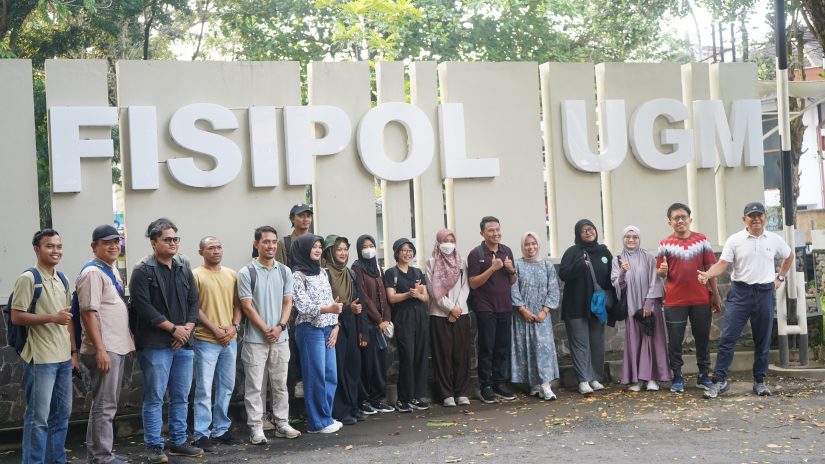
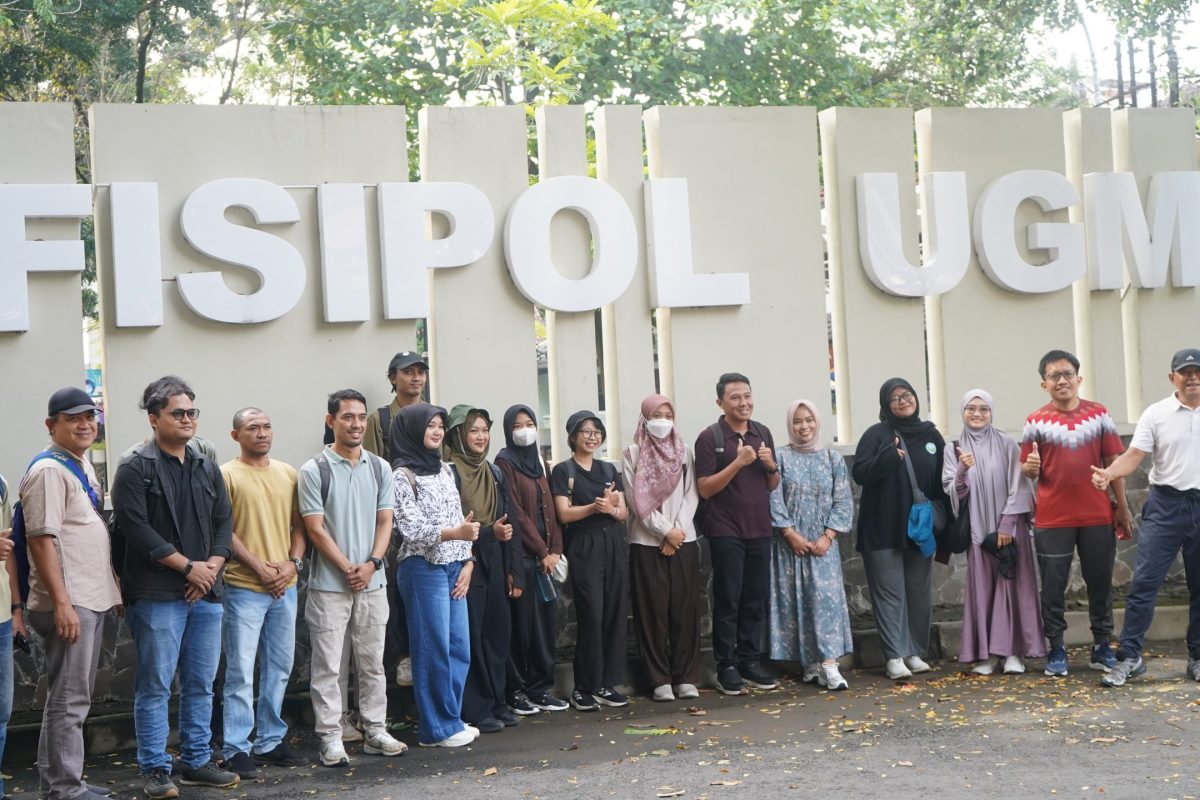
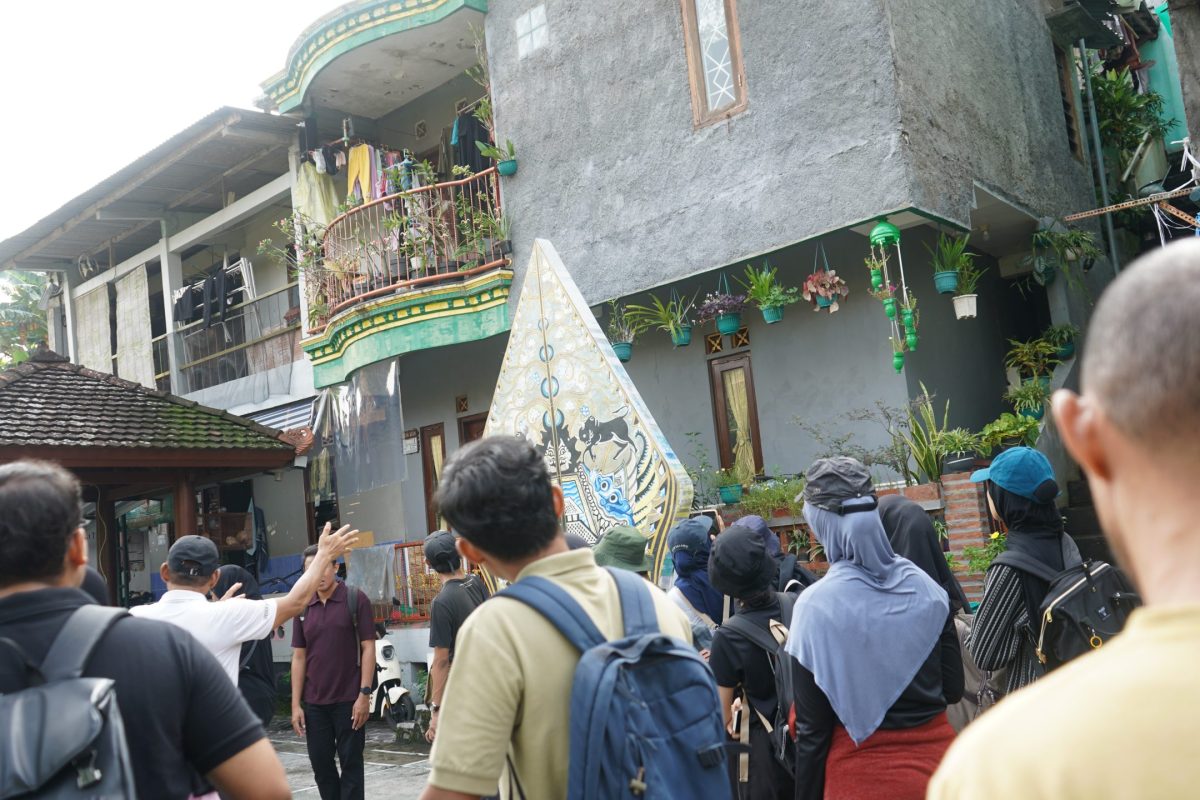
Yogyakarta, April 6th 2026 – The Population Master’s Program at the Graduate School of Universitas Gadjah Mada organized a field trip to the Kali Code riverside settlement area. This activity was guided by Prof. Ir. Bakti Setiawan, M.A., Ph.D. and attended by students as part of field-based learning to understand population dynamics as well as the concept of inclusive, safe, resilient, and sustainable settlements.
The Kali Code settlement area is one example of an urban kampung in Indonesia that demonstrates a significant transformation from a slum area into a more livable environment. The growth of settlements along this riverbank has been influenced by urbanization, limited access to urban land, and the housing needs of low-income communities. This phenomenon aligns with studies by the Ministry of Public Works and Housing (PUPR) and the National Development Planning Agency (Bappenas), which state that riverside settlements are part of urban development dynamics in Indonesia. Hence, the 100-0-100 program was introduced to achieve 100% access to safe drinking water, 0% slum areas, and 100% access to proper sanitation.
The transformation of the Kali Code area cannot be separated from the role of Romo Y.B. Mangunwijaya, an architect, cultural figure, and clergyman who, in the early 1980s, initiated the development of Kampung Code with a community-based development approach. This approach emphasized active community participation in planning and development processes, thereby not only improving the physical quality of housing but also strengthening social cohesion and community identity. This achievement received international recognition with the Aga Khan Award for Architecture in 1992, which acknowledged the project as a best practice in improving the quality of housing for low-income communities.
During the field trip, students conducted direct observations of the physical conditions of the settlement, basic infrastructure, population density, and community social interactions. Discussions with Prof. Bakti Setiawan provided insights into the implementation of the Sustainable Development Goals (SDGs), particularly Goal 11, which emphasizes the importance of creating inclusive, safe, resilient, and sustainable cities and settlements.
The aspect of inclusivity is reflected in the active involvement of the community in decision-making and the presence of strong social solidarity. In terms of safety, the arrangement of housing and the improvement of basic infrastructure help create a healthier and more livable environment. Meanwhile, the resilience of the settlement is demonstrated by the community’s ability to adapt to disaster risks, such as floods and cold lava flows, considering the Code River originates from Mount Merapi. The sustainability aspect is established community-based environmental management and efforts to maintain the quality of housing and living spaces.
The students also learned about the role of the government and local institutions in supporting the improvement of settlement quality. Various slum upgrading programs and the provision of basic infrastructure—one of which is the M3K program (Munggah, Mundur, Madhep Kali)—efforts are made to reduce disaster risks, improve environmental quality, and organize spatial planning in settlements. The synergy of communities, academics, and the government is key to the successful transformation of Kampung Code into a model of sustainable urban settlement.
This activity provided a comprehensive learning experience by integrating theory and field practice. Students are expected to develop critical analysis of various urban settlement challenges and understand the importance of participatory approaches in development planning. Through this field trip, the Population Master Program reaffirms its commitment to produce graduates who possess strong academic understanding and also social sensitivity to community dynamics. The Kali Code settlement demonstrates that community-based development can create environments that are more inclusive, safe, resilient, and sustainable.
Author: Caesarean Fadhilah Putri
Editor: Siti Muyasaroh