
May 20th 2026 — Belu Regency, East Nusa Tenggara (NTT), is more than just a peripheral line on the map of Indonesia. With the presence of the Mota’ain State Border Crossing Post (PLBN), Belu serves as the nation’s front porch as well as a strategic geopolitical and geoeconomic gateway connecting the Republic of Indonesia, the Democratic Republic of Timor-Leste, and the wider world.
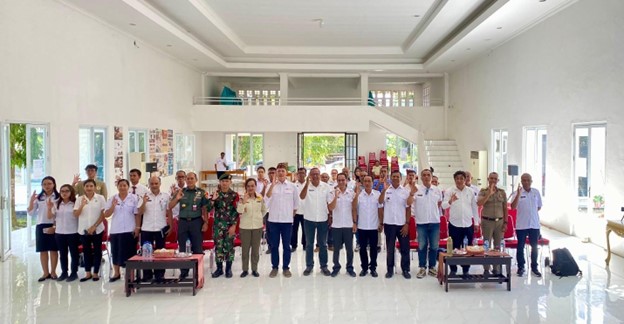
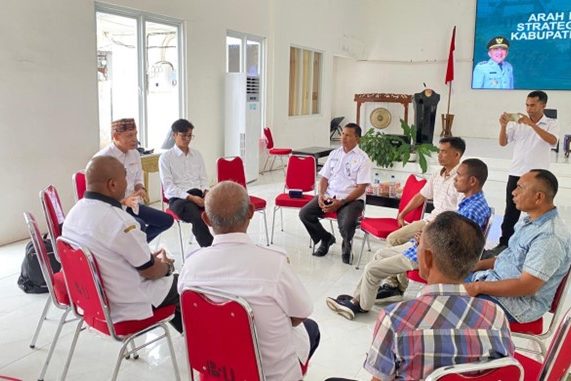
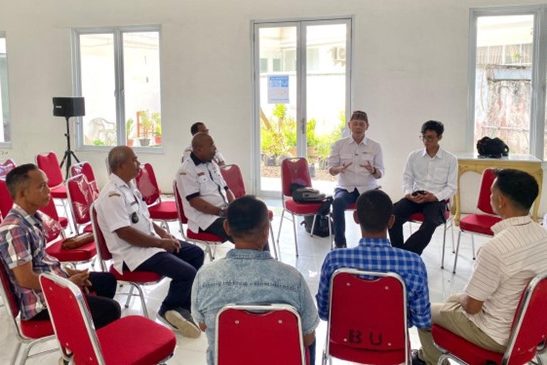
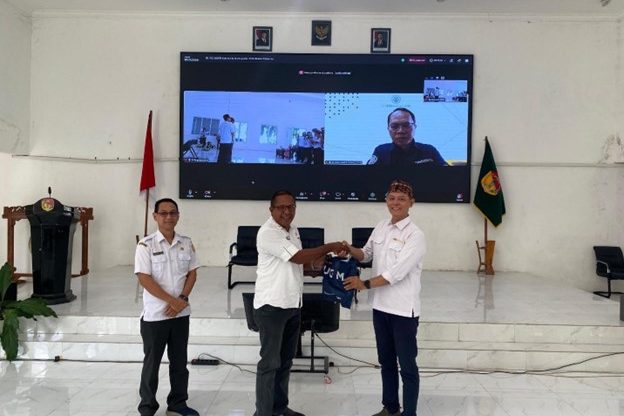
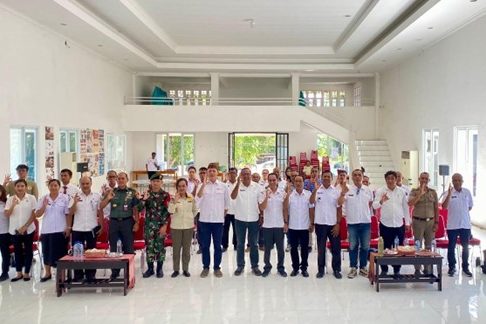
To strengthen this strategic position, Universitas Gadjah Mada (UGM), in collaboration with the Belu Regency Government, officially held the Crossborder Partnership (CBP) Focus Group Discussion (FGD) at Betelalenok Hall, Atambua, on Wednesday, Mayth 20, 2026. The forum marked an important milestone in aligning regional development directions, cross-border research initiatives by UGM within the CBP framework, and the EQUITY program (Enhancing Quality Education for International University Impacts and Recognition), a strategic initiative by the Ministry of Higher Education, Science, and Technology (Kemdiktisaintek) together with LPDP. It also reinforced community engagement programs in border areas with internationally oriented Community Service Programs (KKN).
The FGD, conducted in a hybrid format, represented a concrete manifestation of pentahelix collaboration involving multiple stakeholders. Dynamic discussions took place among representatives from the Belu Regency Government, including Assistant for Economic Affairs and Development of the Regional Secretariat, Riene Bere Baria, ST; Chief of the Regional Development Planning, Research, and Development Agency (BP4D) of Belu Regency, Fredrikus L. Bere Mau, ST; Muhammad Sulaiman, ST, MT, D.Eng., coordinator of the EQUITY and CBP programs at UGM; Dr. Leonard Chrysostomos Epafras from UGM as EQUITY researcher for the Social Humanities cluster; Brigadier General TNI Yudha Medy Dharma Zafrul, Vice Dean for Finance and General Affairs at the Faculty of Military Logistics Vocational Studies (FVLM), Ben Mboi Polytechnic, Defense University; Fasiha Putri Untsa, S.Ars., M.URP. from Caritra Indonesia; representatives of the Timor-Leste Border Security Task Force (Pamtas RI-RDTL); Dr. Manuel Vong, Director of the Doctor of Business Administration Program at Dili Institute of Technology (DIT) and Chair of Kagama Timor-Leste; as well as local stakeholders including district chiefs, village chiefs, and representatives of Regional Apparatus Organizations (OPD). The forum was further strengthened by the presence of the Director of UGM’s Directorate of Community Service (DPKM), Dr. dr. Rustamaji, M.Kes., who reaffirmed the importance of this partnership.
The selection of Belu Regency as the site for community engagement was based on its extraordinary potential alongside multidimensional crisis challenges. Border villages such as Sadi, Tulakadi, and Dualaus possess remarkable natural and historical wealth, ranging from expansive agroforestry landscapes, the scenic “Jokowi Tamarind” valley adorned with marigold flower gardens, naturally dyed ikat weaving crafts, to prehistoric fossil sites containing remains of Stegodon (ancient dwarf elephants) dating back approximately 900,000 years.
In response to these dynamics, UGM launched the 2026 “Halo Belu” 2.0 Community Service and Empowerment Program (KKN-PPM) in collaboration with the Community Service Program of Universitas Nusa Cendana, continuing the 2025 Collaborative KKN initiative. The program is integrated with the EQUITY research initiative supported by Kemdiktisaintek and LPDP, as well as the Crossborder Partnership (CBP) initiative from the UGM Graduate School, in cooperation with LP2M Universitas Nusa Cendana.
A total of 60 students, consisting of 30 UGM students and 30 Undana students, will be deployed to Sadi, Tulakadi, and Dualaus villages to strengthen village potential exploration and improve governance systems.
Muhamad Sulaiman, Chief of the Research Team and Field Supervisor for the UGM KKN program, emphasized that the initiative was designed to create long-term impact. “More importantly, students will learn about Indonesian identity, international collaboration, peacebuilding at the border, understanding real conditions in the field, and applying the knowledge they gained on campus,” he stated.
This FGD and KKN initiative, UGM supports Belu in its transformation. National borders are no longer viewed merely as military security demarcations, but are evolving into centers of environmental resilience, cultural exchange, and regional economic growth. This transformation aligns with the Sustainable Development Goals (SDGs), particularly strengthening partnerships and collaboration (Goal 17), encouraging innovation (Goal 9) and quality education (Goal 4), promoting responsible management of natural resources (Goal 12), fostering economic growth (Goal 8), and alleviating poverty (Goal 1).
Author: Leonard Chrysostomos Epafras
Editor: Arfika