
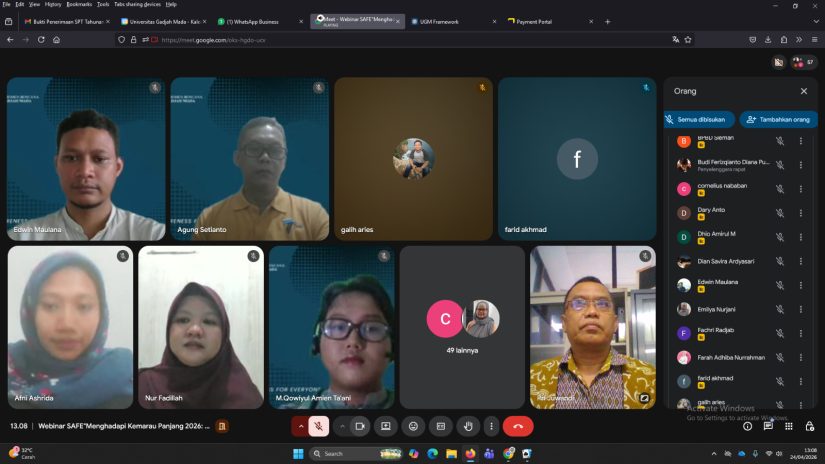
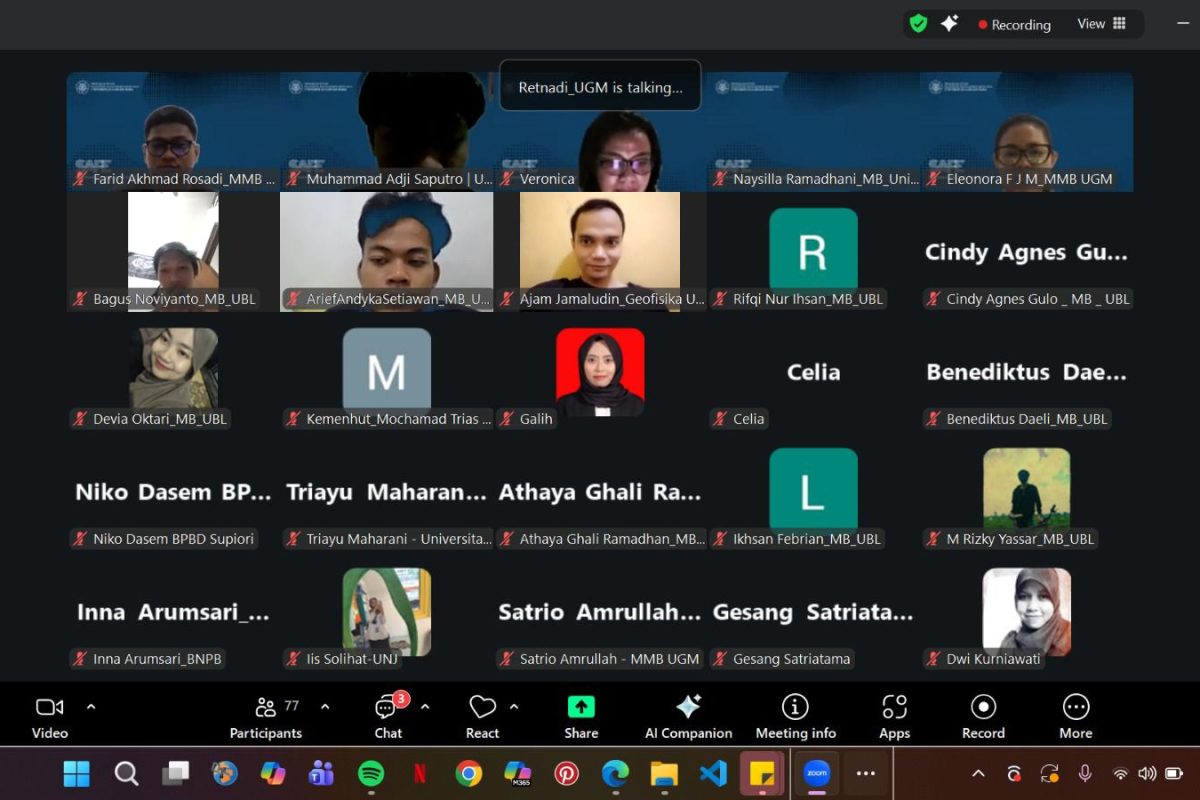
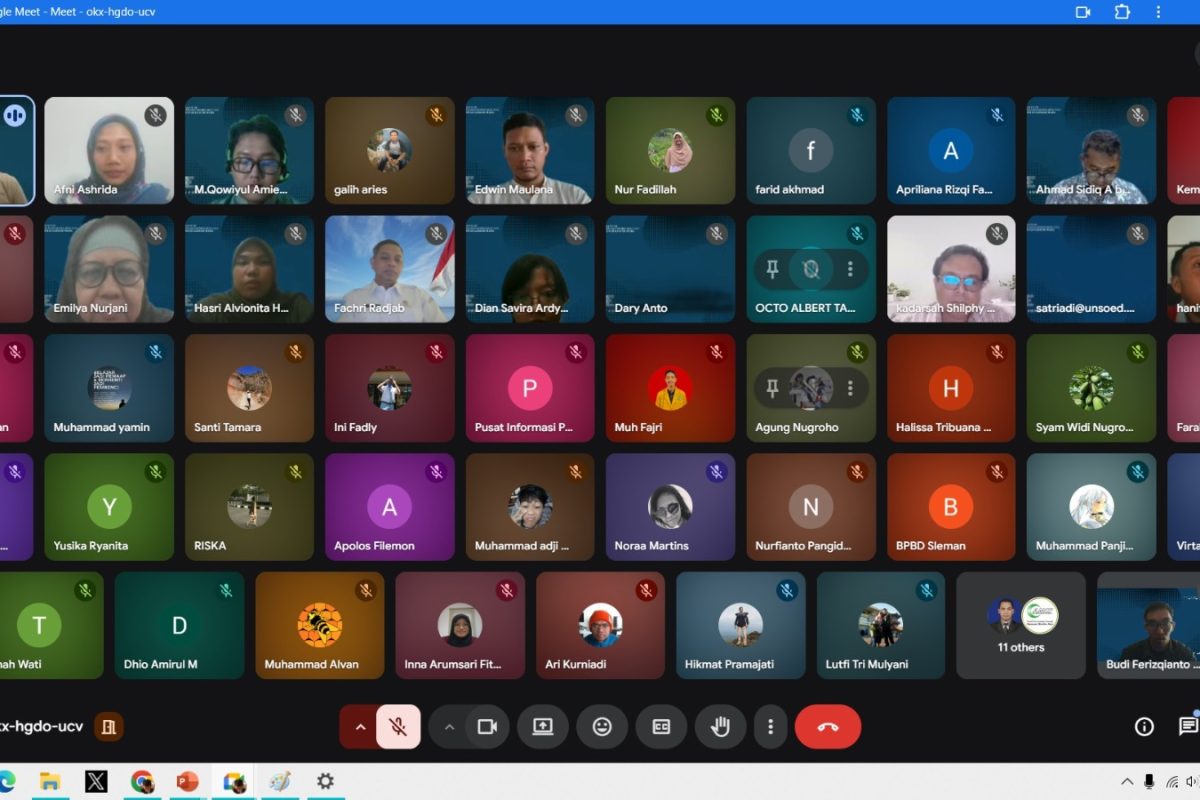
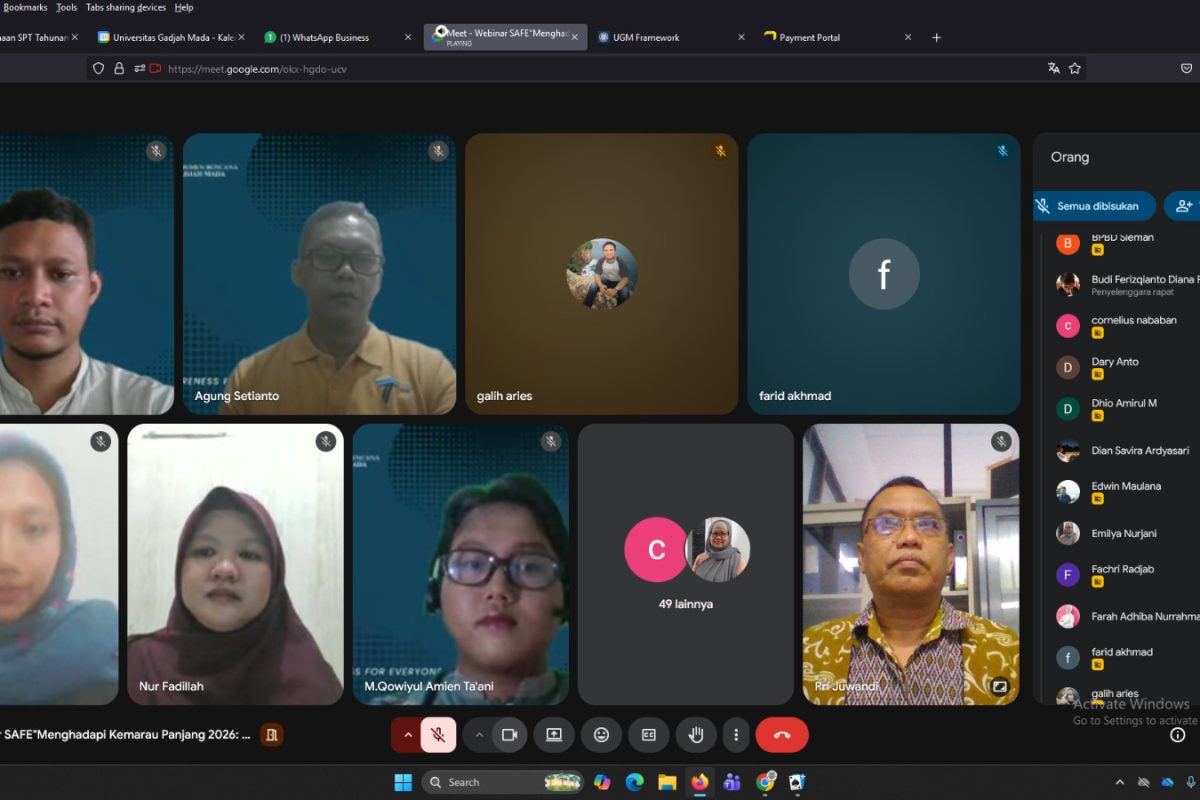
Yogyakarta, April 24, 2026 – The Master’s Program in Disaster Management at Universitas Gadjah Mada successfully held an online seminar titled SAFE (Seminar on Awareness for Everyone). Moderated by Dr. Emilya Nurjani, S.Si., M.Si., the event featured Dr. Fachri Rajab (Deputy for Climatology at BMKG) as the main speaker, who discussed Indonesia’s preparedness in facing the predicted prolonged dry season expected to peak in August 2026.
In his presentation, the speaker emphasized that this phenomenon poses serious threats to multiple sectors, ranging from disruptions in food security and clean water availability to increased risks of forest and land fires. Beyond the physical impacts, a major challenge lies in the uneven level of preparedness at the local level, as well as the risks posed by fast-food journalism and the spread of misinformation on social media, which may trigger public panic or, conversely, public indifference.
The interactive discussion session provided a dynamic platform for dialogue between the speaker and participants from both academic and general backgrounds. During this session, projections of drought impacts were presented, highlighting not only effects on agriculture and public health but also potential threats to national energy stability due to reduced water levels in reservoirs and hydropower plants.
This discussion is particularly crucial given the extreme transition from wet hydrometeorological anomalies to drought conditions, driven by significant global atmospheric dynamics. Through this forum, academics and practitioners sought to synergize strategic efforts to translate technical meteorological data into concrete mitigation measures for the wider community.
Participants were encouraged to understand that the threat of the 2026 prolonged dry season is a scientific reality that demands collective behavioral change, particularly in accurately interpreting early weather warnings to build national resilience. As part of policy recommendations, the seminar highlighted the importance of reflecting on the handling of extreme dry seasons in previous years as a basis for improving future strategies.
Practical measures such as water conservation and strengthening public literacy were identified as top priorities to enable communities to undertake independent mitigation and avoid being misled by unverified information. Through enhanced literacy, it is hoped that the public will be better prepared to face future extreme weather phases.
The discussion ultimately formulated an urgent action agenda for local governments and communities to immediately initiate water conservation measures and early prevention of forest and land fires (Karhutla). It is hoped that synergy between government policies and growing public awareness will serve as a strong foundation for Indonesia in facing the looming crisis of the 2026 prolonged dry season.
Tags: disaster management, climatology, hydrometeorological anomalies, webinar, SDG 4: quality education, SDG 13: climate action, SDG 15: life on land
Author: Dara Akhina
Editor: Siti Muyasaroh