
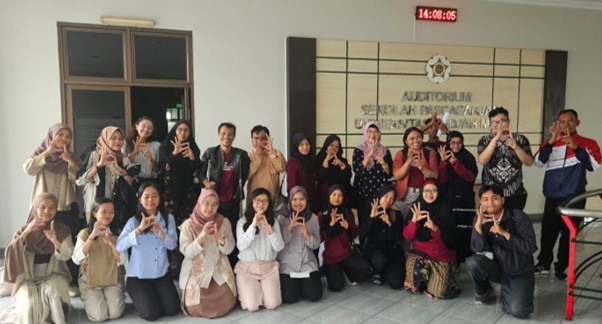
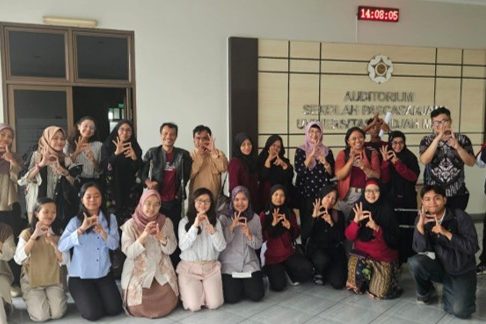
Yogyakarta – The Biomedical Engineering Master Program (BME) at the Graduate School of Universitas Gadjah Mada (UGM) organized a Workshop on Management Development and the Preparation of Standard Operating Procedures (SOPs) for Rumah Kebugaran Difabel (RKD) Pinilih Sedayu, Bantul, on Friday (June 12th 2026), at Meeting Room A, 5th Floor, Graduate School Building, UGM.
This activity was part of the 2026 Community Service Program conducted by the UGM Biomedical Engineering Master Program. The workshop aimed to strengthen the capacity of RKD Pinilih managers in developing organizational growth plans and effective SOPs to support professional, high-quality, and sustainable service governance.
A total of 11 RKD Pinilih staff members participated in the workshop alongside lecturers and students from the Community Service Team of the UGM Biomedical Engineering Master Program, coordinated by Dr. drg. Anne Handrini Dewi, M.Kes. The participating students came from the UGM Graduate School’s Biomedical Engineering Master Program, with support from students of the Biomedical Sciences Master Program at the Faculty of Medicine, Public Health, and Nursing (FK-KMK) UGM.
The event was opened by the Chief of the Biomedical Engineering Master Program at the UGM Graduate School, Ir. Rini Dharmastiti, M.Sc., Ph.D., IPM., ASEAN Eng. – DTMI, who presented the history of collaboration of the UGM Biomedical Engineering Master’s Program and RKD Pinilih over the past four years. According to her, this partnership reflects the university’s commitment in supporting the development of inclusive health and fitness services for people with disabilities.
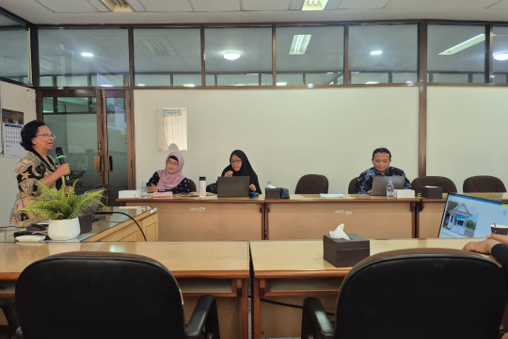
The discussion session began with a presentation by the Chairperson of the Pinilih Foundation, Maria Tri Suhartini, S.E., affectionately known as Mrs. Tri, who introduced the profile, achievements, and service developments of RKD Pinilih. The activity documentation presented showed participants the enthusiasm of people with disabilities and their families in developing inclusive and accessible fitness services.
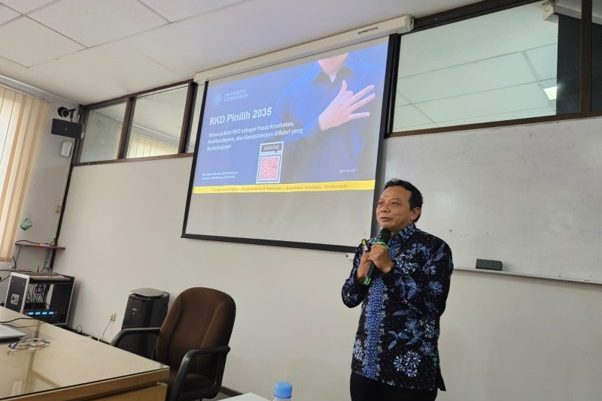
The presentation was further enriched by Dr. M. Lutfan Lazuardi, M.Kes., Ph.D. from FK-KMK UGM, who introduced the concept of a “Vision 2035” as a strategic direction for RKD Pinilih’s future organizational development.
Lutfan expressed appreciation for the various initiatives carried out by RKD Pinilih. He noted that the ongoing collaboration with UGM has the potential to transform RKD Pinilih into a learning, training, and research laboratory for the UGM academic community—not only in health sciences but also in fields such as psychology, law, and social sciences.
He also encouraged stronger collaboration of study programs and institutions to broaden the impact of community empowerment efforts. During the discussion, several opportunities for collaboration were identified, including the development of an information system to support more integrated recording and management of disability-related data.
“The presentation on Vision 2035 delivered by Dr. Lutfan was highly inspiring for us. It has strengthened our confidence that RKD Pinilih can grow further as an inclusive, professional, and sustainable center for services and empowerment. His ideas have opened a new perspective for us in planning the future development of RKD Pinilih,” said Mrs. Tri.
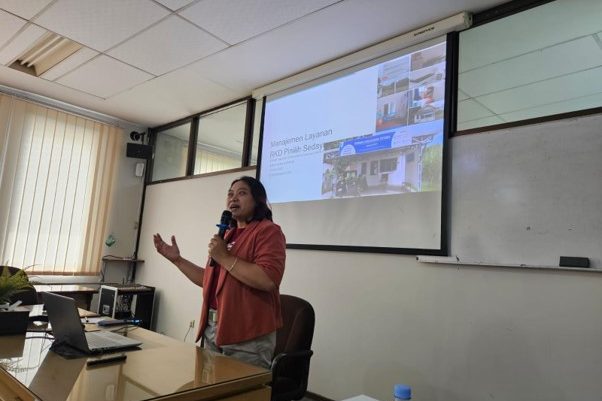
Dr. Rina Susilowati, Ph.D. from FK-KMK UGM delivered a presentation on SOP development as an essential instrument for maintaining organizational service quality and consistency in the next session. The training showed participants how to learn the fundamental concepts of SOPs, conducted SOP needs assessments, developed SOP documents tailored to organizational requirements, and implemented effective document control systems.
Rina, in her presentation, explained that SOPs play a crucial role in ensuring consistency in work implementation, improving efficiency with clear workflows, and serving as learning tools for new personnel. SOPs also support organizational sustainability during staff transitions, enhance transparency in work processes, and facilitate audits and evaluations.
“Good work should be repeatable in the same way at different times or by different people,” Rina remarked while explaining the importance of standards in work implementation.
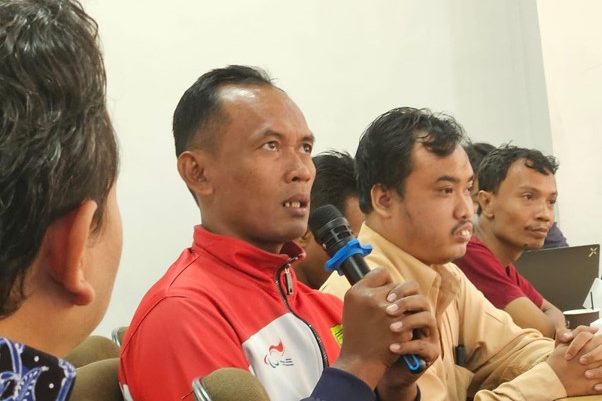
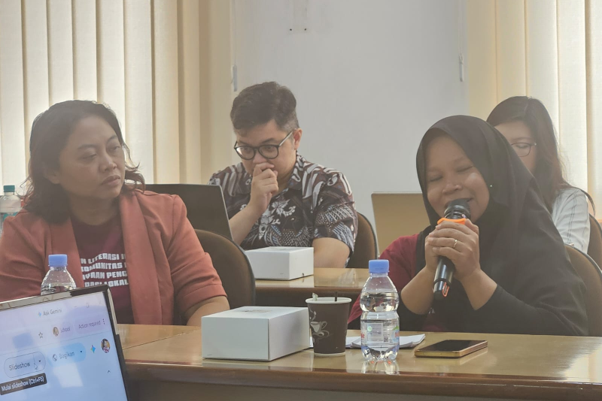
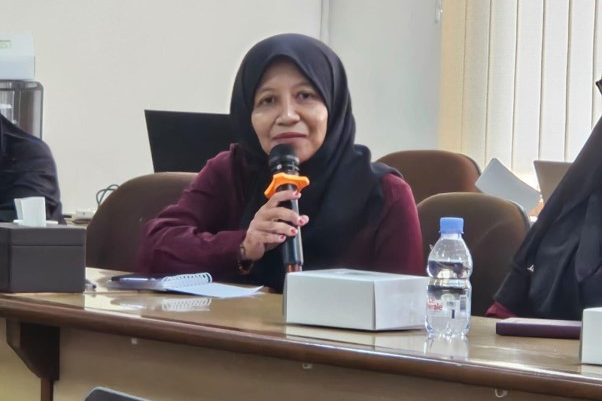
The enthusiasm of RKD Pinilih staff was evident in the workshop. One staff member commented, “This mentoring program has been extremely beneficial because it helps us review our service processes more systematically. Together with the team, we plan to revise five draft SOP documents in the near future so they become clearer and better aligned with the service needs of RKD Pinilih.”
The workshop also provided valuable benefits for the participating students. The direct involvement in community service activities—particularly in strengthening management systems and developing inclusive service SOPs for people with disabilities— made students gain contextual and practical learning experiences. The activity also served as a platform for developing analytical, communication, and interdisciplinary collaboration skills that are highly relevant to the professional world.
The Biomedical Engineering Master’s Program at the UGM Graduate School, with this initiative, seeks to support the strengthening of service governance at RKD Pinilih while fostering closer synergy of higher education institutions and the community in creating inclusive, high-quality, and sustainable health and fitness services.
Author: Arni W
Editor: Dr. Rina Susilowati, Ph.D.