
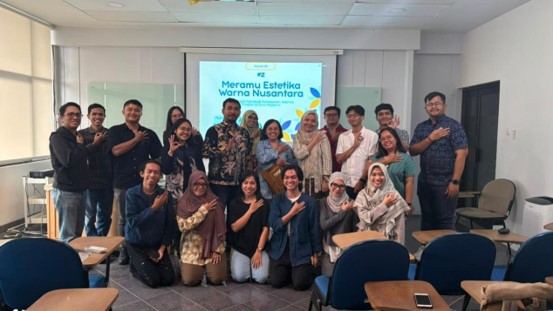
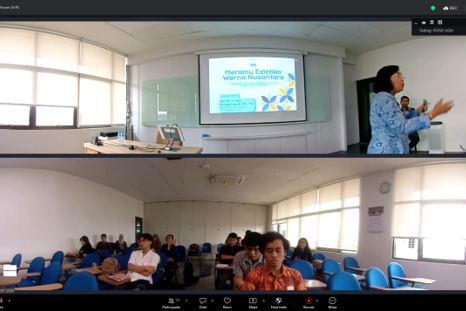
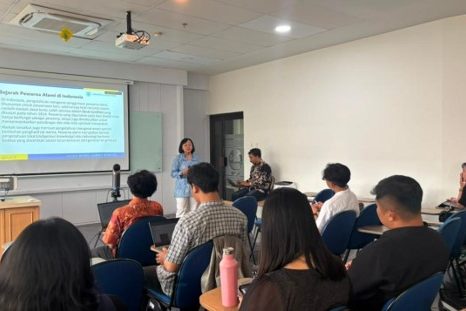
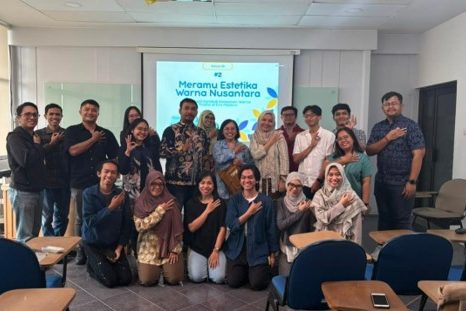
Yogyakarta, June 25th 2026 – The Performing Arts and Visual Arts Studies Master Program (PSPSR), Graduate School of Universitas Gadjah Mada (SPs UGM) organized the academic Forum 35 titled “Concocting the Aesthetics of Archipelago Colors: Rediscovering the Wealth of Traditional Colors in the Modern Era.” Taking place in Room 407 of the SPs UGM Building on Thursday, June 25th 2026, this event facilitated an interdisciplinary dialectical space bringing together applied science and the arts. This academic gathering specifically examined the existence of traditional archipelago colors that are increasingly marginalized amidst the currents of modernization. Furthermore, this forum also aimed to expand the participants’ insights regarding the position of traditional archipelago colors amidst the development of modern aesthetics. The event, which was open to the academic community and the general public, served as a crucial platform for building cross-disciplinary synergy.
The discussion in this forum was motivated by the shift in coloring practices within the modern textile and visual arts industries, which are increasingly dominated by synthetic dyes. The dominance of these chemical substances has ultimately marginalized the use of natural dyes, while simultaneously raising various issues such as environmental pollution and health risks. The traditional textiles and performing arts properties, color does not merely exist as a visual element alone. Colors in the archipelago tradition are proven to carry profound philosophical values, regional identities, and local wisdom inherited across generations. Therefore, global awareness of sustainability was reawakened to view natural dyes as a highly relevant alternative to be developed today.
The event featured a comprehensive presentation by a Chemical Engineering expert from UGM and researcher at the Indonesia Natural Dye Institute (INDI) UGM, Prof. Dr. Ir. Edia Rahayuningsih, M.S., IPU. The discussion session, guided by moderator Topan Bagus Permadi, S.Sn., M.A., highlighted the urgency of revitalizing natural dyes in the textile and art world. In her presentation, Prof. Edia emphasized that the utilization of natural dyes is a solution to pollution and the dangers of carcinogenic substances that threaten health. This step is also considered highly strategic to reduce the national dependence on imported synthetic dyes, which reaches over 42,000 tons annually. Moreover, the return to natural dyes significantly contributes to the efforts of maintaining and strengthening the cultural identity of the Indonesian nation.
The organization of Forum 35 is a concrete manifestation of PSPSR SPs UGM’s ongoing commitment to supporting the achievement of the Sustainable Development Goals (SDGs). This cross-disciplinary dialogue contributes directly to the provision of quality education through the expansion of academic insights for students and the general public (SDG 4). Meanwhile, the innovation in natural dye production technology discussed aligns perfectly with efforts to build environmentally friendly industry and innovation (SDG 9). Furthermore, the strong push to shift from hazardous chemical dyes to natural dyes serves as a concrete step toward achieving responsible consumption and production patterns (SDG 12). It is hoped, with this synergy of science and art, that various ideas and advanced research regarding the revitalization of traditional colors will emerge in the future.
Author: Berlian Belasuni