
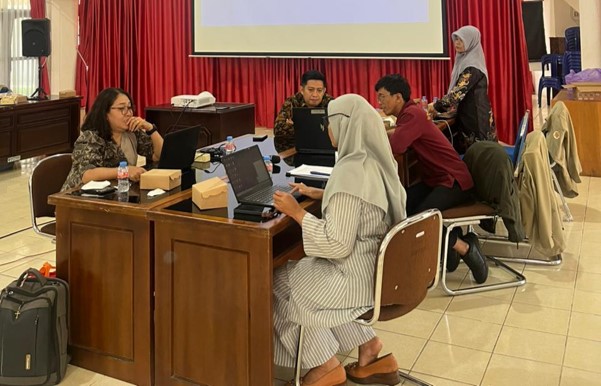
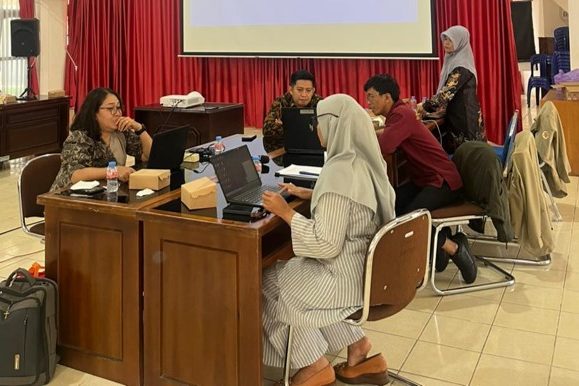
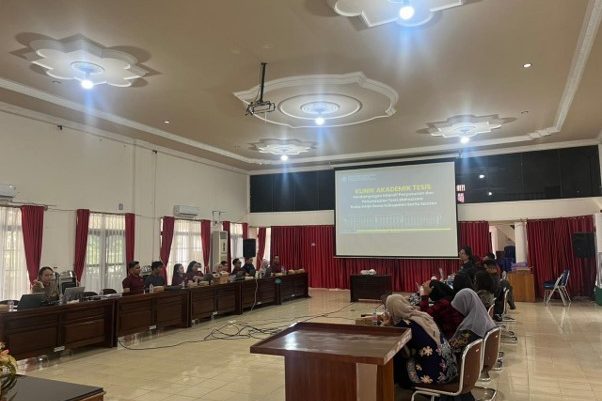
Buntok, Barito Selatan – The Leadership and Policy Innovation (MKIK) Master Program at the Graduate School of Universitas Gadjah Mada (UGM) organized a Thesis Academic Clinic for students enrolled in the Barito Selatan Regency partnership program from 23rd–25th May 2026 in Buntok, Central Kalimantan. The initiative forms part of the program’s commitment to enhance academic support services and accelerate students’ progress toward completing their studies.
Many participants in the partnership program are working professionals and public sector practitioners, therefore they face unique challenges in balancing academic responsibilities with their professional duties. In response to these circumstances, MKIK UGM designed an intensive and needs-based mentoring program aimed at supporting students with the thesis-writing process.
The Thesis Academic Clinic was conceived not merely as a series of lectures, but as a collaborative academic forum that enabled students to receive direct guidance from faculty members. This approach enables participants to consult on a wide range of research-related issues, including research design, data collection methods, data analysis, academic writing, and thesis examination preparation.
According to Makbul Hajad, S.T.P., M.Eng., Ph.D., Chief of the MKIK Program, the activity reflects the program’s commitment in ensuring the students receive adequate academic support in the final stages of their studies. Intensive mentoring, he noted, helps students identify research challenges more effectively and develop solutions tailored to the specific needs of their projects.
The course of the three-day program made participants attend academic enrichment sessions covering thesis design and writing, research methods and data collection techniques, and academic writing ethics. The sessions were facilitated by MKIK faculty members, including Makbul Hajad, S.T.P., M.Eng., Ph.D., Dr. Dewi Haryani Susilastuti, M.Sc., and Dr. Novi Widyaningrum, M.A.. These sessions were followed by academic clinics and individual consultations, allowing students to discuss their research challenges in greater depth.
A key feature of the program was its needs-based approach. Prior to the event, the organizers mapped students’ research progress and found that participants were at different stages of thesis development, ranging from proposal preparation and data collection to data analysis, thesis revision, and examination preparation. Consequently, mentoring activities were tailored to address the specific needs of each group of students.
The clinic also incorporated working sessions which participants were encouraged to actively develop their thesis drafts while receiving direct feedback from faculty members. This hands-on approach ensured that consultations extended beyond conceptual discussions and resulted in tangible improvements to students’ research manuscripts. Such a mentoring model is expected to enhance the effectiveness of academic supervision while accelerating students’ thesis completion.
The implementation of the Thesis Academic Clinic demonstrates MKIK UGM’s commitment to providing responsive and student-centered academic services, particularly within regional partnership programs. Beyond supporting timely graduation, the initiative also aims to uphold the quality of students’ scholarly work in accordance with the university’s academic standards.
The sustained academic mentoring made MKIK UGM hopes that students in the Barito Selatan partnership program will be able to complete their research more systematically, produce high-quality theses, and contribute policy recommendations that are relevant to regional development. The program further highlights the role of UGM Graduate School in advancing human resource capacity through postgraduate education that is academically rigorous, applicable, and impactful for society.
Author: Khoirul Mujazanah