
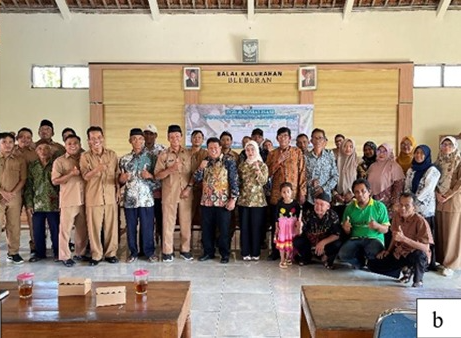
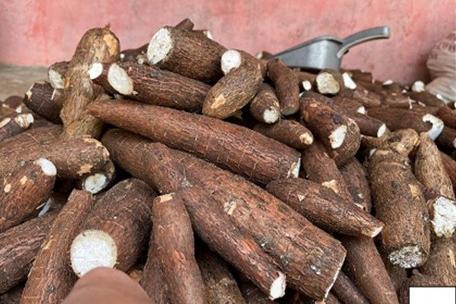
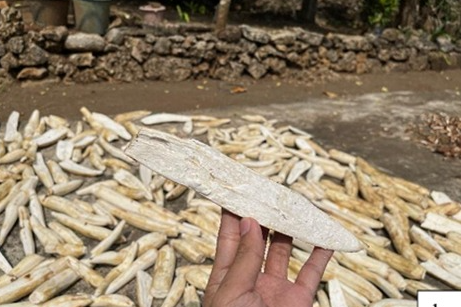
The Graduate School of Universitas Gadjah Mada (SPs UGM), with its 2026 Community Service Grant Program (PKM), implemented a community empowerment initiative titled “Strengthening Farmers’ Capacity in Utilizing Digital Technology to Support Local Food Product Diversification” in Bleberan Village, Playen District, Gunungkidul Regency, Special Region of Yogyakarta. The program reflected SPs UGM’s commitment to increase technology-based agricultural transformation while strengthening community food security through the development of more diverse and value-added local food products.
The program began with a socialization session and a Focus Group Discussion (FGD) involving farmers and community groups from Bleberan Village. During these activities, participants gained insights into the role of digital technology in supporting agricultural practices, including access to cultivation information, market price monitoring, crop scheduling, and the utilization of weather and climate information provided by Indonesia’s Meteorology, Climatology, and Geophysics Agency (BMKG) to support decision-making at the farm level.
The community service team also conducted hands-on training on the use of digital technology for agricultural product marketing. Participants were introduced to social media platforms such as WhatsApp, Facebook, and Instagram, as well as local online marketplaces, to promote local food products. Farmers also received guidance on creating simple promotional content, including product photography, writing product descriptions, and applying more engaging and effective digital marketing techniques.
The chief of the Community Service Team, Dr. Sudrajat, S.Si., M.P., explained that strengthening digital literacy is a strategic step toward expanding market access while increasing the added value of local food products. “Digital technology is not only a communication tool but also an essential instrument for farm management, data-driven decision-making, and more effective and efficient agricultural marketing,” he stated.
The evaluation results indicated that the program had a highly positive impact on participants’ capacity development. Approximately 90 percent of participants reported that they understood or strongly understood the role and benefits of digital technology after participating in the socialization sessions, discussions, and practical training. Furthermore, all participants stated that they had acquired new digital skills that could be applied to agricultural activities and the marketing of local food products.
The program also increased farmers’ awareness of the importance of adopting digital technology to support sustainable agriculture. The total of 97.1 percent of participants expressed their readiness to adopt digital technology in their farming activities. Participants showed strong enthusiasm during the practical sessions by actively exploring various agricultural digital applications and discussing opportunities for technology-based agribusiness development.
The SPs UGM Community Service Program in Bleberan Village also contributes to the achievement of the United Nations Sustainable Development Goals (SDGs), particularly SDG 2 (Zero Hunger) through strengthening food security and local food diversification, SDG 8 (Decent Work and Economic Growth) through enhancing farmers’ economic capacity, SDG 9 (Industry, Innovation and Infrastructure) through the adoption of digital technology, and SDG 12 (Responsible Consumption and Production) through the development of more sustainable local food production systems.
SPs UGM, with this program, hopes that Bleberan Village will become a model for digital agriculture development at the village level. Continuous mentoring and community capacity-building are expected to accelerate technology adoption, expand marketing networks for local products, and sustainably improve farmers’ livelihoods. The program also reaffirmed SPs UGM’s commitment to deliver research-based, innovative, and community-responsive public engagement as part of the university’s contribution to rural development and national food security.
Author: Siti Muyasaroh