
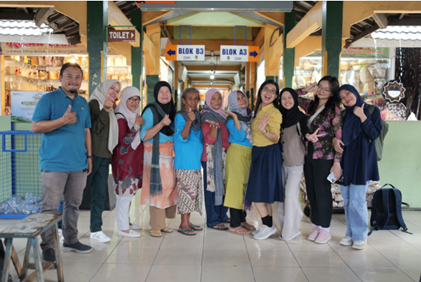
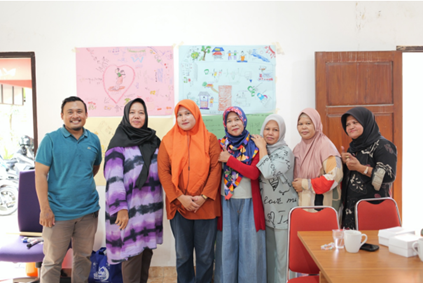
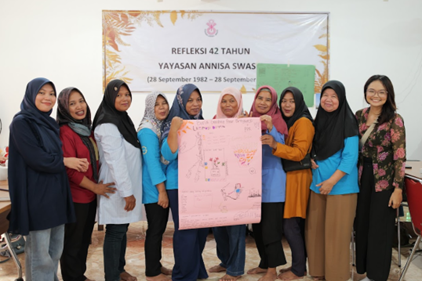
The Information and Library Management Master Program of the Graduate School, in collaboration with the Annisa Swasti Foundation Yogyakarta, organized a training program focused on improving digital and financial literacy for buruh gendong (traditional market porters) (May 19th). This activity aims to help participants understanding the benefits of digital technology, recognize various forms of digital fraud, and learn how to avoid the traps of online loans.
This training was motivated by the condition of elderly buruh gendong in Yogyakarta, who generally have limited education, minimal savings, and economic pressure, forcing them to continue working in old age. Ironically, some of them become trapped in online loan debt or loan sharks due to a lack of understanding of the risks involved. Data from the Financial Services Authority (OJK) shows that in 2024, the rate of non-performing loans among individuals over the age of 54 increased by 104 percent, most of which came from the informal sector.
One of the most engaging moments in the training occurred when participants were asked to create posters about their experiences using smartphones. The discussions were lively and warm, yet remained serious when addressing various fraud cases.
One participant, Hamidah (55), stated that after attending the training, she and her peers better understood the characteristics of dangerous online loans and became more cautious about sharing personal data on social media. She also committed to sharing the knowledge she gained with fellow buruh gendong so they would not be easily deceived.
Overall, this training aims to enhance the ability of buruh gendong to use technology safely and wisely, while also equipping them with practical skills in managing daily finances to avoid debt traps and digital fraud. The program also envisions empowering buruh gendong as peer literacy agents who can spread knowledge within their communities, reduce digital and financial gaps, and promote economic independence in line with the Sustainable Development Goals (SDGs) through inclusive education and lifelong learning.
Safirotu Khoir, PhD, one of the research team members, stated that amid the rapid development of the digital era, this digital and financial literacy training is expected to serve as both protection and hope for marginalized groups to gain access to education, protection, and better living opportunities.
(Surono)