
The Religion and Cross-Cultural Studies Master Program (CRCS), Graduate School of Universitas Gadjah Mada (SPs UGM), organized a field trip for students in Wonosobo and Dieng on July 23th–24th, 2026. The activity was part of the learning process, connecting academic knowledge with social and environmental realities in the field.
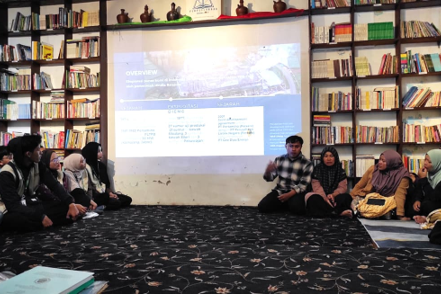
The activity was attended by CRCS students from the 2024 cohort, CRCS faculty members, including Prof. Mark Woodward, and CRCS staff. The destinations included Universitas Sains Al-Qur’an (UNSIQ), Kampung Ilmu in Garung, the geothermal power plant area in Dieng, and Perpustakaan Rakjat in Dieng.
Wonosobo was selected due to its relevance with the topics covered in the students’ courses, particularly Religion and Social Movement and Environmental Ethics and Politics. These field visits allowed students to gain first-hand understanding of environmental issues, social movements, and the roles of communities and religious institutions in responding to these challenges.
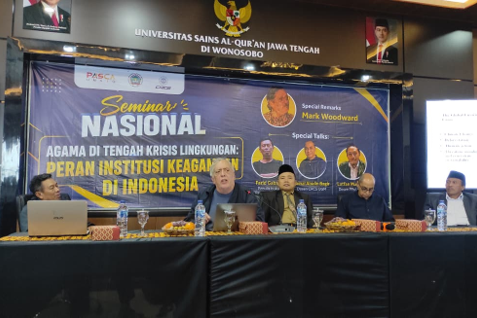
One of the activities took place at UNSIQ with a seminar entitled “Religion Amid the Environmental Crisis: The Role of Religious Institutions in Indonesia.” The seminar was organized in collaboration with CRCS alumni who are now teaching at UNSIQ. The event featured Prof. Mark Woodward, Dr. Zainal Abidin Bagir, Farid Gaban, and UNSIQ faculty members as speakers.
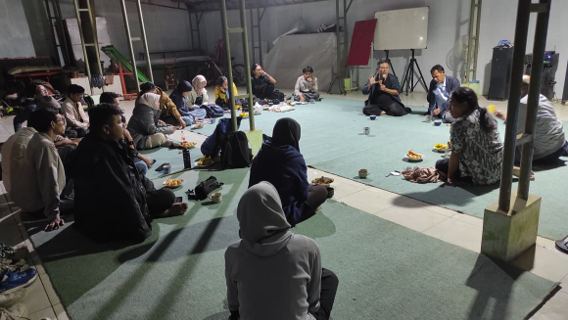
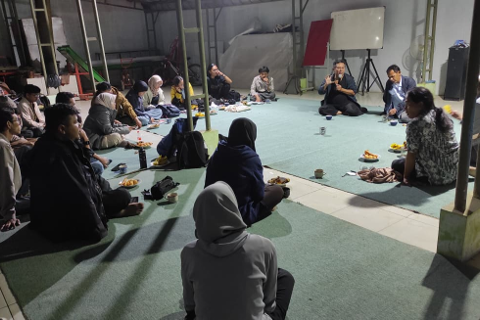
Students then discussed agricultural movements and alternative agriculture at Kampung Ilmu, Garung, with Farid Gaban and Eka Mardiana, a researcher and agricultural practitioner in Wonosobo. During the activity, students also had the opportunity to observe future-oriented agricultural models being developed, including a smart greenhouse.
On the following day, the students visited a geothermal power plant in Dieng to observe its operations directly and engage in dialogue with affected communities. These interactions provided students with an opportunity to understand the impacts experienced by local residents, as well as their efforts to defend their living spaces.
Najiyah Martiam, a lecturer for the Environmental Ethics and Politics course, said that the field trip was aimed to introduce students to realities on the ground, particularly environmental issues and social movements. According to her, learning cannot be limited to readings, films, and classroom discussions, but should also be complemented by direct experiences and dialogue with communities.
“The educational model developed at CRCS seeks to bring knowledge closer to realities on the ground and to foster the co-production of knowledge with communities,” Najiyah said.
The field trip will continue to be part of CRCS’s learning activities in the coming years. Field-based experiences are expected to enrich students’ understanding on the relationship of religion, the environment, policy, and social movements, while encouraging a more contextual learning process.
Writer: Asti Rahmaningrum