
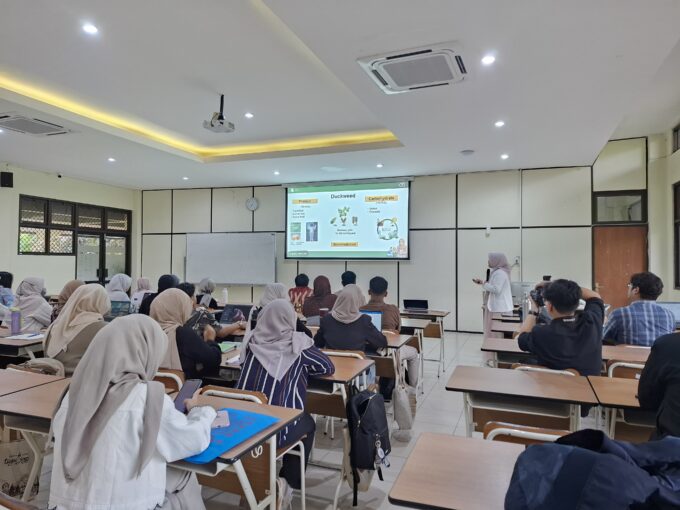
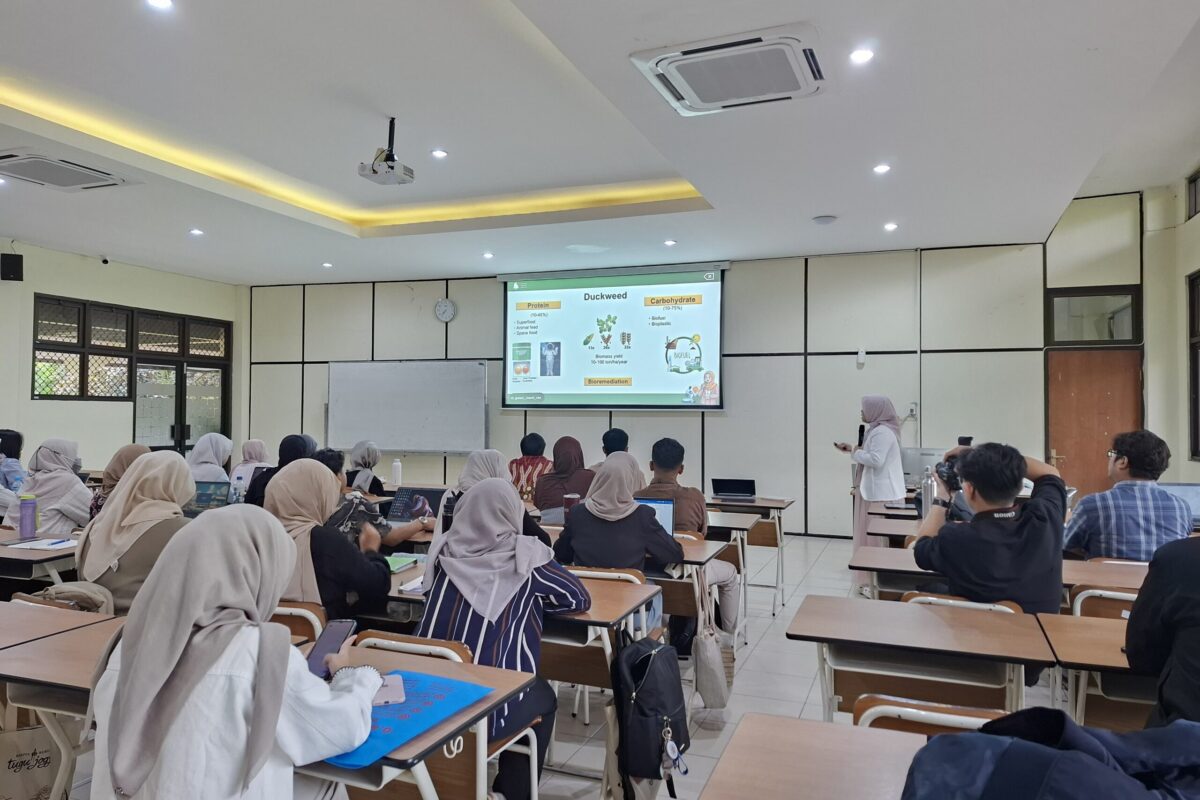
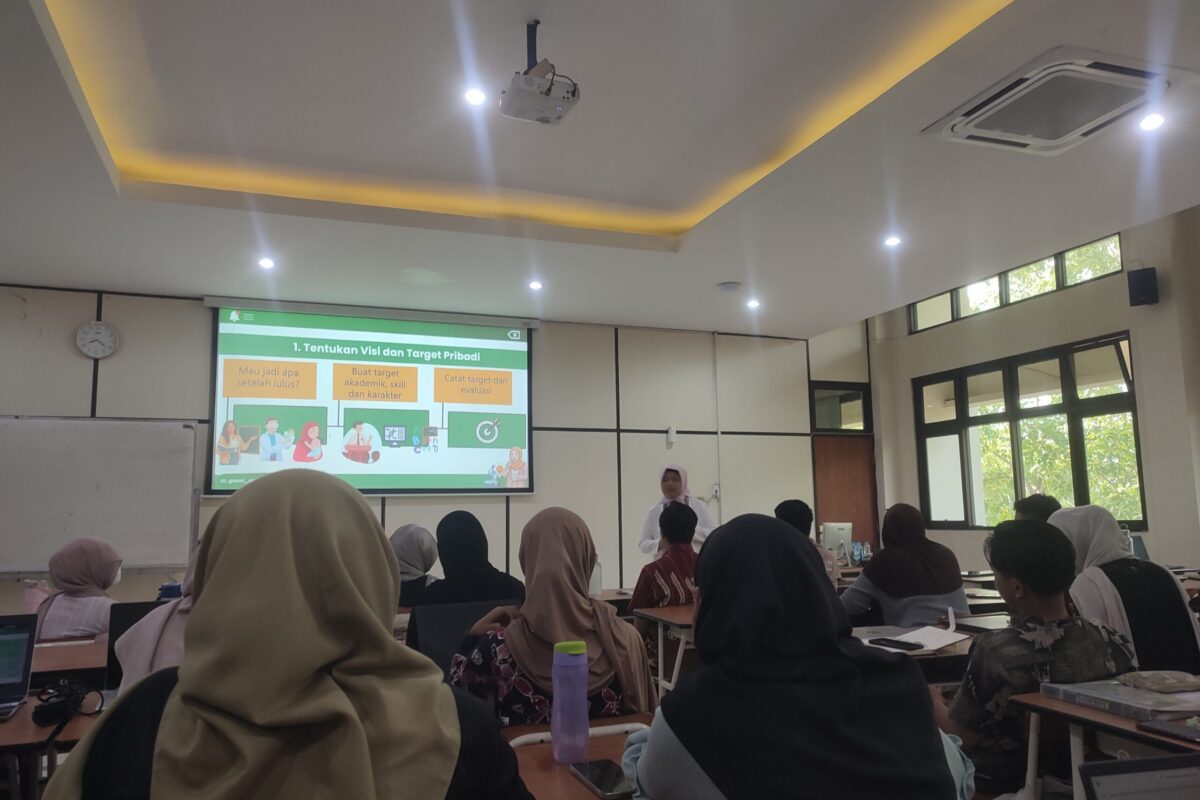
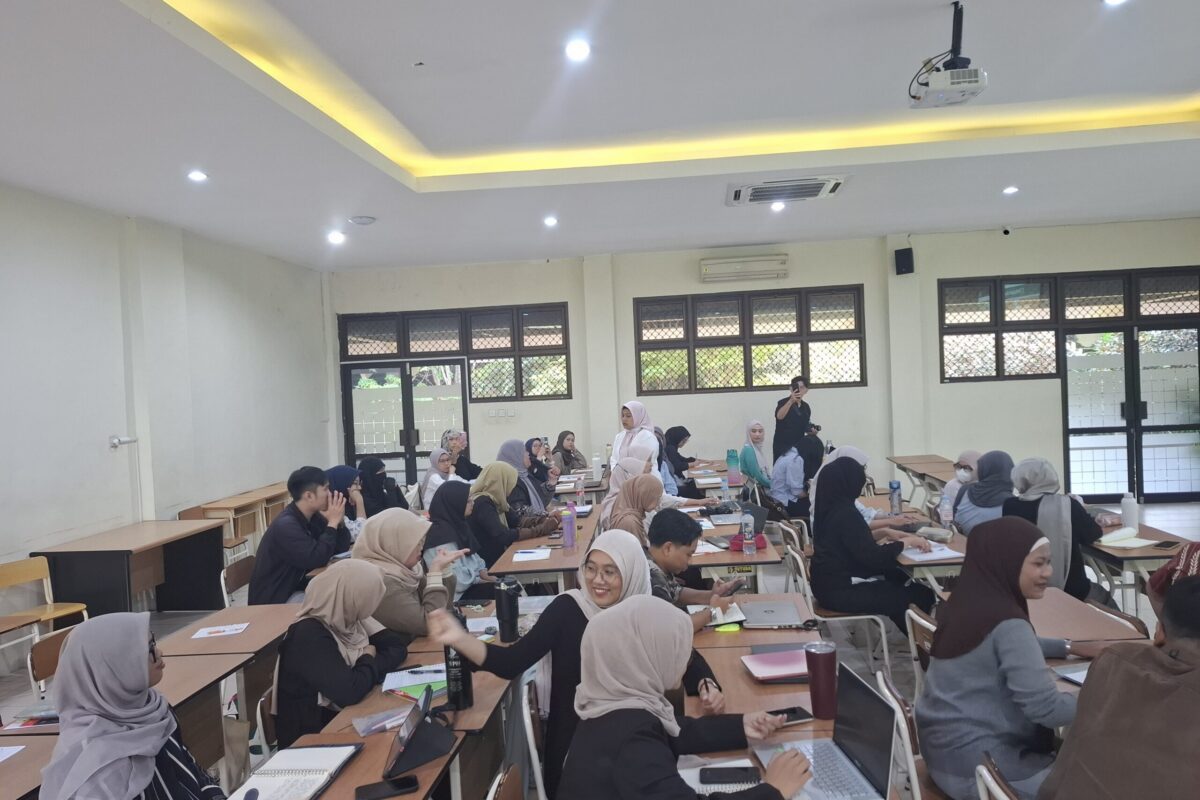
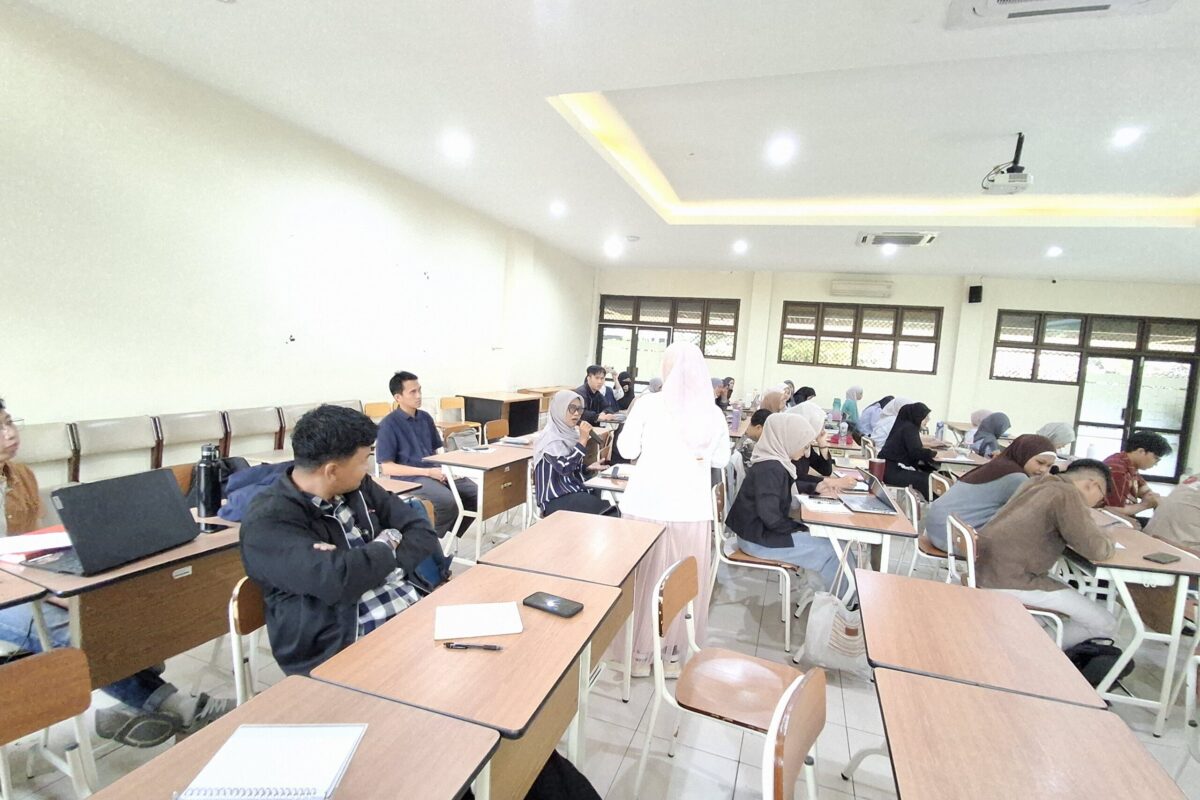
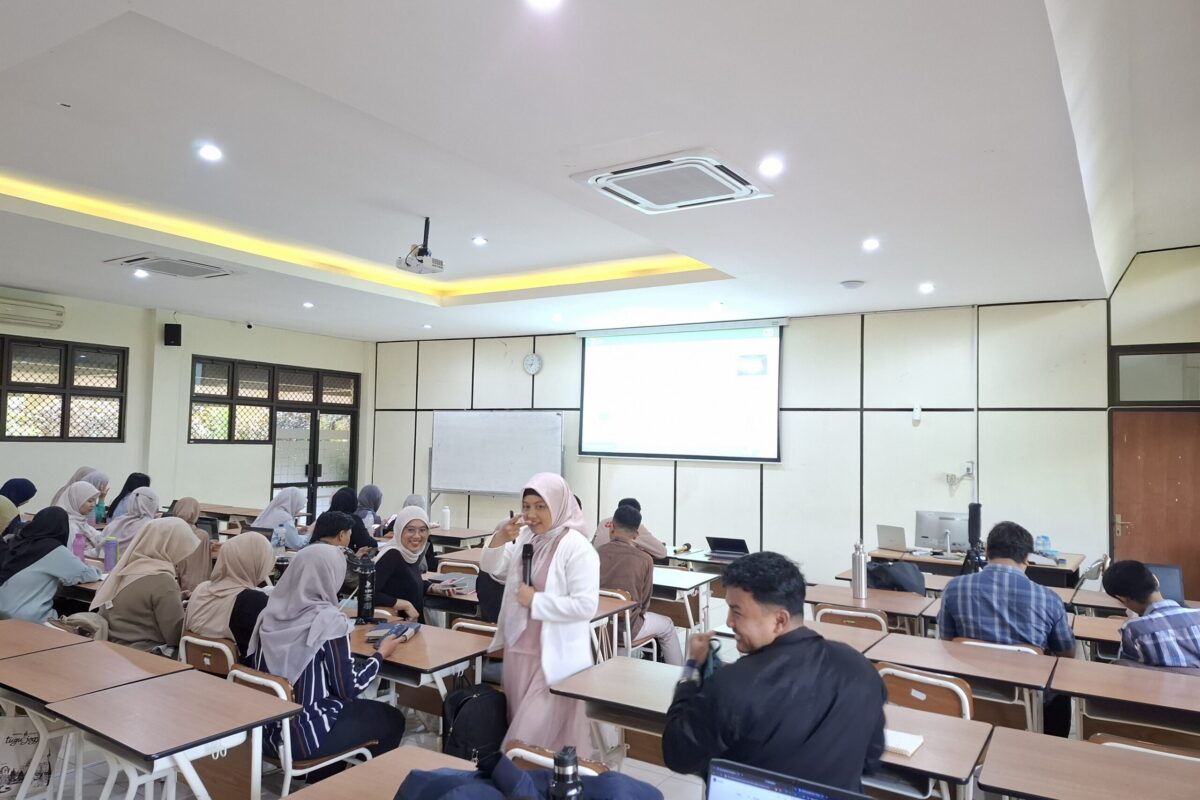
Yogyakarta, Monday (October 5, 2026). The Master’s Program in Biotechnology at the Graduate School of Universitas Gadjah Mada (SPs UGM) hosted a guest lecture titled “Developing Personal Potential and Preparing for a Competitive Career.” Held as part of the Biotechnology Career course, the event featured Desi Utami, S.P., M.Env.Sc., Ph.D.—a lecturer from the UGM Faculty of Agriculture—as the speaker. The session took place in the 3rd-floor lecture hall of the Biotechnology Study Program at the UGM PAU Building.
The lecture aimed to broaden students’ perspectives on recognizing their personal potential, planning competency development, and preparing for the dynamics of the professional world. Students were encouraged to consider the importance of continuous self-development and strategic career planning. This topic is particularly relevant for biotechnology master’s students, given the wide range of career opportunities available to graduates in this field—spanning academia and research, industry, and the government sector.
The presentation and interactive discussion showed students had the opportunity to reflect on their preparation to design their professional paths following the completion of their master’s studies. Career development involves more than just choosing a specific field of work; it encompasses understanding one’s own potential, identifying necessary competencies, and maintaining preparation to learn and adapt to the advancements in science and technology.
Discussions regarding career preparation have become increasingly pertinent for biotechnology students amidst the Industrial Revolution 4.0, which drives the integration of science and technology across various sectors of life. Biotechnology holds a strategic position, as its applications foster innovation in various fields such as food, agriculture, healthcare, the environment, industry, and research. These developments create extensive career opportunities for individuals with biotechnology expertise across academic, research, industrial, and government sectors.
The vast scope of these opportunities also presents challenges for education and human resource development in the field of biotechnology. Diverse professional opportunities must be matched by a strong scientific foundation, enabling graduates to comprehend issues deeply, apply scientific approaches appropriately, and contribute to the development of science-based solutions. Consequently, preparation for the workforce relies not merely on academic degrees but also requires relevant competencies, adaptability, and a commitment to continuous self-development.
Moreover, the nature of biotechnology—intersecting with various scientific fields—makes a multidisciplinary perspective a crucial element in developing graduate competencies. Many contemporary challenges cannot be resolved with a single scientific approach. The ability to view issues from diverse perspectives, collaborate with experts from other disciplines, and integrate knowledge serves as a vital asset for fostering innovation and the broader application of biotechnology.
The Biotechnology Master Program at the UGM Graduate School (SPs UGM) showed this underscores the importance of balancing deep biotechnology expertise with a broad, cross-disciplinary perspective. Master education aims to produce not only graduates who have mastered their field but also individuals’ expertise within a wider context. This combination equips graduates to maintain high scientific standards while ensuring their contributions remain relevant amidst advancements in science and technology and the evolving needs of the professional world.
Within this framework, the “Biotechnology Career” course serves as a learning platform that bridges the academic process with students’ future planning. Personal potential development and career preparation are not treated as separate from scientific mastery; rather, they are integral to building professional readiness grounded in academic competence. Students are encouraged to identify their strengths, determine appropriate development paths, and cultivate the capabilities necessary to pursue their chosen careers.
Author: Novita Kusherdianti
Editor: Burhanul Aqil