
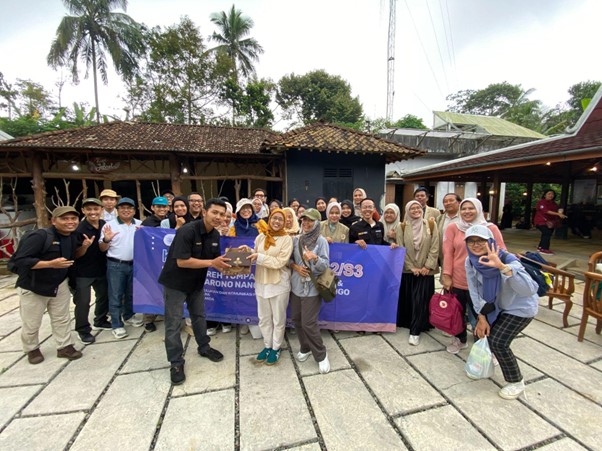
The Development Extension and Communication Master and Doctoral Programs (PKP), Graduate School of Universitas Gadjah Mada, conducted a community service activity with a field lecture on April 26th 2026, in Kulon Progo Regency, Special Region of Yogyakarta. This activity took place in Purwosari Tourism Village, Girimulyo, and the Village Disability Group (KDK) of Jatisarono, Nanggulan.
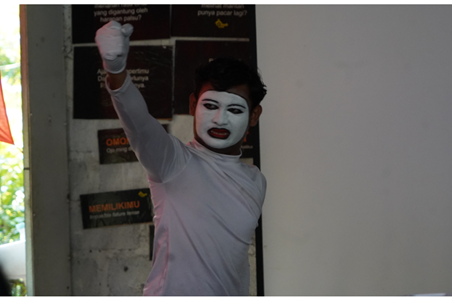
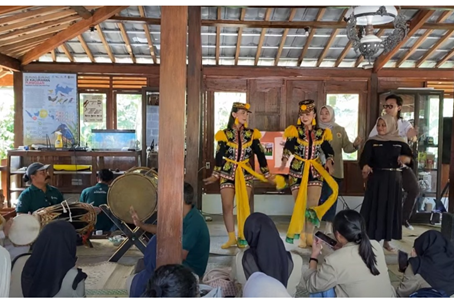
A total of 30 students and 10 lecturers participated in this activity as part of contextual learning to directly understand community empowerment practices. The visit began at the Kopi Menoreh Tumpangsari area in Girimulyo Tourism Village, which was welcomed with an Angguk dance performance as a representation of local cultural identity. The series of activities then continued with a visit to KDK Jatisarono, opened with a pantomime performance by a person with disabilities.
The Chief of the PKP Doctoral Program at UGM, Dr. Alia Bihrajihant Raya, in her remarks emphasized the importance of synergy of academics and the community in promoting participatory and locally grounded development. She highlighted the collaboration as the key to create sustainable empowerment models.
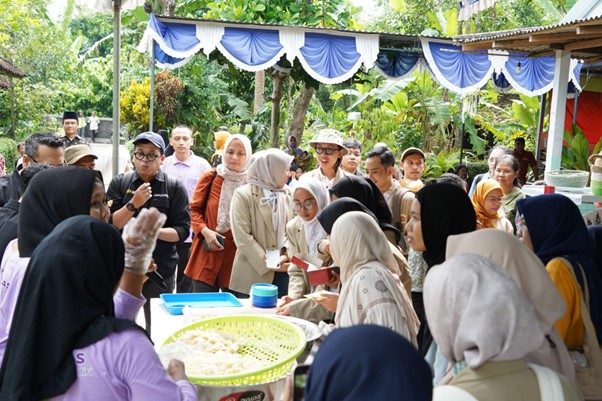
Purwosari Tourism Village itself has developed since 2014 by adopting an agro-edu-tourism concept based on conservation and culture. The Kopi Menoreh Tumpangsari Group, the local community has successfully increased the added value of coffee commodities by implementing selective harvesting systems and integrated processing. The applied economic incentive approach has proven effective in changing farmers’ behavior to be more quality-oriented. Interestingly, a group of young people concerned about issues in their village managed to encourage all residents to transform their farming practices into more competitive ones. These consistently managed new habits have ultimately made Purwosari Village as a reference for agriculture-based tourism rich in biodiversity.
The next visit was conducted at KDK (Village Disability Group) Jatisarono, presenting an inclusive, human-centered empowerment model involving around 150 members consisting of persons with disabilities and facilitators. Various productive activities such as weaving crafts, mushroom processing, and arts development serve as means to enhance capacity while building members’ self-confidence. Activities at KDK were initiated by SIGAB (Center for Inclusion and Disability Advocacy Movement) Yogyakarta. The Development Extension and Communication Master Program is also disability-friendly, currently supporting two students with disabilities studying at the program.
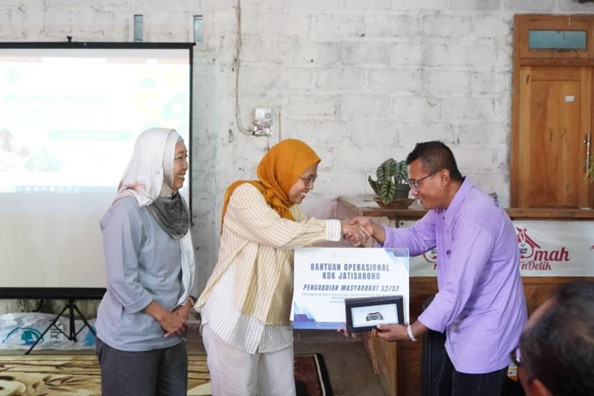
The inclusivity of the Development Extension and Communication Master and Doctoral Programs is also demonstrated with concrete support, with Universitas Gadjah Mada providing operational assistance to KDK Jatisarono to strengthen the sustainability of its empowerment programs.
This field lecture activity aligns with efforts to achieve the Sustainable Development Goals (SDGs), particularly in poverty alleviation, reducing inequalities, and building inclusive and sustainable communities. Students are expected not only to understand concepts theoretically but also to apply them in real societal contexts with this activity.
This activity is also in line with the implementation of SDG number 3 on Good Health and Well-being, number 4 on Quality Education, and number 17 on Partnerships for the Goals.
Author: Natasya, Arni W
Editor: Dr. Alia Bihrajihant Raya