
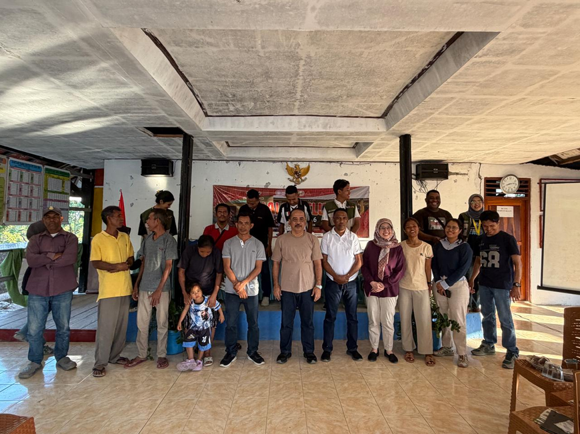
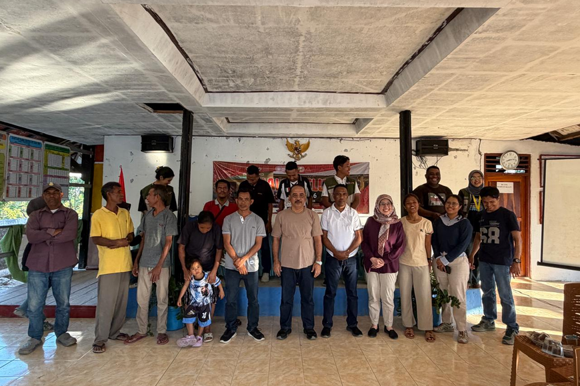
Belu – The Graduate School of Universitas Gadjah Mada (SPs UGM) continues to strengthen its commitment to support community development in Indonesia’s border regions with research and community engagement initiatives. As part of this effort, SPs UGM organized a Focus Group Discussion (FGD) at the Tulakadi Village Office in Atambua, Belu Regency, on Wednesday (July 15th).
The FGD featured two speakers from SPs UGM, Dr. Hilda Ismail, Apt., M.Si., and Prof. Dr.rer.nat. Junun Sartohadi, M.Sc. The event was attended by the Chief of Tulakadi Village and local residents, who actively participated in the discussion.
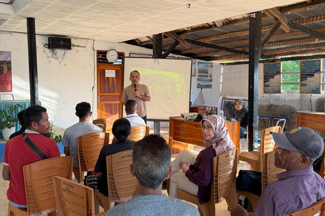
During the session, Dr. Hilda Ismail delivered a presentation on Research for National Pharmaceutical Raw Material Independence, highlighting the importance of utilizing Indonesia’s rich biodiversity to support the country’s self-reliance in pharmaceutical raw materials. She also emphasized the potential of local natural resources to contribute for the community welfare and regional economic development.
Meanwhile, Prof. Junun Sartohadi presented the concept of Adaptive Rorak, a sustainable soil and water conservation technique that can be adapted to local environmental conditions. The approach aims to improve water infiltration, reduce land degradation, and support sustainable land management, particularly in areas facing environmental and climate-related challenges.
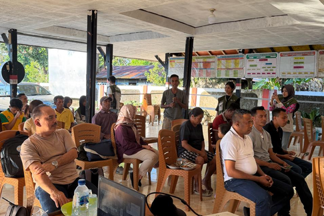
The discussion was highly interactive, with participants enthusiastically asking questions and sharing their experiences regarding local agricultural practices, land management, and the utilization of natural resources. The speakers responded to the participants’ questions with practical insights, creating an engaging and constructive exchange of ideas.
The strong enthusiasm shown by the villagers reflected the relevance of the topics presented to the needs of the local community. The FGD made participants gain new knowledge on how research-based innovations could be applied to address local challenges while maximizing the potential of their surrounding environment.
The activity is part of SPs UGM’s ongoing commitment to ensure that research outcomes extend beyond academic publications and provide tangible benefits to society. Similar initiatives are expected to continue serving as platforms for knowledge sharing, strengthening collaboration between universities and local communities, and supporting sustainable development in Indonesia’s border regions.
Author: Sri Pangesti Tuhu