
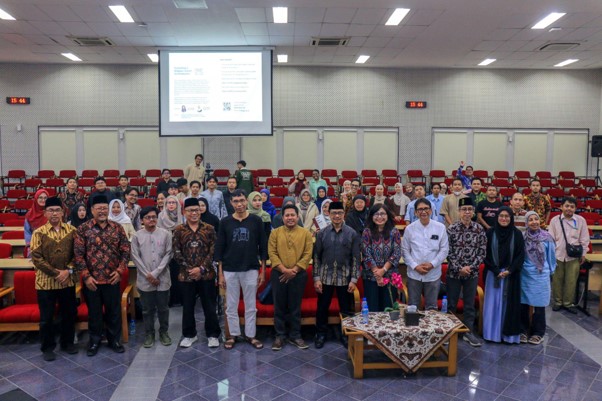
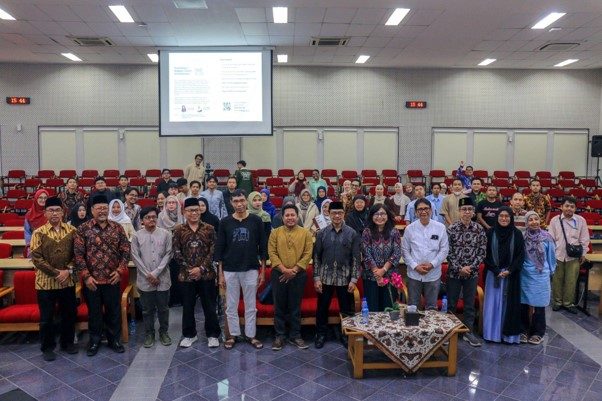
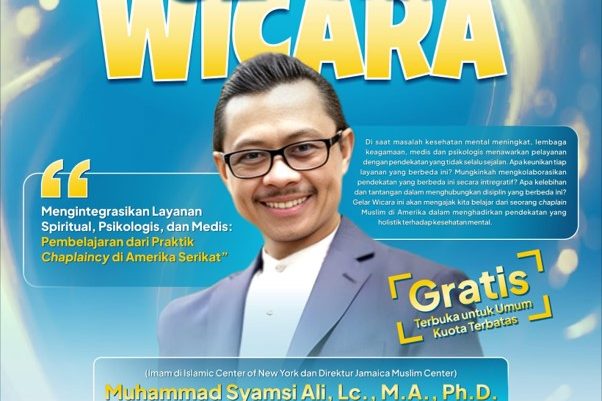
Yogyakarta – The concerns surrounding mental health continue to increase worldwide, the need for more comprehensive and holistic approaches to care has become increasingly evident. Recognizing that human well-being encompasses not only physical and psychological dimensions but also spiritual needs. The UGM Campus Mosque, in collaboration with the Center for Religious and Cross-cultural Studies (CRCS) Universitas Gadjah Mada, organized a public lecture titled “Integrating Spiritual, Psychological, and Medical Services: Lessons from Chaplaincy Practice in the United States” on Saturday, May 23rd 2026, at the Graduate School Building of Universitas Gadjah Mada.
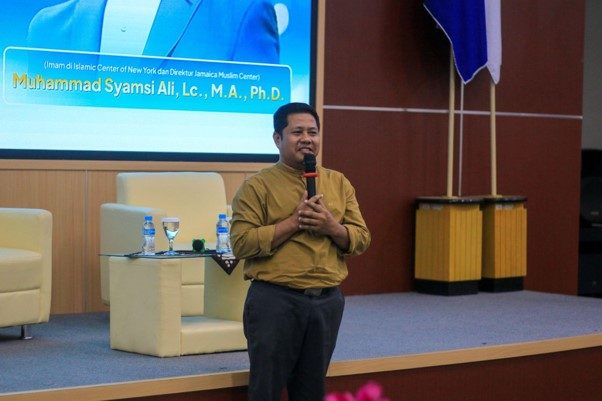
The event featured Muhammad Syamsi Ali, Lc., M.A., Ph.D., Imam of the Islamic Center of New York and Director of the Jamaica Muslim Center, as the keynote speaker. Drawing upon his extensive experience serving Muslim communities in the United States, Syamsi Ali shared valuable insights into the practice of chaplaincy and its role in addressing the increasingly complex challenges of mental health and human well-being.
Syamsi Ali, in his presentation, emphasized contemporary mental health issues that often require more than clinical treatment. Medical and psychological interventions remain essential there are many individuals also seek meaning, hope, and spiritual guidance during times of crisis. Chaplaincy, therefore, serves as an important bridge that connects spiritual care with professional health and counseling services.
He explained that chaplains in the United States work in a variety of settings, including hospitals, universities, correctional facilities, military institutions, and community organizations. Their role is not replacing psychologists or healthcare professionals, but rather to complement existing services by addressing individuals’ spiritual and existential concerns. This collaborative model recognizes human beings as whole persons whose physical, emotional, social, and spiritual dimensions are deeply interconnected.
The discussion also explored the opportunities and challenges of implementing similar approaches in Indonesia. Participants reflected on how educational institutions, religious organizations, and healthcare providers will collaborate more effectively to support mental health and overall well-being. The conversation highlighted the potential of spiritual values and religious communities to foster resilience, social support, and personal growth, particularly in times of uncertainty and distress.
The participants actively engaged in dialogue regarding interdisciplinary approaches to care and the importance of creating inclusive support systems that respect diverse backgrounds and beliefs. The session provided a valuable platform for exchanging ideas on how spiritual care can be integrated into broader efforts to promote mental health and human flourishing.
The UGM Campus Mosque, as part of its ongoing commitment to addressing contemporary societal issues, continues to facilitate meaningful discussions that bridge faith, knowledge, and public service. This public lecture not only introduced participants to international experiences in chaplaincy practice but also encouraged critical reflection on the development of more holistic, compassionate, and sustainable models of care in Indonesia.
The event, by bringing together perspectives from spirituality, psychology, and medicine, underscored the importance of interdisciplinary collaboration in promoting human well-being and fostering healthier communities.
Author: Khoirul Mujazanah