
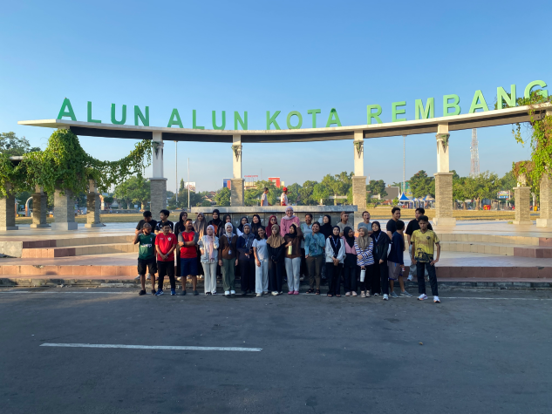
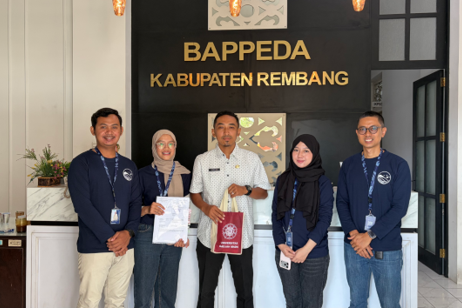
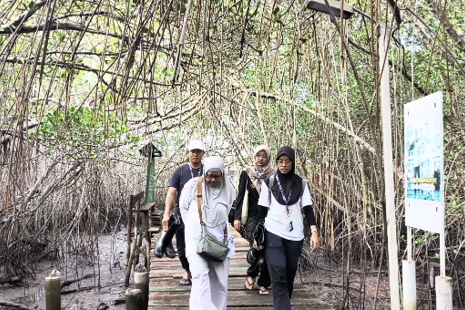
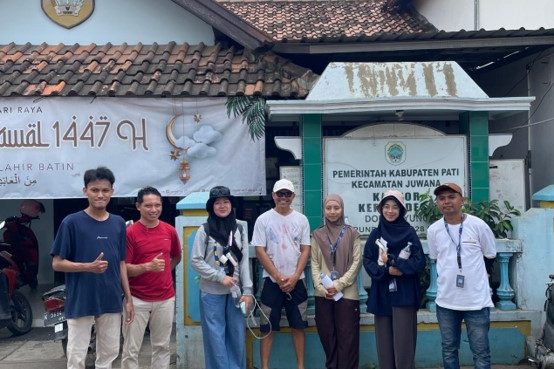
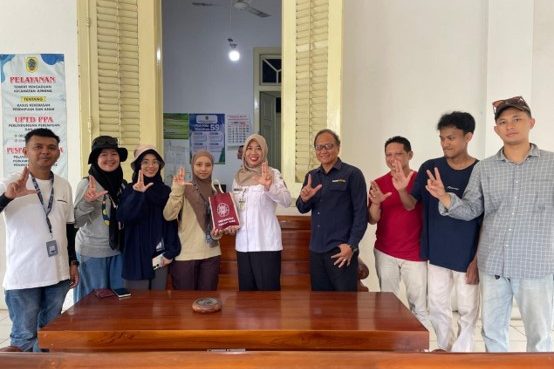
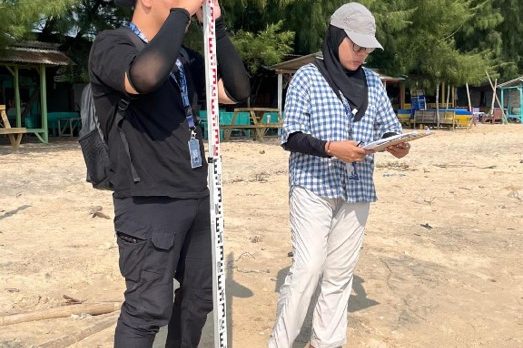
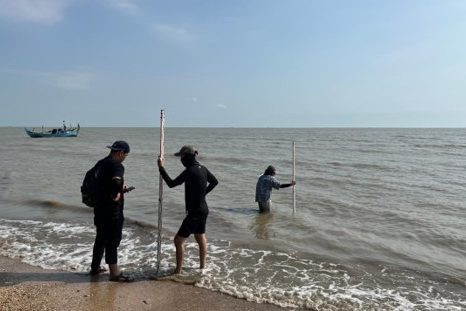
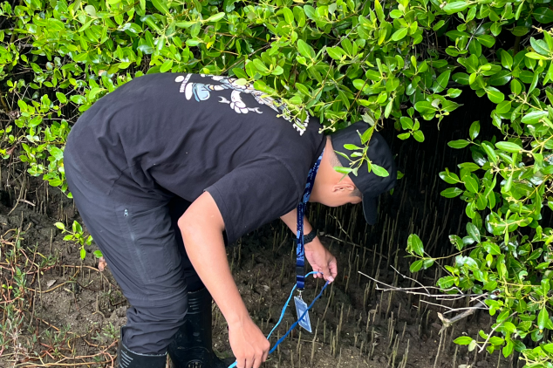
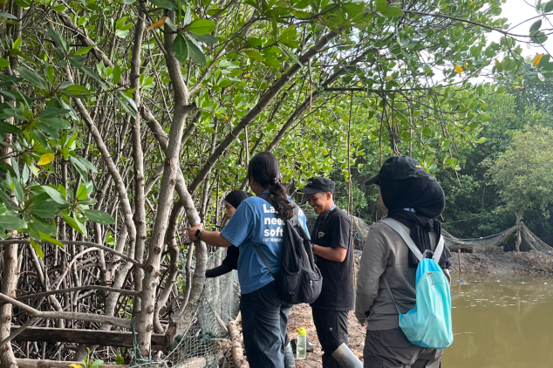
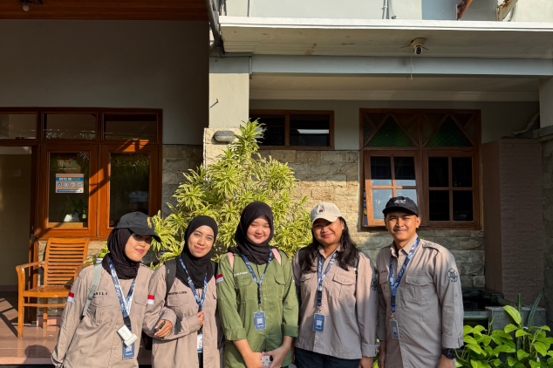
Yogyakarta, June 29th 2026 – The Environmental Science Master’s Program, Graduate School of Universitas Gadjah Mada (SPs UGM) successfully organized the 2026 Field Work Lecture (KKL) in the Northern Coast of Java, specifically in Pati and Rembang Regencies. This field research activity took place intensively from June 22nd to 25th 2026, involving dozens of students and supervising lecturers. In this KKL, postgraduate students were directly deployed to observe, measure, and analyze various complex environmental problems occurring in the coastal areas. Participatory observation and spatial data mapping were carried out comprehensively to validate the factual conditions experienced by local communities. This event served as a crucial momentum to connect academic theories learned in the classroom with the reality of ecological challenges in the field.
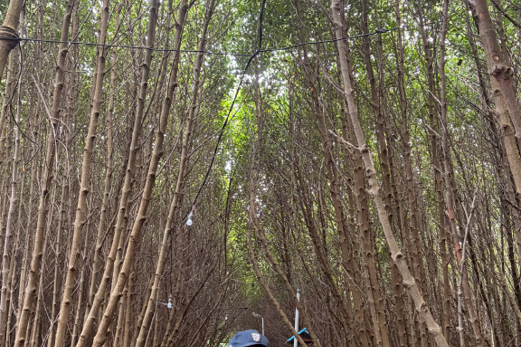
This field research adopted a multidisciplinary approach divided into four major study groups, namely physical, biotic, social, and applied technology aspects. In the physical group, the research focused on assessing the level of coastal abrasion, the expansion of seawater intrusion into residential wells, and flood vulnerability mapping in the Juwana Watershed. Meanwhile, the biotic group specifically investigated the potential of carbon reserves in the Pasar Banggi mangrove ecosystem, recorded vegetation structures, and identified the diversity of avifauna species. The data collected from these aquatic and terrestrial areas are expected to provide a complete picture of the local environmental carrying capacity. The integration of these various variables is considered highly essential to understand the cause-and-effect chain of the ongoing environmental degradation.
This KKL activity was analyzing natural conditions and also highlighted socio-economic aspects and the application of sustainable development technologies in society. The students mapped the quality of the residential environment to observe the correlation of economic conditions and access to sanitation and decent housing layouts. Furthermore, evaluations of waste management technologies, clean water supply, and flood mitigation infrastructure were conducted to discover adaptive solutions. Based on field findings, there is still a gap of macro-level infrastructure provision by the government and the availability of appropriate technology at the community level. Therefore, various applied technological innovations that are low-cost and easy to operate independently by coastal communities are highly needed.
The implementation of this Field Work Lecture proves the strong commitment of the Master of Environmental Science SPs UGM in tangibly and measurably responding to the threat of the climate crisis. The synthesis of this mini-research will later be compiled into a strategic recommendation document for local governments regarding disaster mitigation and regional spatial planning policies. This academic effort contributes directly to the achievement of the Sustainable Development Goals (SDGs), especially in providing quality education through integrated field research experience (SDG 4). In-depth studies on housing feasibility and coastal infrastructure management strongly support the efforts to realize sustainable cities and communities (SDG 11). Furthermore, this mangrove and groundwater management research serves as a manifestation of tangible action in handling climate change (SDG 13) as well as conserving life below water (SDG 14).
Author: Berlian Belasuni