
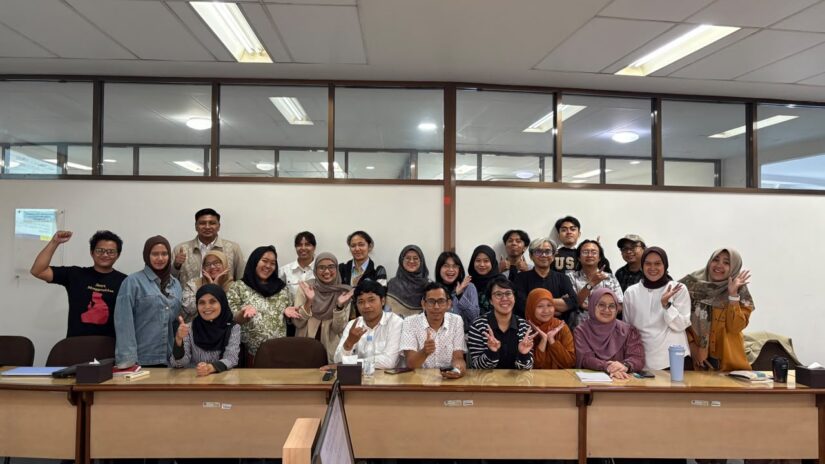
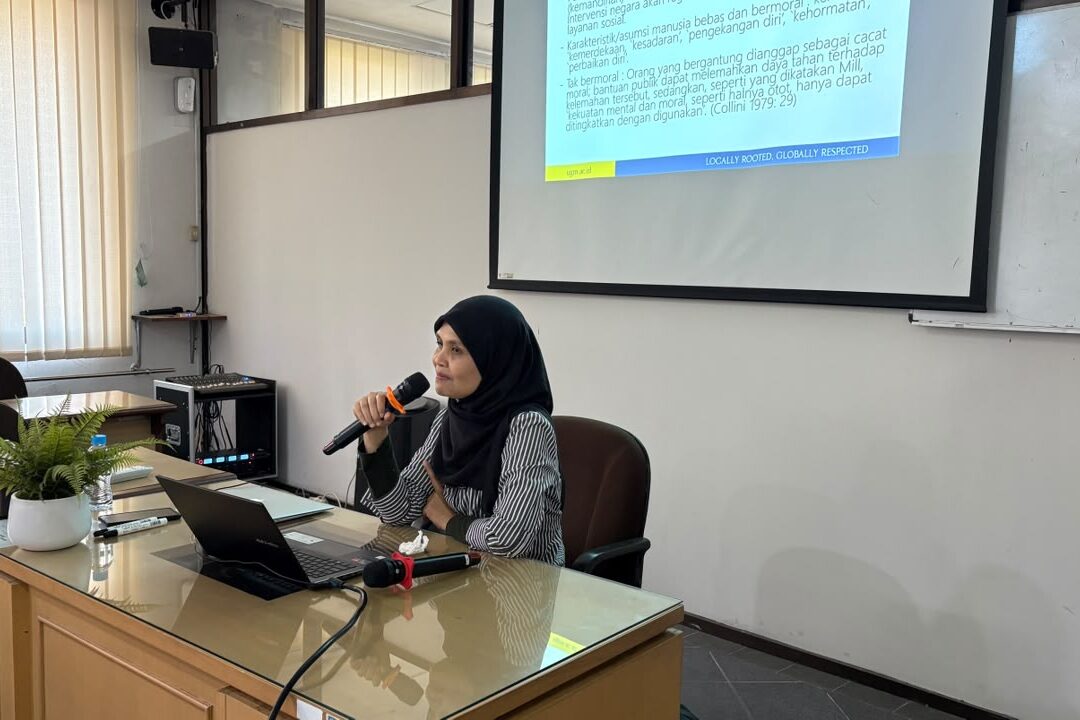
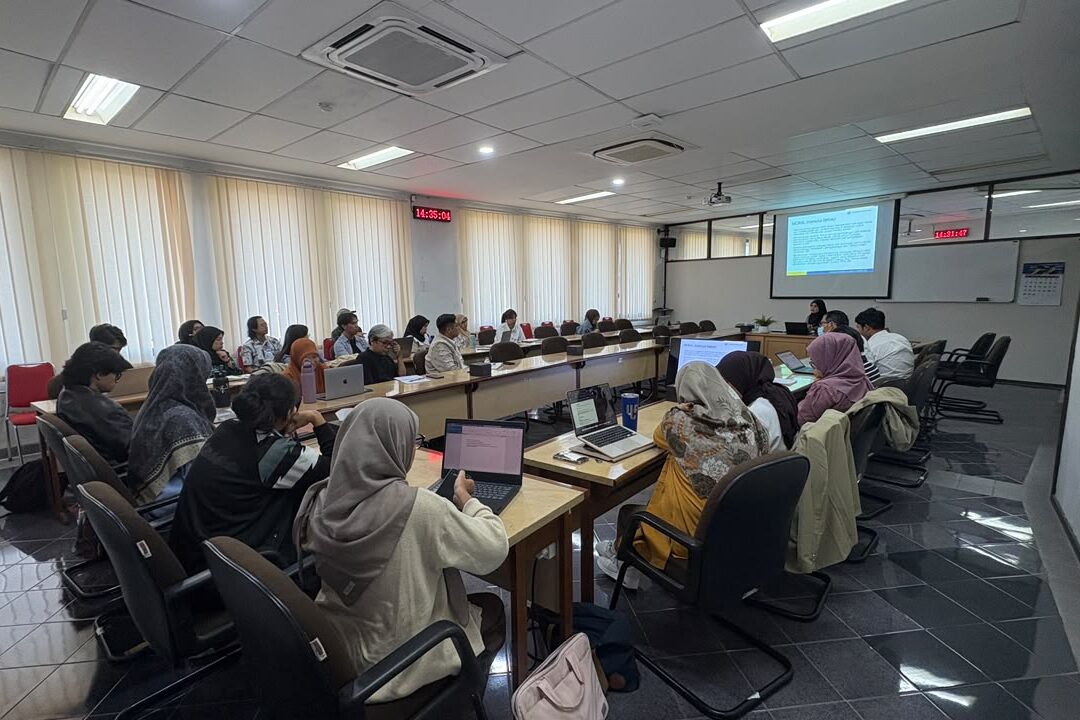
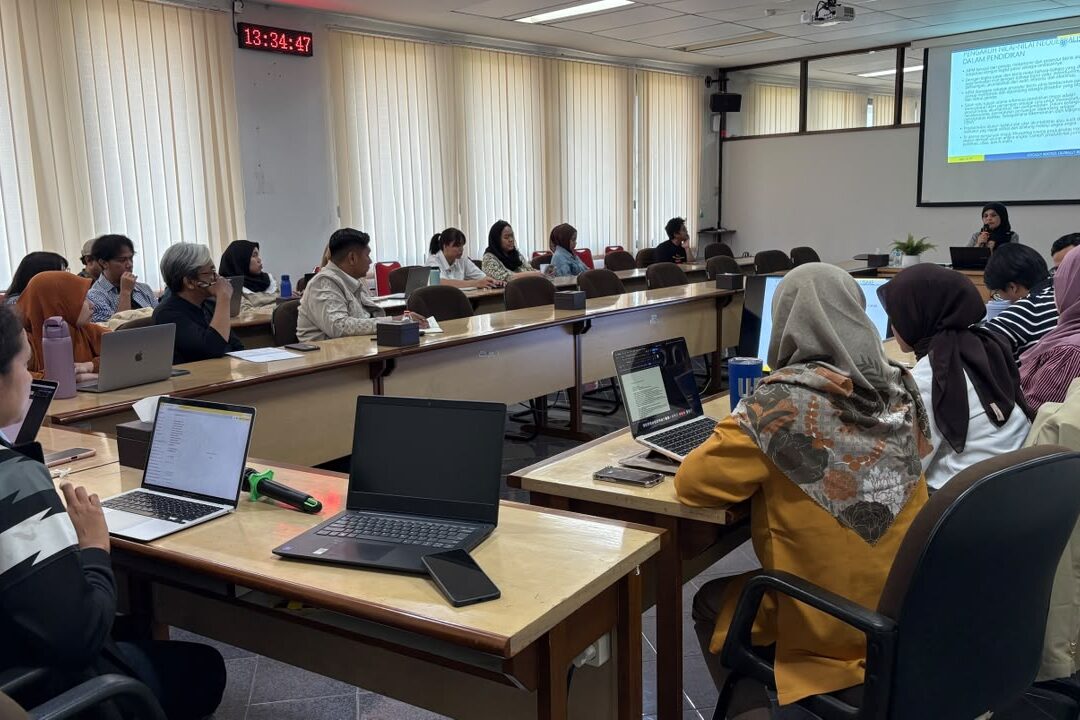
Yogyakarta, 23rd September 2026 — The Media and Cultural Studies (KBM) Program, Graduate School, Universitas Gadjah Mada (UGM), held the Discussion Series: Gender Studies in Higher Education on Wednesday, 23rd September 2026. The event took place in the Meeting Room A, 5th Floor, Unit 1, Graduate School, UGM, featuring Prof. Nurdiana Gaus, S.S., PGDIP., Ph.D. as the speaker and attended by members of the KBM community.
The first session of the discussion series addressed the theme “Neoliberalism and the Gendered University.” The discussion explored how neoliberalism can be understood as an economic ideology but also as a technology of government that influences how individuals and institutions govern themselves through mechanisms such as competition, productivity, efficiency, evaluation, and individual responsibility.
The discussion, in the context of higher education, examined how these values can be embedded in university life. Universities increasingly face demands related to productivity, performance, efficiency, competition, and various forms of quantitative measurement. Students may also be positioned as individuals who are expected to continually develop themselves with education, skills, experience, networks, and various forms of achievement as investments for their future.
The discussion also addressed New Public Management (NPM) as an approach that brings principles associated with private-sector management into the administration of public institutions, including educational institutions. Targets, performance indicators, evaluation, productivity, and outcome measurement become part of mechanisms that can shape the behavior of both individuals and institutions. Academic productivity may be represented with publications, citations, research, grants, conferences, and other performance indicators.
These perspectives were then connected to the concept of the gendered university, which refers to the idea that universities are not entirely gender-neutral spaces. Norms, language, organizational structures, workplace cultures, symbols, and standards of success within academic environments may have different consequences for individuals with different social positions and responsibilities.
The discussion also highlighted academic cultures that emphasize competition, productivity, mobility, publication, individual achievement, and extensive availability of time. A gender perspective encourages further examination of whether the standards of success used within universities are genuinely neutral and how particular social conditions may influence individuals’ ability to meet those standards. Thus, gender studies in higher education is concerned not only with the representation of women within institutions but also with how norms, organizational structures, workplace cultures, and standards of success are constructed.
Another topic discussed was the role of higher education with the perspective of liberal education. Education is not solely directed toward meeting labor-market needs but also serves to develop individuals who are capable of critical thinking, understanding different perspectives, developing reasoning, and participating in public life. Students are not merely positioned as consumers of knowledge but also as producers of knowledge through reading, questioning, conducting research, engaging in discussion, generating ideas, and sharing knowledge with society.
In this context, participants were invited to reflect on their experiences as students amid various academic performance demands. Grades, GPA, publications, achievements, certifications, organizational activities, and work experience can all form part of an academic journey. At the same time, students are encouraged to question how standards of success are constructed, who determines them, what remains invisible within quantitative measures, and how such standards may affect different groups.
The discussion also introduced the concept of the greedy institution to examine how institutions may place extensive demands on individuals’ time, energy, loyalty, and attention. In academic contexts, expectations to remain productive, publish research, participate in activities, meet targets, build networks, and improve performance can increasingly blur the boundaries of academic and personal life.
This Discussion Series showed KBM UGM provided a space for dialogue and critical reflection on the relationship of neoliberalism, gender, and higher education. The discussion examined not only how policies, standards, indicators, and evaluation mechanisms affect institutions, but also how individuals shape and govern themselves within academic environments.