
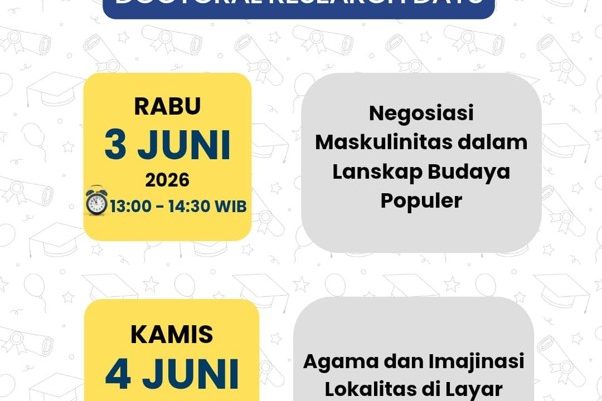
Yogyakarta – The Media and Cultural Doctoral Program, Graduate School of Universitas Gadjah Mada (UGM), successfully held Doctoral Research Days 2026 on 3rd–4th June 2026. Conducted online, the event served as an academic forum for doctoral graduates to disseminate their research findings while fostering critical discussions on contemporary issues in media and cultural studies.
Doctoral Research Days, as part of the program’s commitment to strengthening scholarly engagement and research dissemination, brought together doctoral graduates, faculty members, students, and researchers to explore diverse perspectives on culture, media, identity, and society. The event showcased how media and cultural studies contribute to understanding complex social transformations occurring in contemporary life.
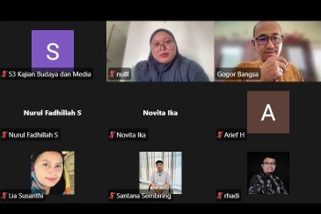
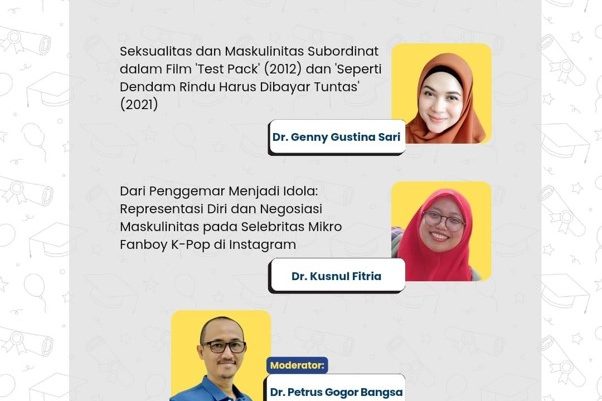
The first session, held on 3rd June 2026, was themed “Negotiating Masculinity in the Landscape of Popular Culture.” Moderated by Dr. Petrus Gogor Bangsa, the session featured presentations by Dr. Genny Gustina Sari and Dr. Kusnul Fitria.
In her presentation, Dr. Genny Gustina Sari examined representations of sexuality and subordinate masculinity in Indonesian cinema through a study of Test Pack (2012) and Vengeance Is Mine, All Others Pay Cash (2021). Her research highlighted how masculinity is not a fixed or dominant category, but rather a cultural construct that is continually negotiated with social, cultural, and gender relations.
Meanwhile, Dr. Kusnul Fitria explored digital popular culture on her study of K-pop fanboy micro-celebrities on Instagram. Her research revealed how male fans actively construct self-representations and negotiate masculine identities within social media environments, challenging conventional assumptions about fandom and gender performance.
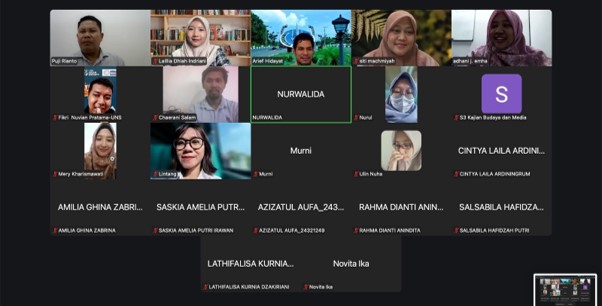
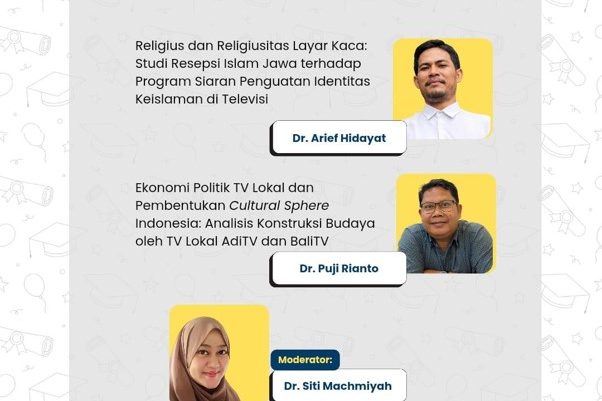
The second session, conducted on 4th June 2026, focused on “Religion and the Imagination of Locality on Television.” The discussion featured Dr. Arief Hidayat and Dr. Puji Rianto, with Dr. Siti Machmiyah serving as moderator.
Dr. Arief Hidayat presented his research on the reception of Islamic television programs among Javanese Muslim audiences. His study demonstrated that audiences are not merely passive recipients of media messages; rather, they actively interpret television content through the lens of local cultural experiences, religious values, and everyday practices.
Dr. Puji Rianto, in the same session, discussed the political economy of local television in Indonesia in a study of AdiTV and BaliTV. His research examined the role of local broadcasters in shaping Indonesia’s cultural sphere and preserving local identities amid the growing influence of national and global media industries.
These presentations made participants gain insight into how media and cultural studies can illuminate broader questions surrounding identity formation, cultural representation, religion, power relations, and media transformation. The discussions also highlighted the interdisciplinary nature of the field and its relevance to understanding contemporary social issues.
Doctoral Research Days formed part of the Doctoral Program’s ongoing effort to strengthen research culture and scholarly exchange within the academic community. Beyond providing a platform for graduates to share their doctoral research, the event also offers current students valuable opportunities to engage with completed doctoral projects and learn from the experiences of fellow scholars.
The event, by bringing together researchers working on diverse themes, reinforces the role of Media and Cultural Studies as a critical field for examining the intersections of culture, communication, media, and society. The Doctoral Program hopes that initiatives such as Doctoral Research Days will continue to foster meaningful academic dialogue and contribute to the advancement of knowledge in the humanities and social sciences.
Author: Khoirul Mujazanah