
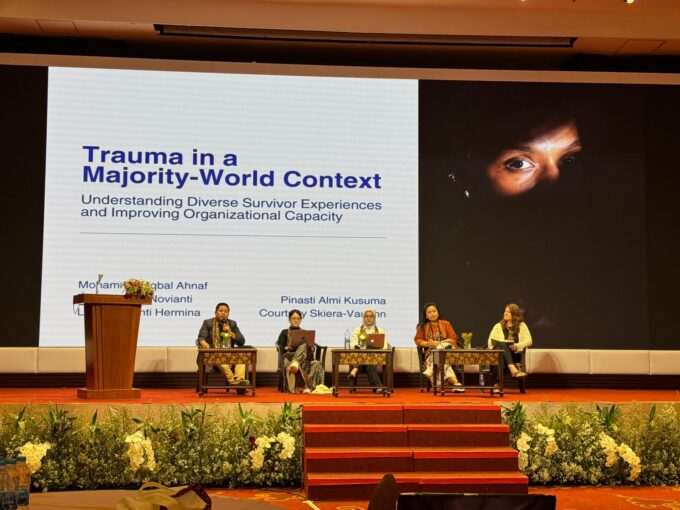
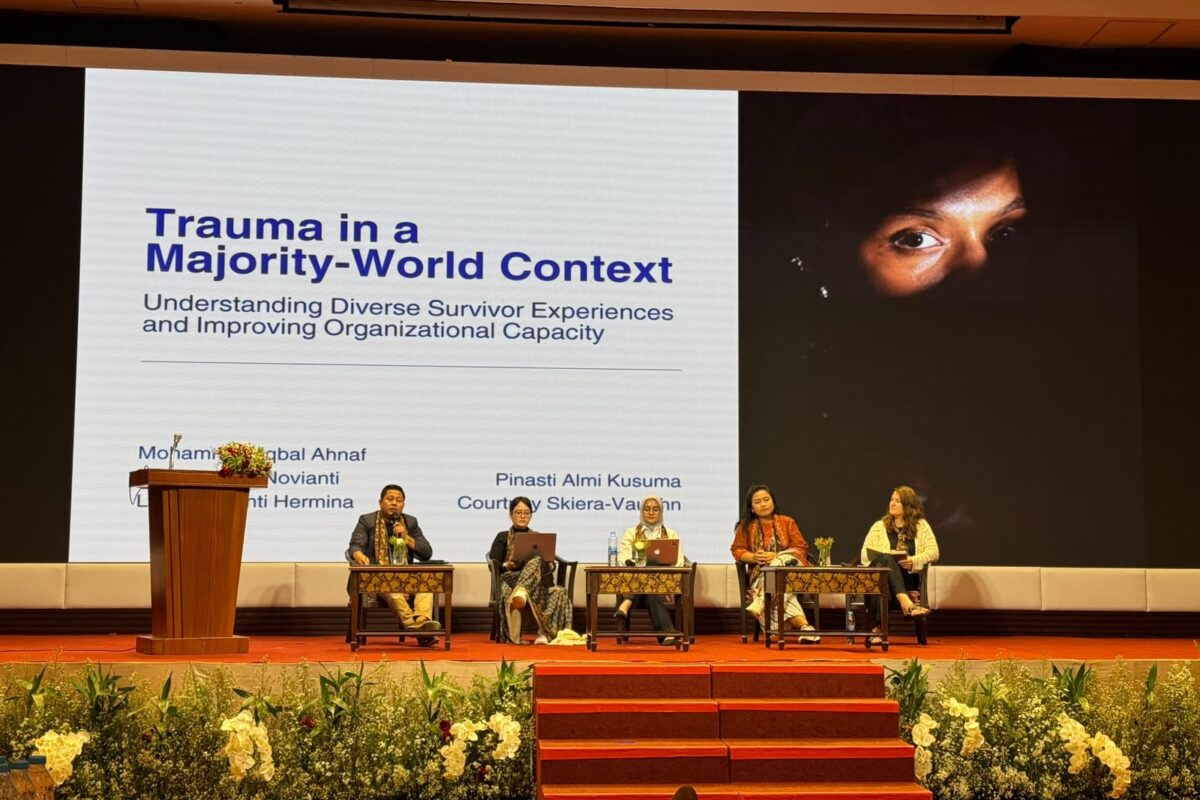
Chiang Mai, Thailand — Pinasti Almi Kusuma, S.Psi., a student of the Religious Studies and Cross-Cultural Studies Master’s Program (CRCS) at the Graduate School of Universitas Gadjah Mada (UGM), together with the CRCS UGM research team, participated in the Asia Region Anti-Trafficking (ARAT) Conference, held from 21st–23rd July 2026 at The Empress Hotel/Empress Convention Centre in Chiang Mai, Thailand.
The regional conference brought together researchers, academics, practitioners, activists, civil society organizations, and survivors from various countries to discuss issues surrounding modern slavery and human trafficking (MSHT) and to develop approaches that are more responsive to survivors’ experiences.
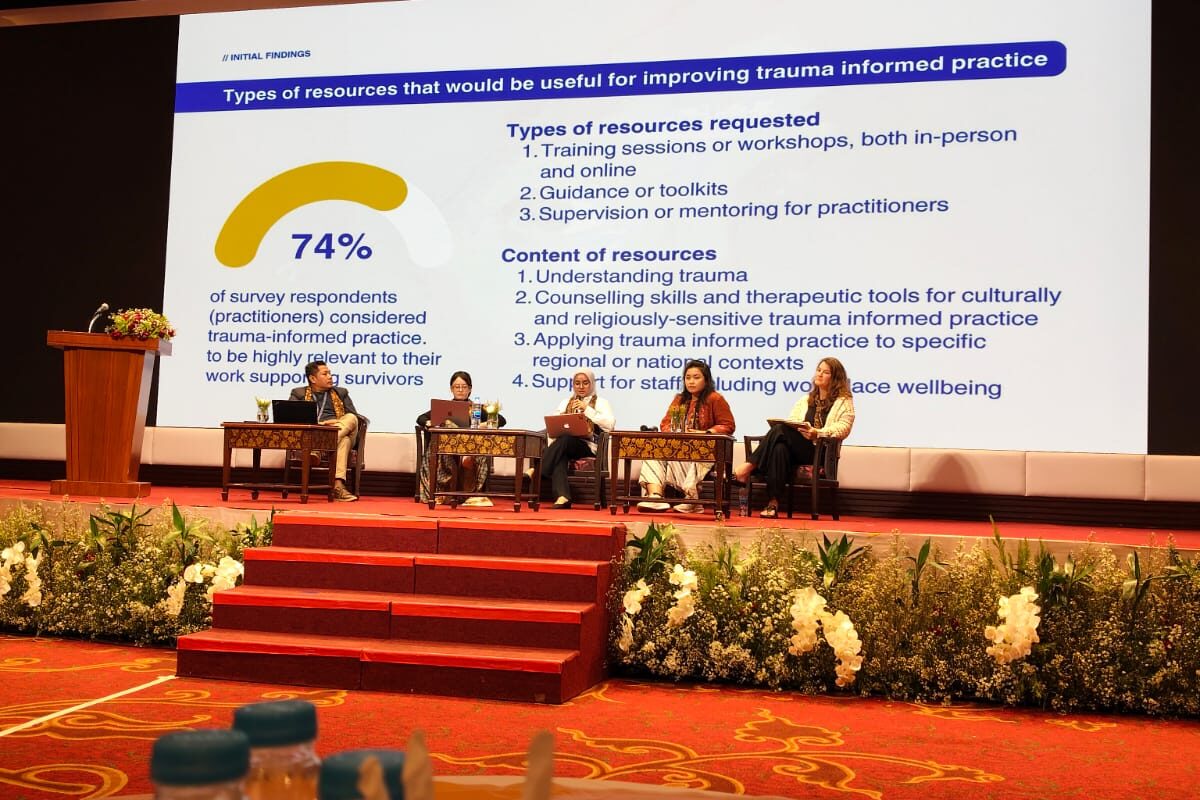
The CRCS UGM research team at the conference presented the initial findings of a study entitled “Trauma in a Majority-World Context: Understanding Diverse Survivor Experiences and Improving Organizational Capacity,” a collaborative research project of UGM and The Salvation Army.
The study seeks to understand how MSHT survivors make sense of their experiences of trauma across diverse cultural and religious contexts. The research responds to concerns about the dominance of psychological perspectives developed within WEIRD contexts—Western, Educated, Industrialized, Rich, and Democratic—while recognizing that people in Majority World countries experience different social, cultural, and religious contexts.
The initial findings indicate that trauma is not necessarily understood in a uniform way. In religious contexts, for example, traumatic experiences may be understood as fate, a test, God’s will, a spiritual attack, divine punishment, or an experience of inner devastation. Meanwhile, within cultural and social contexts, trauma may manifest with emotional distress, tendencies toward self-blame, and the normalization of violence and exploitation.
One of the experiences identified in the study illustrated how repeated violence within a community may come to be perceived as ordinary and normalized. On the other hand, some survivors interpreted their past experiences without blaming God or others, as the decisions they made at the time were influenced by economic needs.
The study involved 47 survey respondents, 22 participants in listening dialogues, 12 survivors interviewed individually, and 6 staff members interviewed. These findings highlight the importance of applying trauma-informed practices in ways that are not one-size-fits-all, but instead take into account individuals’ cultural and religious backgrounds, as well as the ways in which they make sense of their experiences of violence.
Participation in the ARAT Conference also provided CRCS UGM with an opportunity to strengthen academic networks and international collaboration while broadening its perspectives on trauma, human trafficking, and modern slavery. Perspectives from psychology, religious studies, and cross-cultural studies are important for developing approaches that are more contextual and centered on survivors’ experiences.
The UGM team consisted of Dr. Mohammad Iqbal Ahnaf, Dr. Jonathan Davis Smith, Leyla Adrianti Hermina, M.A., Lucia Peppy Novianti, M.Psi., Psychologist, and Pinasti Almi Kusuma, S.Psi. The event also involved international partners, including Prof. Emma Tomalin from the University of Leeds, United Kingdom; Phoebe Burton from The Salvation Army United Kingdom & Ireland; and Dr. Courtney Skiera-Vaughn, a Trauma-Informed Practice Consultant from the United States of America.
This forum showed CRCS UGM demonstrated its commitment in advancing interdisciplinary research and strengthening academic contributions to the understanding of humanitarian issues, particularly with the perspectives of religion, culture, and survivors’ experiences.
Writer: Pinasti Almi Kusuma
Editor: Arfikah Istari