
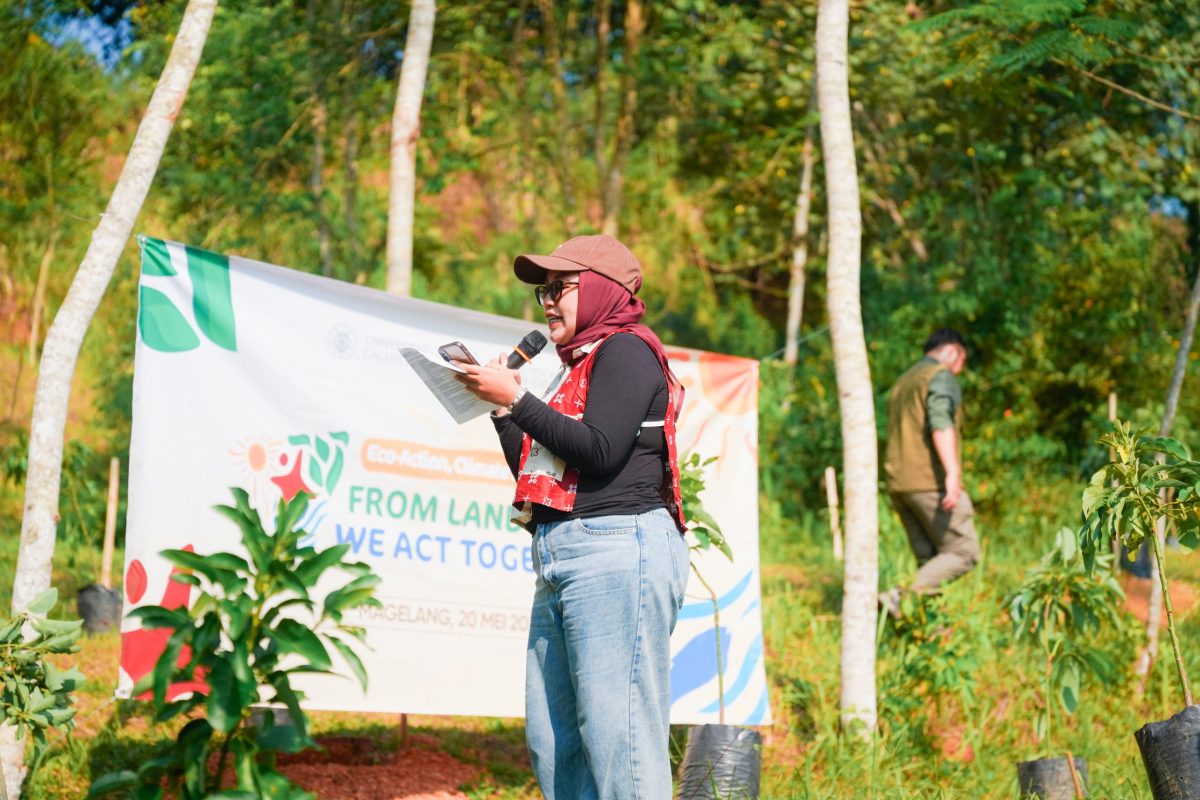
Magelang, May 20, 2026 – The Environmental Science Master Program at Universitas Gadjah Mada (UGM) organized the 2026 World Environment Day event under the theme “Eco Action, Climate Reaction: From Land to Water We Act Together” in the Bompon Watershed (DAS Bompon) area and the MOCAF Industry in Kajoran District, Magelang Regency. This activity represented a tangible manifestation of the program’s academic commitment to strengthen ecological awareness, expanding field-based learning experiences, and fostering multi-stakeholder collaboration in addressing the challenges of climate change and environmental degradation.
The event involved students from UGM’s Environmental Science, students from various study programs Master and Doctoral Programs, lecturers, and local partners. It was designed as a platform for integrating scientific knowledge, conservation practices, and community empowerment. The experiential learning approach showed participants gained conceptual understanding of environmental issues and also engaged directly in practical activities that contribute to natural resource conservation efforts.
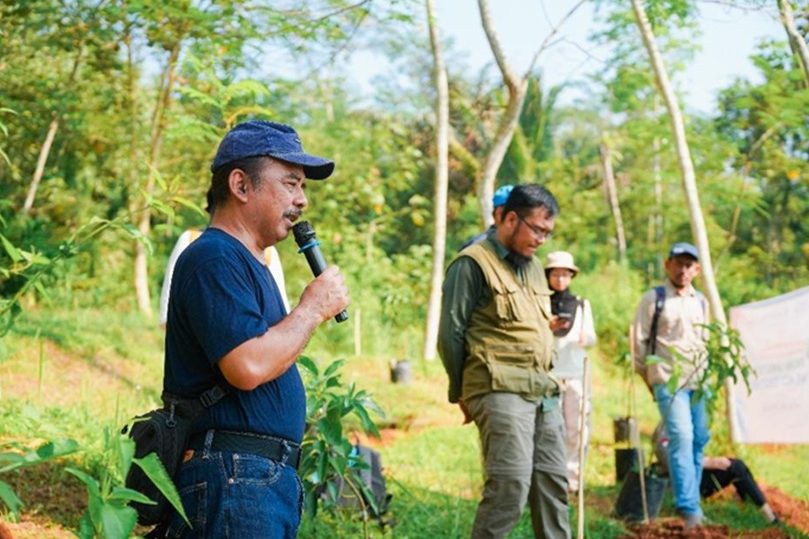
The series of activities began with an opening session and an expert talk delivered by Prof. Dr. rer. nat. Junun Sartohadi, M.Sc. In his speech, he emphasized the importance of land conservation as a fundamental strategy for maintaining the sustainability of watershed ecosystems. Sustainable land management plays a strategic role in enhancing environmental resilience, reducing the risk of hydrometeorological disasters, and supporting adaptation efforts in response to the increasing complex climate change challenges.
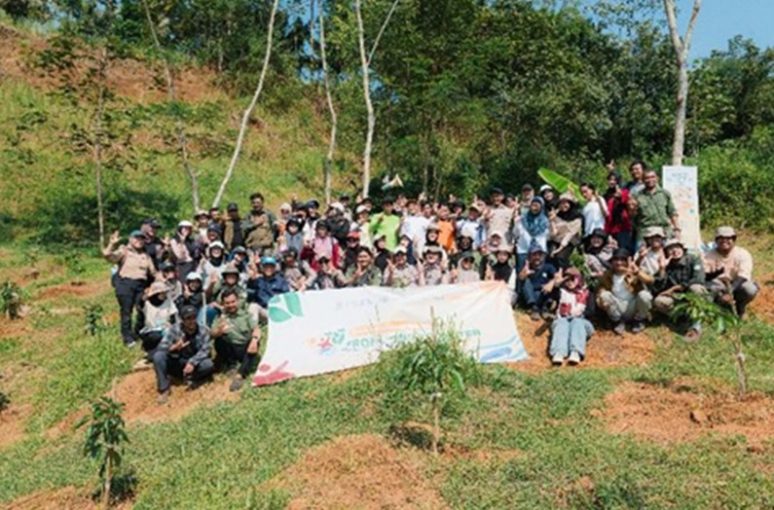
Participants, as an implementation of the knowledge shared during the session, carried out a tree-planting activity in the Bompon Watershed area. This initiative served both as a symbol and a concrete step toward supporting land rehabilitation, increasing vegetation cover, reducing erosion, and strengthening the ecological functions of water catchment areas. The activity also highlighted the importance of youth involvement in environmental sustainability with actions that directly impact ecosystem quality.
Participants subsequently took part in a river trekking activity and the release of local fish fingerlings as part of efforts to restore aquatic ecosystems. These activities made participants gain a deeper understanding of the interconnection of terrestrial environmental conditions and the health of river ecosystems as an integrated socio-ecological system. The release of local fish species is expected to support the preservation of aquatic biodiversity while raising awareness of the importance in maintaining river water quality as a vital resource for local communities.
The event also featured an educational visit to the MOCAF (Modified Cassava Flour) Industry, providing insights of the development of sustainable industries based on local resources. Participants learned about the process of transforming cassava into MOCAF flour, the production chain, and opportunities for local economic development aligned with environmental sustainability principles. The visit demonstrated how economic sectors can grow with utilization of local potential without neglecting social and ecological sustainability aspects.
Overall, the 2026 World Environment Day activities were successfully implemented and achieved their intended objectives. All participants demonstrated active engagement throughout both the field activities and educational sessions. More than an annual commemoration, this event served as a transformative learning platform that connected scientific knowledge, environmental action, and community collaboration in building a more sustainable future.
Author: Hikmatun Lampadjoa
Editor: Siti Muyasaroh