
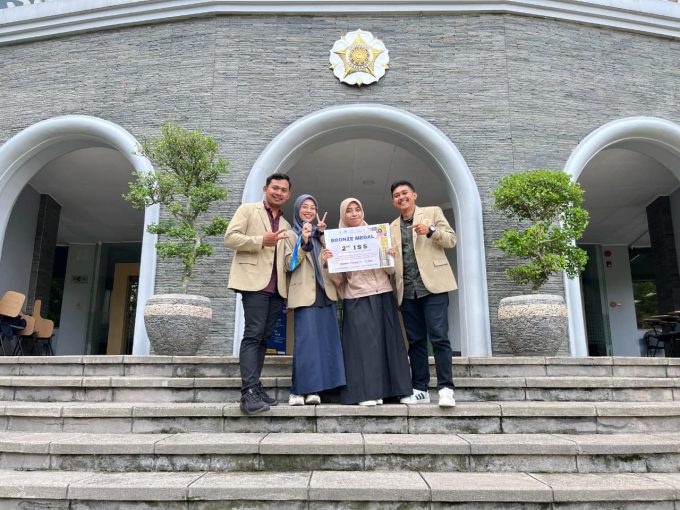
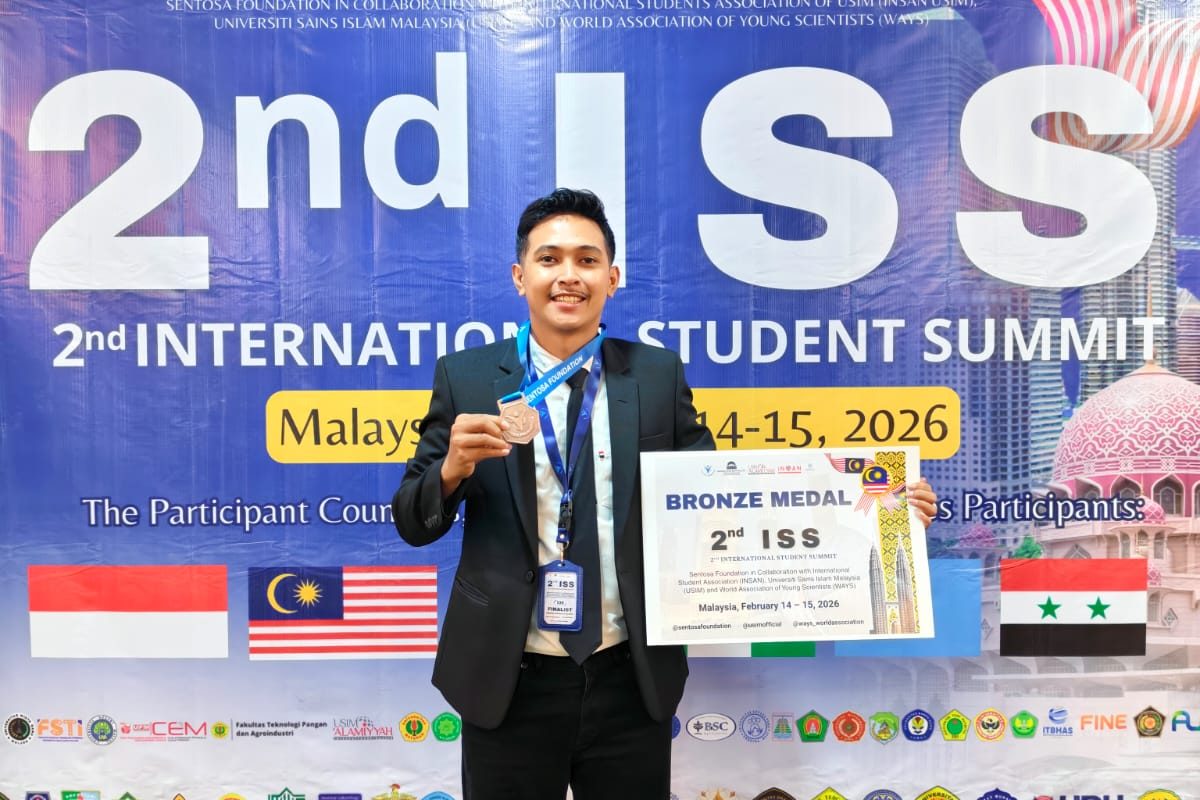
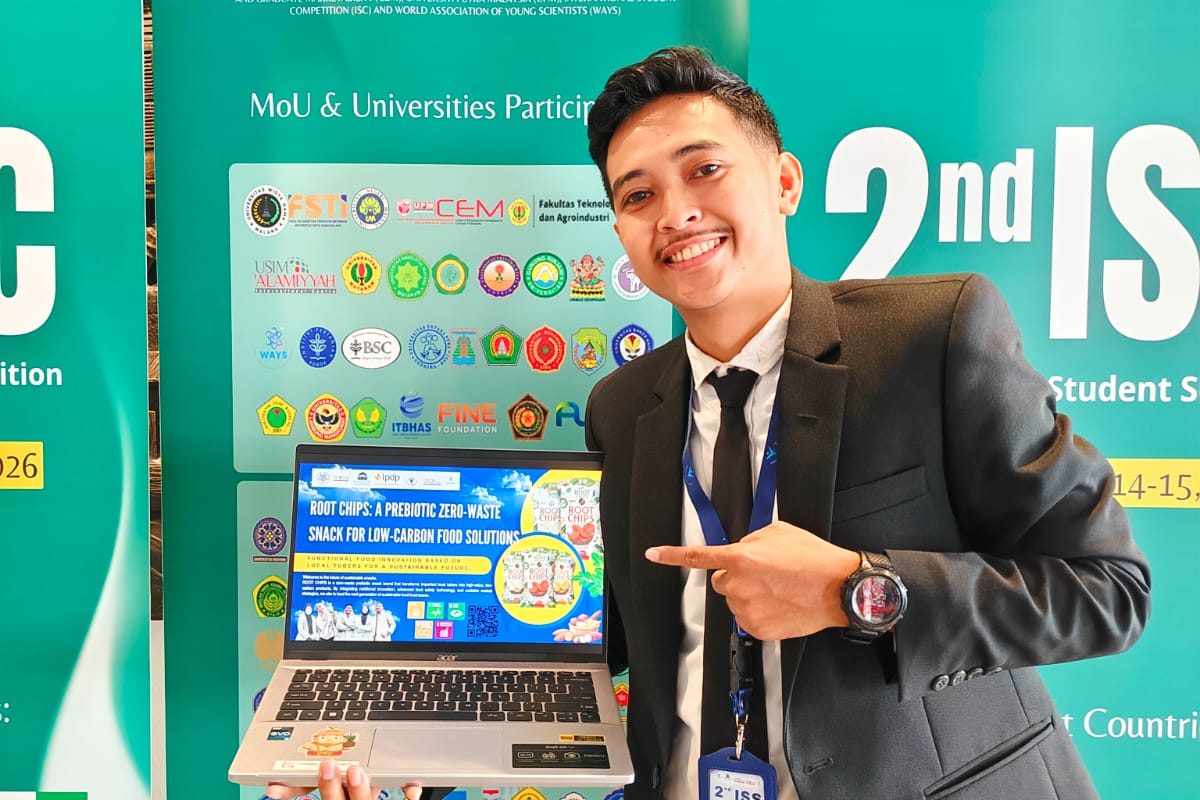
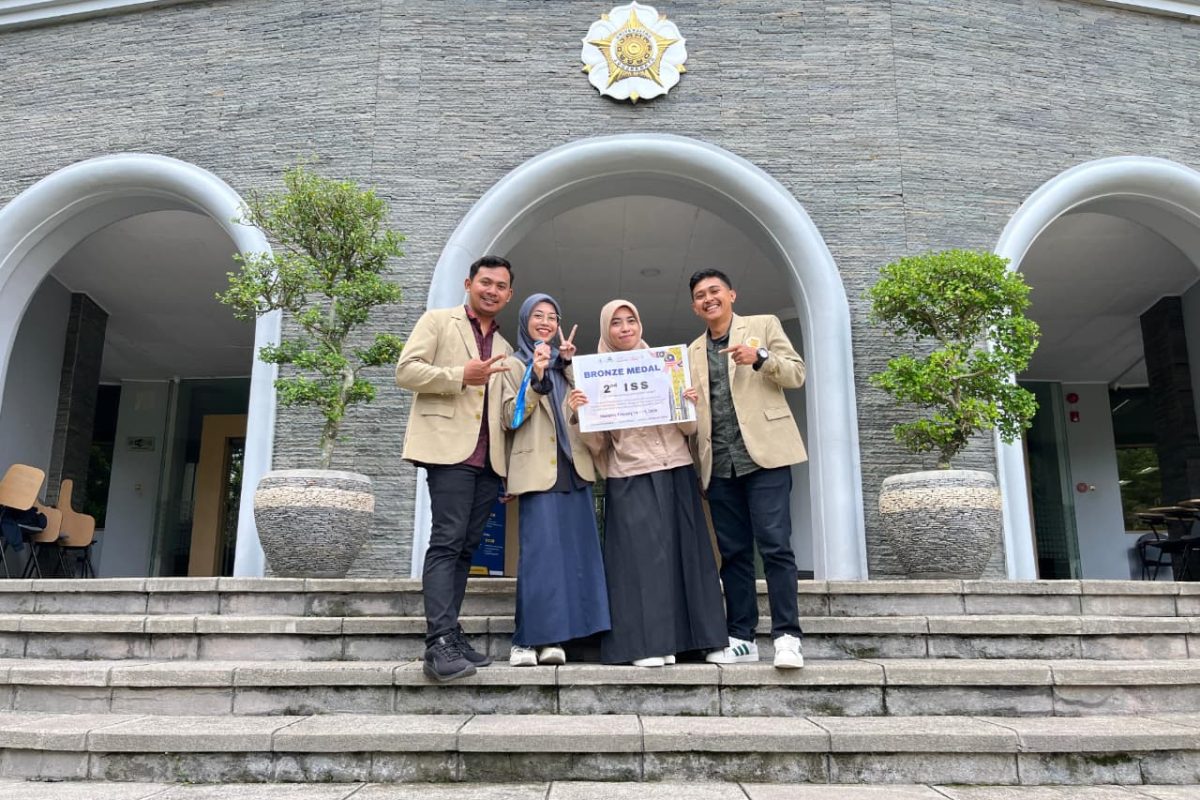
A team of students from the Environmental Science Master Program at the Graduate School of Universitas Gadjah Mada (SPs UGM) has once again achieved international recognition by winning a Bronze Medal at the 2nd International Student Summit 2026, held on February 14th–15th 2026, in Kuala Lumpur, Malaysia. The award was earned in the Food category with their innovation titled “ROOT CHIPS: A Prebiotic Zero-Waste Snack for Low-Carbon Food Solutions.”
The team was supervised by Dr. Priyaji Agung Pambudi, with Baso Samsu Rijal as team leader, and members Nurlaila Sahara Worabay, Rabiyathul Adawiyah Abbas, Muchammad Shaliqin, and Atik Septiana Putri.
The International Student Summit is a global academic forum that brings together students of various countries to exchange ideas, present research, and propose innovative solutions to global issues ranging from food and health to the environment. In this competition, participants are evaluated not only on the originality of their ideas but also on how feasible and impactful their proposed solutions are for society. In this context, ROOT CHIPS emerges as an innovation that integrates food science, environmental sustainability, and the empowerment of local resources.
ROOT CHIPS is developed as a healthy snack based on local tubers such as cassava, taro, and sweet potatoes, which are often underutilized in the food supply chain. Many tubers with irregular shapes or considered “market rejects” often end up as waste or are sold at very low price. This innovation shows the tubers are processed into high value-added products using a zero-waste approach, minimizing raw material waste while extending product shelf life.
Beyond waste reduction, ROOT CHIPS is also designed as a functional food rich in prebiotics. The team optimized processing methods to produce resistant starch type 3 (RS3), a form of resistant starch formed with heating and cooling cycles. RS3 acts as a prebiotic supporting gut microbiota health, helps maintain digestive health, and potentially contributes in immunity improvement. Thus, ROOT CHIPS is not merely a snack but also offers added health benefits.
ROOT CHIPS, in terms of processing technology, adopts a low-temperature baking method to replace the high-temperature frying commonly used in conventional snack industries. This approach reduces oil usage and lowers the risk of harmful compound formation such as acrylamide, which often develops in starch-based foods under high heat. At the same time, the method is designed to maintain the crunchy texture and appealing taste preferred by consumers, balancing health and enjoyment.
The ROOT CHIPS innovation also embraces the concept of a low-carbon food system. The use of locally sourced tubers—easy to cultivate, adaptable to various land conditions, and available from nearby farmers—helps shorten supply chains and reduce carbon emissions from distribution. At the upstream level, utilizing non-standard harvests reduces food loss; while at the downstream level, energy-efficient and low-waste production processes help minimize emissions. Thus, ROOT CHIPS serves as a prototype of a food product integrating sustainability from upstream to downstream.
This achievement in the Food category will highlight UGM’s commitment to fostering student innovations aligned with global development agendas. ROOT CHIPS directly contributes to several Sustainable Development Goals (SDGs), including SDG 2 (Zero Hunger) through nutritious food development and local resource utilization, SDG 3 (Good Health and Well-being) through functional food innovation supporting digestive health, SDG 12 (Responsible Consumption and Production) through sustainable production and consumption practices, and SDG 13 (Climate Action) through waste reduction and low-emission food systems.
This success shows UGM students are capable of competing and contributing at the international level by integrating science, innovation, and sustainability. The team, with ROOT CHIPS, hopes to inspire the development of other local food products that are market-competitive and also environmentally friendly and supportive of farmers. This innovation has the potential to be further developed through advanced research, industry collaboration, and community empowerment programs, enabling its benefits to be felt more widely at both national and global levels.
Author: Siti Muyasaroh