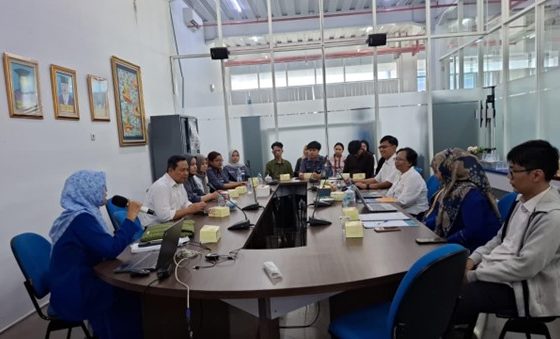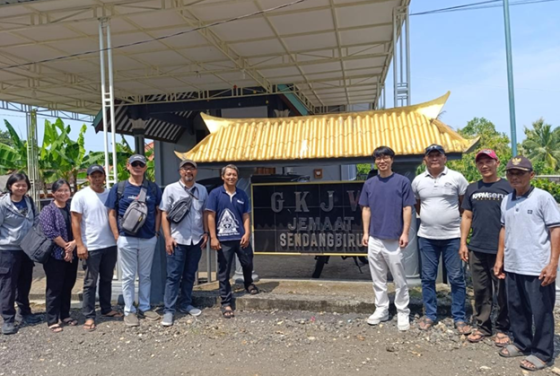
Yogyakarta, March 31st 2026 — A research team from the Biomedical Engineering Master Program, Graduate School of Universitas Gadjah Mada (SPs UGM), has developed a universal modular radiotherapy baseplate designed to enhance service performance during radiotherapy procedures. The research is led by Ir. I Gusti Bagus Budi Dharma, S.T., M.Eng., Ph.D., IPU., ASEAN Eng., and was conducted throughout 2025 in collaboration with RSUP Dr. Sardjito Yogyakarta and RSAU dr. S. Hardjolukito Yogyakarta.
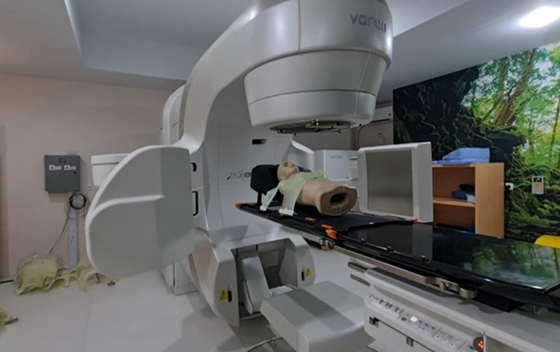
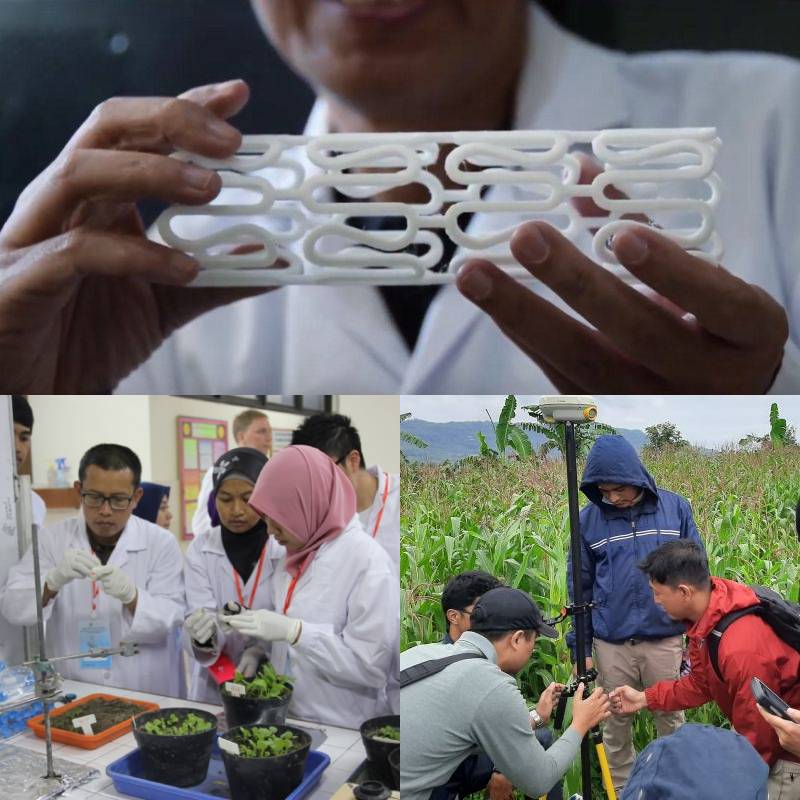
The prototype development began with the collection of clinical requirements with questionnaires and focused discussions involving radiographers, radiation oncologists, and medical physicists. These inputs were then translated into technical designs using engineering software and established in a prototype with Fused Deposition Modeling (FDM) 3D printing technology. Functional verification was carried out on several radiotherapy devices, including Linac Elekta, Varian TrueBeam, and Canon CT Simulator, to ensure cross-modality compatibility.
Testing results show that the prototype is capable of maintaining positional deviation of less than 2 mm, in accordance with applicable clinical tolerance limits. According to dr. Eriko Ekaputra, Sp.Onk.Rad (K), a radiation oncologist involved in the testing, “Patient positioning accuracy is a crucial factor in determining the quality of therapy. The use of this baseplate helps ensure that radiation is delivered precisely to the target without compromising the safety of healthy tissues.”
The device, in addition to accuracy, demonstrated an average installation time of 1.7 minutes, which is faster than the standard operational procedure that typically requires around five minutes. This efficiency has the potential to improve daily service workflows as well as patient comfort.
The modular design allows a single device to be used for three treatment areas—head, neck, and breast—thereby reducing the need for multiple equipment variations and improving access to radiotherapy services, particularly in developing healthcare facilities. This innovation supports the enhancement of healthcare quality through the application of technology and medical device engineering, while also strengthening institutional collaboration between universities and partner hospitals.
In the future, the research team hopes that this innovation can be further developed using composite materials and implemented across various radiotherapy facilities in Indonesia.
Keywords (SDGs): SDG 3: Good Health and Well-being; SDG 9: Industry, Innovation and Infrastructure; SDG 17: Partnerships for the Goals
Source: I Gusti Bagus BD
Editor: Asti Rahmaningrum
Photo: I Gusti Bagus BD