
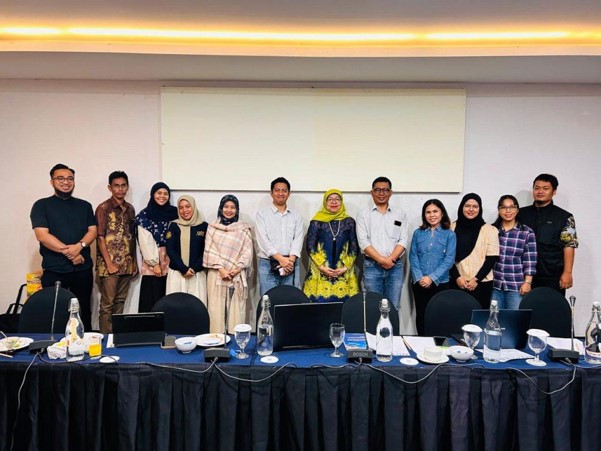
Penajam Paser Utara – The Leadership and Policy Innovation (MKIK) Master Program at the Graduate School of Universitas Gadjah Mada (UGM) reaffirmed its commitment to support student success through the organization of a Thesis Academic Clinic for students enrolled in the Penajam Paser Utara (PPU) partnership program. Held on 30th–31st May 2026 in Penajam Paser Utara and Balikpapan, the program was designed as an intensive academic mentoring forum aimed at improving the quality of students’ research proposals and theses while accelerating their academic progress.
Most participants are government officials and working professionals therefore they face unique challenges in balancing academic responsibilities with their professional duties. Recognizing these circumstances, MKIK UGM developed a needs-based mentoring model that provides targeted academic support according to each student’s stage of research.
Based on a preliminary assessment conducted by the study program, the majority of students are currently preparing for proposal seminars, revising research proposals, or collecting research data. Common challenges include research design, instrument development, data analysis, academic writing, and managing the research process alongside professional commitments. The Academic Clinic addressed these issues with direct consultation and intensive guidance from faculty members.
The program began with a series of academic enrichment sessions covering thesis design and writing, research methods and data collection techniques, academic writing ethics, and strategies for scholarly publication. The sessions were delivered by MKIK faculty members, including Makbul Hajad, S.T.P., M.Eng., Ph.D., Prof. Dr. Ahmad Maryudi, Dr. Dewi Haryani Susilastuti, M.Sc., and Dr. Novi Widyaningrum, M.A.. Their expertise provided participants with comprehensive insights into the research process, from formulating research questions to disseminating findings with academic publications.
The Academic Clinic, beyond theoretical discussions, incorporated intensive working sessions that allowed students to develop their research proposals and thesis drafts while receiving direct feedback from faculty members. During these sessions, participants were guided in refining research problems, strengthening theoretical frameworks, selecting appropriate methodologies, developing research instruments, and improving data analysis strategies. This hands-on approach enabled students to receive personalized feedback tailored to the specific needs of their individual research projects.
According to Makbul Hajad, S.T.P., M.Eng., Ph.D., Head of the MKIK Program, the Academic Clinic represents one of the program’s innovations in academic support services. By providing intensive and continuous mentoring, the initiative aims to help students produce higher-quality research, establish clearer research directions, and better prepare for proposal seminars and subsequent stages of their studies.
In addition to supporting timely degree completion, the clinic served as a platform for strengthening academic engagement of students and faculty members. More intensive interaction is expected to help students address research challenges more effectively while enhancing the overall quality of their scholarly work.
The implementation of the Academic Clinic for students from Penajam Paser Utara reflected MKIK UGM’s commitment to deliver postgraduate education that is responsive to regional needs. The structured academic mentoring made the program seeks to help students graduate on time and also to encourage the production of research that contributes meaningfully to public policy development and governance improvement at the regional level.
Author: Khoirul Mujazanah