
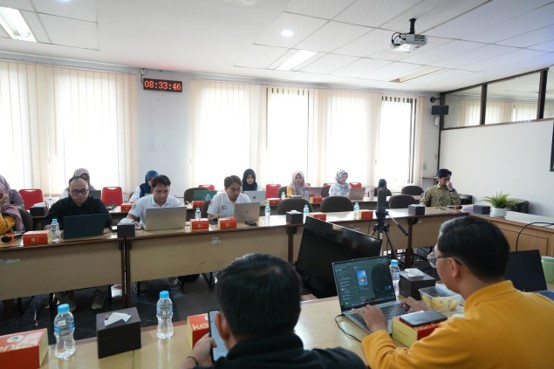
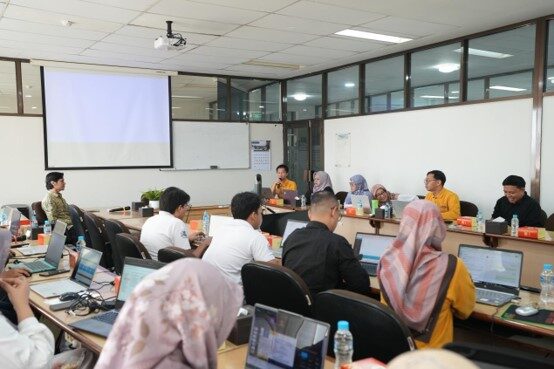
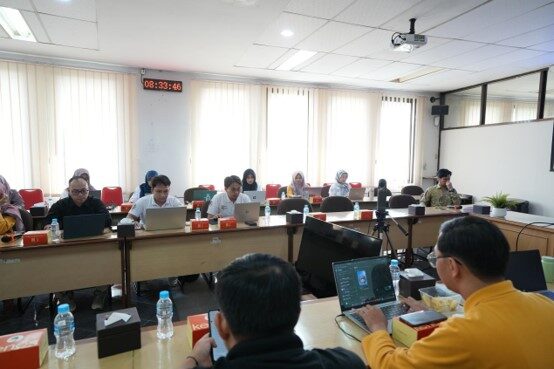
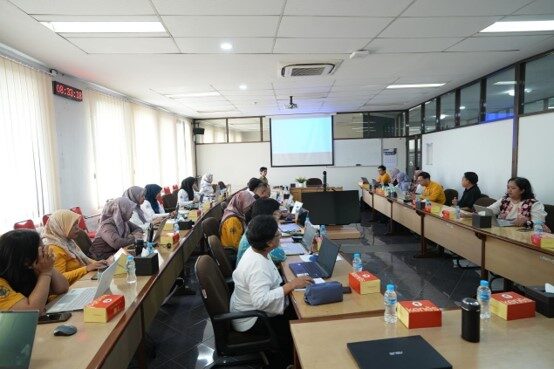
Yogyakarta, August 20th 2026 — Welcoming the start of the odd semester academic activities for the 2026/2027 Academic Year, the Graduate School of Universitas Gadjah Mada (SPs UGM) continues to mature various administrative preparations. This concrete step was established with the implementation of the “2026 Curriculum Filling Finalization Mentoring Workshop,” involving all academic support elements of the faculty. This strategic activity was held offline on Friday, August 7th, 2026, at the Auditorium Room, 5th Floor, Unit 1 Building of SPs UGM. This mentoring program was specifically initiated to ensure the preparation, accuracy, and validity of curriculum data before students begin the Study Plan Card (KRS) filling period.
The event was officially opened with direct remarks from the Vice Dean for Academic, Student Affairs, and Collaboration of SPs UGM, Prof. Dr. Ir. Widyanto Dwi Nugroho, S.Hut., M.Agr. SPs UGM, to maintain a systematic governance standard, also collaborated with representatives from the UGM Directorate of Education and Teaching (DPP) as the main resource persons. The UGM DPP provided a comprehensive technical presentation regarding the procedures for setting up and integrating the new curriculum into the academic information system. Subsequently, the study program administrators received direct assistance in filing the draft curriculum documents, which included course codes, names, and credit weights, into the SIMASTER portal.
The dense workshop that lasted until the afternoon, in addition to focusing on curriculum completeness, was also used as a forum for comprehensive institutional data consolidation. The discussion session was expanded to address various crucial administrative agendas, such as updating the study progress monitoring data for master and doctoral students. Participants were also instructed to evaluate the progress of tracer study completion and thoroughly check the validity of public information on their respective study program websites. Furthermore, the synchronization of active student data and estimated graduates was conducted as the primary basis for drafting the Annual Work and Budget Plan (RKAT).
This integrated mentoring that upholds the spirit of inter-unit partnership (SDG 17) made the faculty leadership hope the quality of SPs UGM’s academic services will become increasingly precise and adaptive. The optimization of digital infrastructure via SIMASTER is a manifestation of continuous innovation (SDG 9) as well as a reflection of the institution’s commitment to provide high-quality education (SDG 4). Furthermore, the graduate tracking evaluation is conducted to ensure the curriculum’s relevance to the needs of the professional workforce (SDG 8). Ultimately, strengthening this comprehensive institutional database will greatly support the establishment of a strong, reliable, and globally recognized educational institution (SDG 16).
Author: Berlian Belasuni