
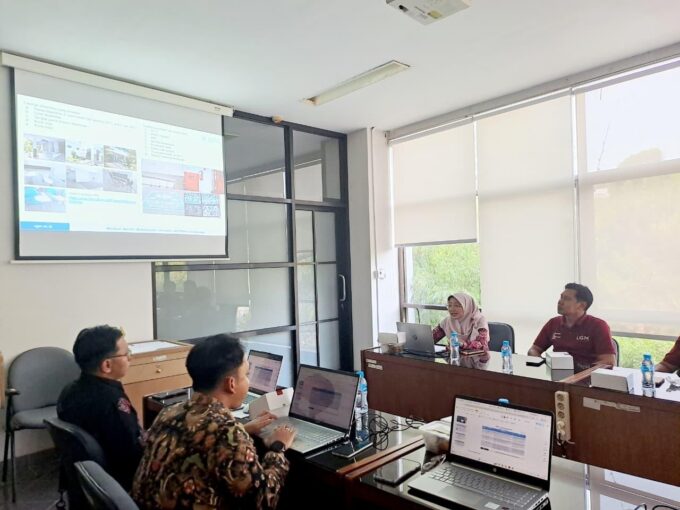
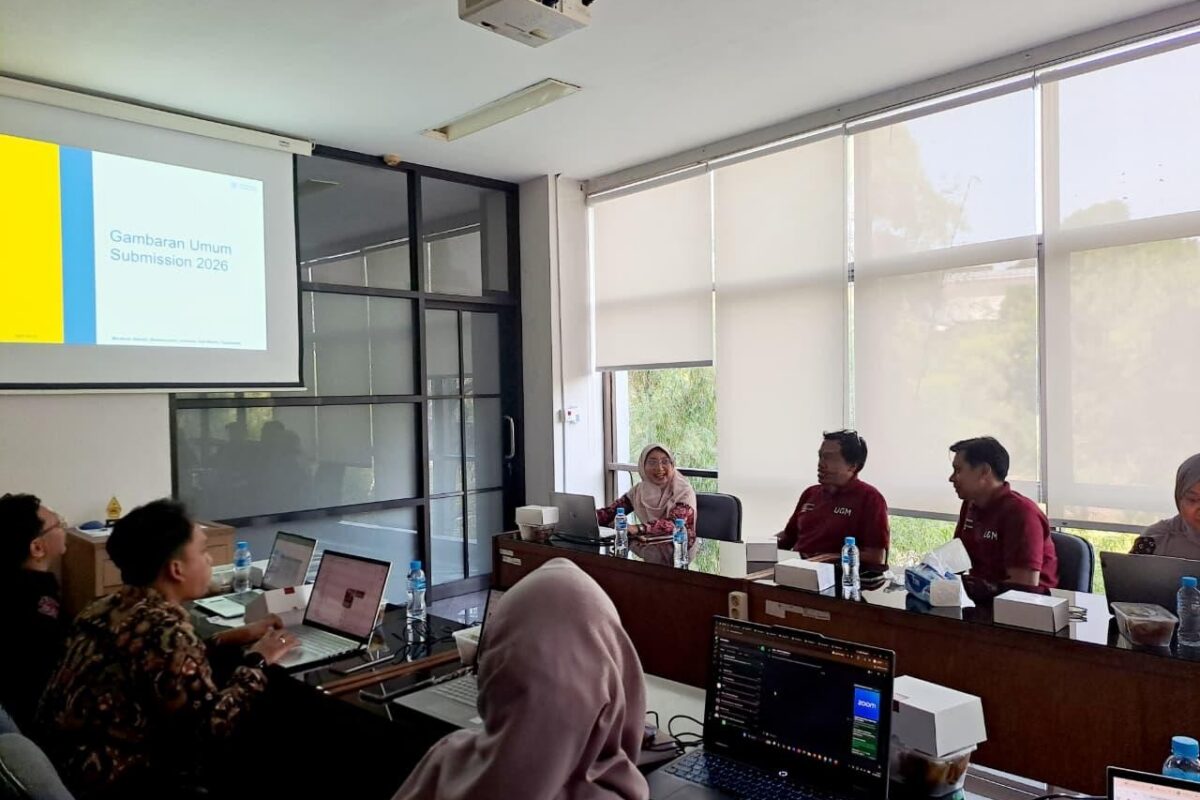
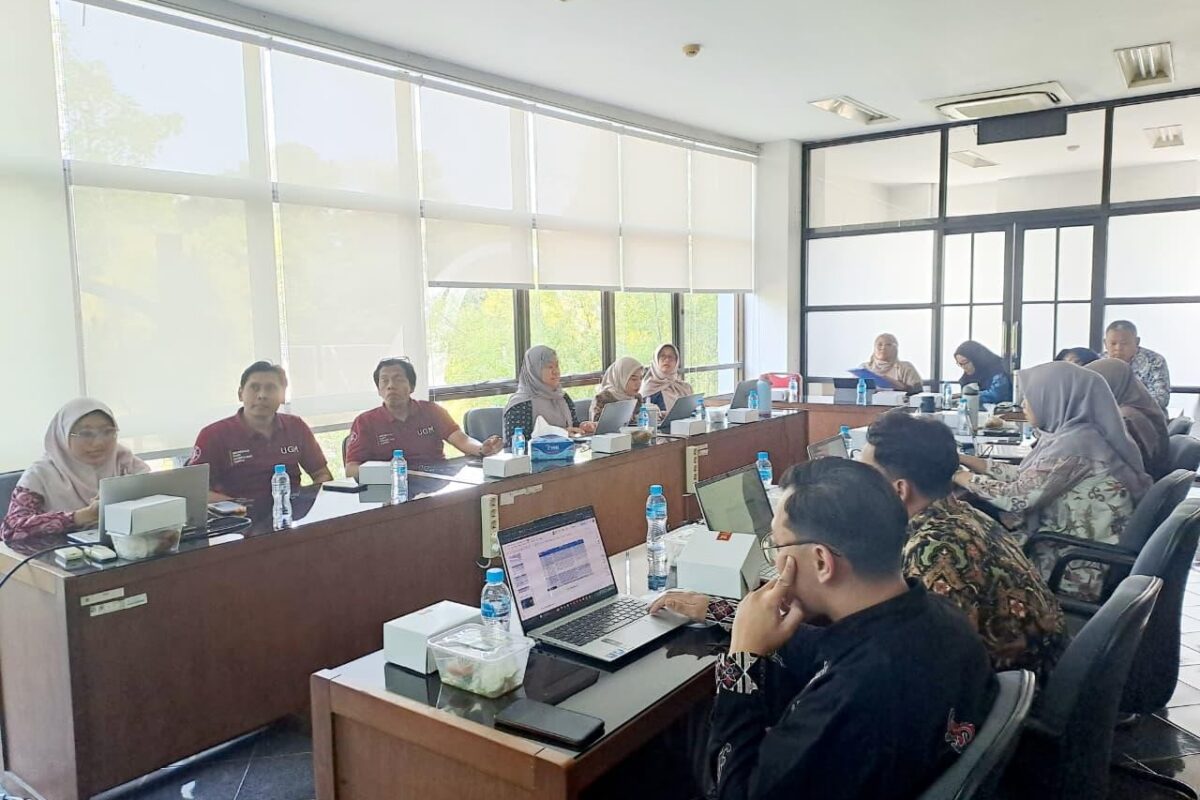
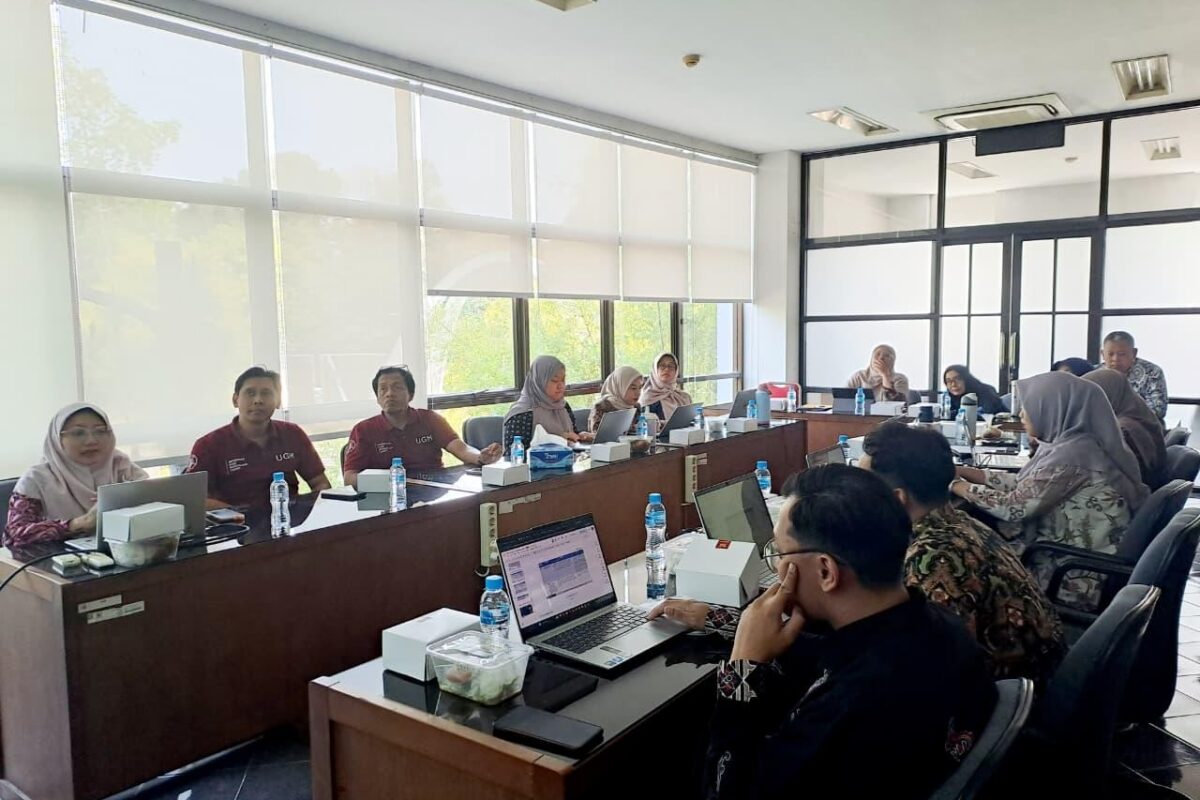
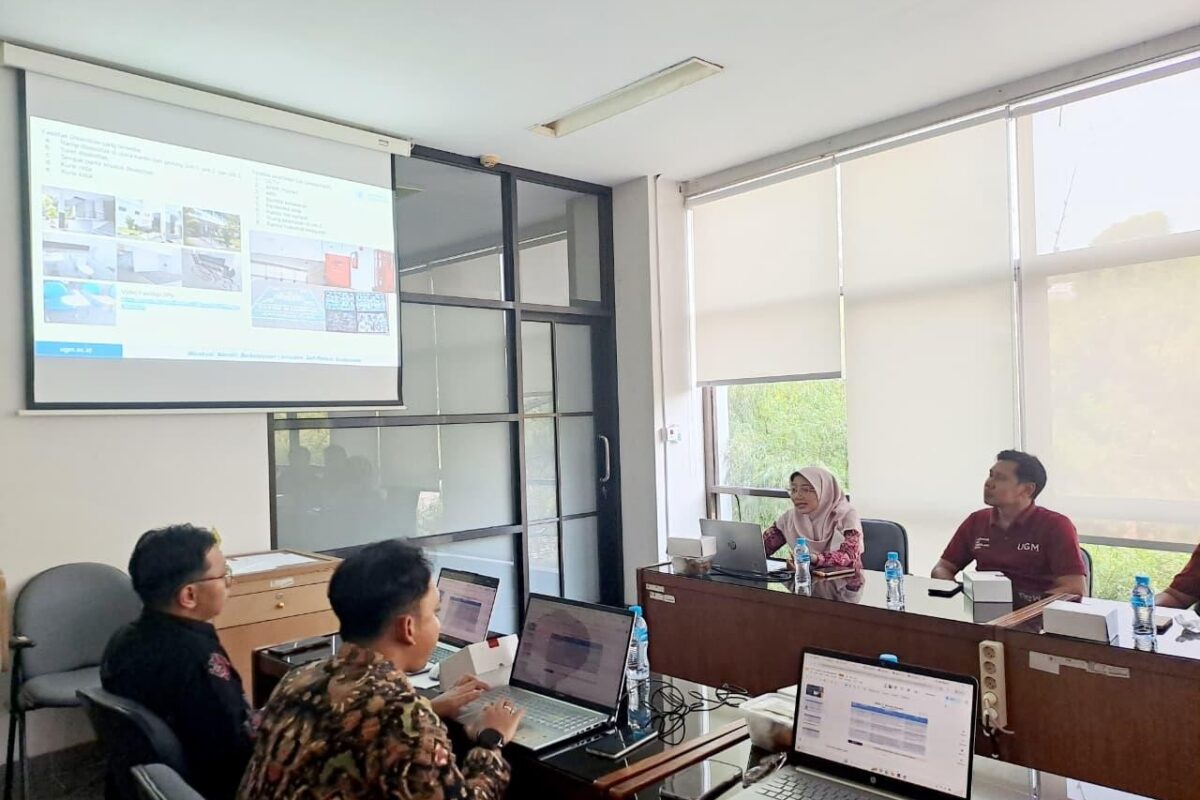
Yogyakarta, September 29th 2026 — The Graduate School of Universitas Gadjah Mada (SPs UGM) organized a Focus Group Discussion (FGD) presenting the results of the 2026 UI GreenMetric (UIGM) and Times Higher Education (THE) Impact Rankings Self-Assessment. Held in-person at the East Meeting Room, 2nd Floor of SPs UGM, the session aimed to evaluate and map the institution’s sustainability rankings and overall contributions to the Sustainable Development Goals (SDGs).
The FGD, initiated by the SPs UGM Administration Office, was attended by the Academic and Student Affairs Team, the Administration, Finance, and General Affairs Team, as well as data management personnel across SPs UGM. The main agenda commenced with the presentation of the 2026 UI GreenMetric Self-Assessment results, delivered sequentially by the UIGM team: Zahra Afifa Rahmasari, S.Ars., Achmad Ali Chaedhori, S.Sos., Aris Suhardi, Diro Yuniarto Prasetyo, Asti Rahmaningrum, S.Stat., Reynata Tri Damayanti, S.Kom., and Arfikah Istari, A.Md. This session reviewed campus environmental sustainability metrics, spanning infrastructure management, energy efficiency, waste management, water conservation, and environmental education integration.
The second session addressed the 2026 THE Impact Rankings Self-Assessment, evaluating SPs UGM’s active contributions across all 17 SDGs. Presentations were systematically structured among nine presenters, featuring Zahra Afifa Rahmasari, S.Ars. covering SDGs 1 and 2, Desla Kusuma Wardani, S.E. for SDGs 3 and 4, Siti Muyasaroh, S.M. for SDGs 5 and 6, Yeti Susilowati, S.AP. for SDGs 7 and 8, Berlian Belasuni, S.Pd. for SDGs 9 and 10, Muthia Nur Arifah, S.E. for SDGs 11 and 12, Alfina Asha Putri Ramadhani, S.E. for SDGs 13 and 14, Burhanul Aqil, S.Pd. for SDGs 15 and 16, and Arfikah Istari, A.Md. presenting SDG 17.
Special focus was dedicated to SDG 17 (Partnerships for the Goals), a mandatory pillar in the overall Impact Rankings. Arfikah Istari, A.Md. detailed three core indicator clusters starting with relationships to support the goals with policy engagement with government and NGOs, cross-sectoral SDG dialogues, international data-gathering collaborations, global best-practice reviews, and joint research or volunteering programs with NGOs. The second cluster highlighted the publication of progress report disclosures across all individual goals from SDG 1 with SDG 17 via integrated annual reports or standalone disclosures. Meanwhile, the third cluster elaborated on education for the SDGs, encompassing curriculum integration commitments, dedicated sustainability coursework, community educational outreach for alumni, local communities, and displaced populations, as well as student sustainability literacy assessments.
This interactive discussion showed SPs UGM reaffirmed its dedication to enhancing green campus governance and integrating sustainability principles into the Tri Dharma of Higher Education. Findings from this FGD will serve as a strategic baseline for refining reporting documentation and driving continuous sustainability improvements throughout SPs UGM.
Author: Berlian Belasuni