
The community service program entitled “Women’s Empowerment in a Community-Based Development Program in Bantaragung Village, Sindangwangi District, Majalengka Regency” was led by Prof. Dr. Sri Rum Giyarsih, S.Si., M.Si. in 2026.
This community service program aligns with the Community Service (PKM) roadmap of the Population Doctoral Program at the Graduate School of Universitas Gadjah Mada (UGM) which is in line with Sustainable Development Goal (SDG) 5: Gender Equality. The program is also expected to support the Graduate School in achieving its Key Performance Targets (Target Capaian Kinerja/TCK).
The program was initiated in response to the fact that women in rural communities play highly active social roles. However, these contributions often receive insufficient recognition and are rarely reflected in formal development processes.
The objectives of this community service program are: (1) understanding how women’s participation in the Lumbung Asa Perempuan (Women’s Hope Granary) Program reflects a community-based empowerment process; and (2) examining the social impacts experienced by women as a result of their involvement in the program. The program employed a qualitative descriptive approach. Data were collected with observation, semi-structured interviews, focus group discussions, and document analysis.
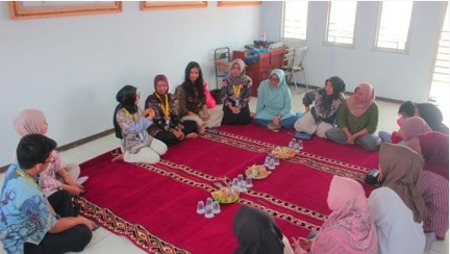
The Lumbung Asa Perempuan Program in Bantaragung Village demonstrates that women’s participation can flourish when activities are designed to meet their needs and fit into their daily lives. Women participated not only as attendees but also in selecting activities, providing input, and fostering a spirit of togetherness with the program. Simple activities such as group exercise sessions, skills training, and community discussions created new social spaces where women could interact, support one another, and develop greater self-confidence in their everyday lives.
The impacts of this participation were not always reflected in dramatic changes but rather in small yet consistent improvements, such as increased confidence of women to express their opinions, stronger relationships among mothers in the community, and a growing sense of ownership of the program. These findings indicate that community-based women’s empowerment can be effectively implemented with participatory and context-sensitive approaches while generating meaningful social benefits for women at the village level.
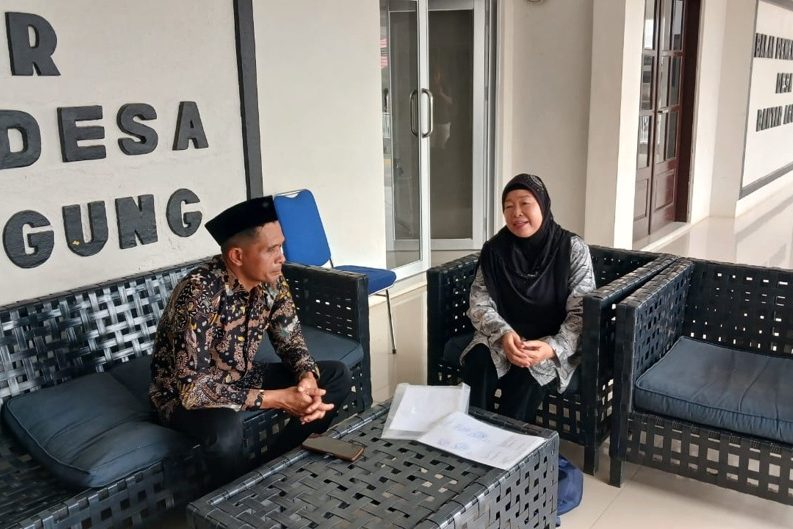
This community service program is expected to continue, due to the importance of women’s empowerment in community-based development initiatives. This expectation is supported by discussions with the Head of Bantaragung Village on 3rd February 2026, who expressed interest in extending similar programs to other villages within Sindangwangi District. Therefore, the practical and empirical benefits generated by this community service program are considered the key to ensuring the sustainability of the proposed initiative.
Author: Sri