

• About UGM
  • Students Portal
  • Library
  • IT Center
  • UGM Mail
  • Informasi Publik
  • English
    • Bahasa Indonesia
    • English
Universitas Gadjah Mada THE GRADUATE SCHOOL OF
UNIVERSITAS GADJAH MADA
  • Home
  • About Us
    • About Us
    • Excellence
    • Status
    • Management Structure
    • Campus Life
    • Facilities and Services
    • Contact Us
  • Academics
    • Announcement
    • Academic Documents
    • Academic Calendar
  • Admission
    • Study Programs
    • Scholarships
    • Admission Requirements
    • How to Apply
    • Registration
  • Activities
    • Events
    • News
    • Research
    • Community Service
    • Universitas Gadjah Mada
  • Publication
  • Home
  • News
  • Tactical Research: Innovation in the Use of Mapping Technology for Public Facility Management in Majalengka Regency

Tactical Research: Innovation in the Use of Mapping Technology for Public Facility Management in Majalengka Regency

  • News
  • 27 August 2025, 09.39
  • Oleh: pudji_w
  • 0

The research titled “Utilization of Mapping Technology to Improve Efficiency and Effectiveness in Public Facility Management in Panyingkiran Village, Panyingkiran Sub-district, Majalengka Regency” aligns with SDG Goal 11: making cities and human settlements inclusive, safe, resilient, and sustainable. This research was conducted by Ratih Fitria Putri, Sri Rum Giyarsih, Cicilia Hary Febryola, Wafiq Nur Azizah, Ridho Andutariansyah, and Lina Agustina Pujiwati. It also addressed one of the nation’s challenges—urban public facility management effectiveness.

This study was conducted in Majalengka Regency, one of the partners of Gadjah Mada University (UGM) in research and community service initiatives. The urgency of this research lies in its alignment with the themes of the National Research Priorities (PRN) and UGM’s own research priorities. The originality of the research lies in its focus on leveraging mapping technology to enhance the efficiency and effectiveness of urban public facility management.

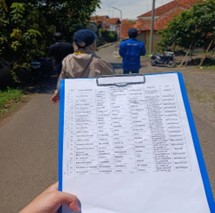
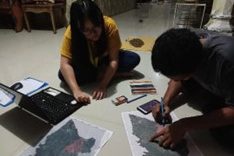
The objective of this research was to analyze the spatial distribution patterns of public facilities in the village to support community-based development planning. The data used include primary data collected with field observations and geolocation of public facilities, as well as secondary data in the form of administrative records from the village government.

The analysis was conducted using a quantitative descriptive approach combined with GIS-based spatial analysis to identify distribution patterns and disparities in access between different areas. The findings show that most public facilities in Panyingkiran Village are concentrated in densely populated areas, while several other regions have limited access to essential services such as healthcare and education. The research recommends optimizing existing facilities and developing new ones in areas with low accessibility and high potential social risk.

Author: Ratih Fitria Putri

Tags: field observation majalengka mapping technology SDG 11: Sustainable Cities and Communities social risk

Recent Posts

  • Mosque-Based Economic Empowerment FGD Encourages Independence and Strengthens Congregational Enterprises
  • Nexus Webinar: Integrating ESG And Green Skills Toward Sustainable Development
  • SPs UGM Produced 79 High-Achieving Graduates
  • Spring Water Potential in Dlingo, Bantul: Studied to Support Access on Sustainable Clean Water
  • Community Supports the Development of Wukirsari Home Gardens in Imogiri, Bantul as SDGs-Based Agrotourism
Universitas Gadjah Mada
THE GRADUATE SCHOOL OF
UNIVERSITAS GADJAH MADA
Jl. Teknika Utara, Pogung, Sinduadi, Mlati, Sleman, Yogyakarta, 55284
Telp. (0274) 544975, 564239
Email : sps@ugm.ac.id

© Universitas Gadjah Mada

KEBIJAKAN PRIVASI/PRIVACY POLICY

[EN] We use cookies to help our viewer get the best experience on our website. -- [ID] Kami menggunakan cookie untuk membantu pengunjung kami mendapatkan pengalaman terbaik di situs web kami.I Agree / Saya Setuju