
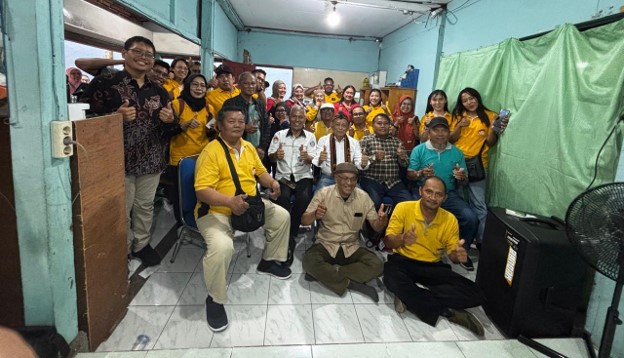
The Tourism Doctoral Program at the Graduate School of Universitas Gadjah Mada (UGM) organized a community engagement program entitled “Harmony Behind Bakpia: Strengthening Culinary Tour Guiding Narratives for Members of the Indonesian Tour Guides Association (HPI) Yogyakarta” on Wednesday, July 15th 2026, at the Bakpia Patuk Center in Ngampilan, Yogyakarta City. The program aimed to strengthen tour guides’ capacity to develop culinary storytelling that is not only informative but also conveys the values of harmony, tolerance, and peace through one of Yogyakarta’s iconic culinary products, bakpia.
Travelers, within the context of experience-based tourism, seek not only destinations and flavors but also the meanings behind the experiences they encounter. Building on this perspective, the program encouraged tour guides to view bakpia not merely as Yogyakarta’s signature souvenir but as a cultural heritage that reflected the long history of interaction of the Chinese and Javanese communities.
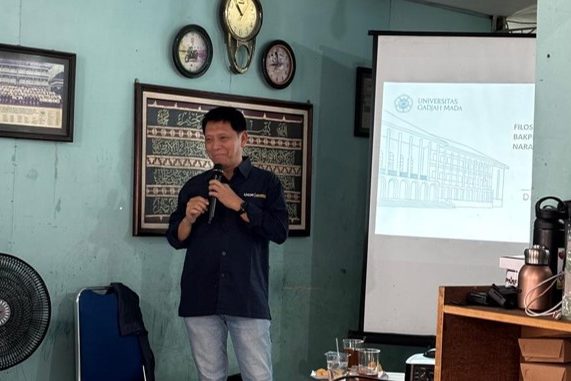
The program began with three classroom enrichment sessions. In the first session, Prof. Dr. Heddy Shri Ahimsa-Putra, Professor of Anthropology at the UGM Graduate School, invited participants to explore bakpia with the lens of cultural anthropology. He explained that bakpia should not be understood solely as a culinary product but rather as the result of a cultural acculturation process in which Chinese culinary traditions interacted with Javanese society in Yogyakarta. The adaptations in ingredients, flavors, and production methods to suit the predominantly Muslim local community, bakpia gradually evolved into one of Yogyakarta’s culinary identities.
Prof. Heddy further explained that the evolution of bakpia extended beyond cultural acculturation. It continued with social assimilation, localization as Yogyakarta’s signature souvenir, official recognition as Indonesia’s Intangible Cultural Heritage, and adaptation to globalization with product innovation and modern marketing strategies. As such, bakpia represents not only a culinary product but also the ability of Yogyakarta’s society to manage cultural encounters in a peaceful and creative manner. This perspective provided participants with a conceptual foundation for developing storytelling that highlights not only the origin of bakpia, but also the values of adaptation, harmony, and peace.
The second session was delivered by Dr. Mohamad Yusuf, Chief of the Tourism Doctoral Program at the UGM Graduate School. He discussed the historical development of bakpia within Yogyakarta’s cultural and tourism landscape, as well as its production process as part of experiential storytelling created with co-creation. Participants learned how changes in ingredients, production techniques, and the growth of the bakpia industry reflected the social, economic, and cultural dynamics of Yogyakarta. These insights were then translated into guiding narratives connecting culinary heritage with local history, cultural identity, and the values of peace.
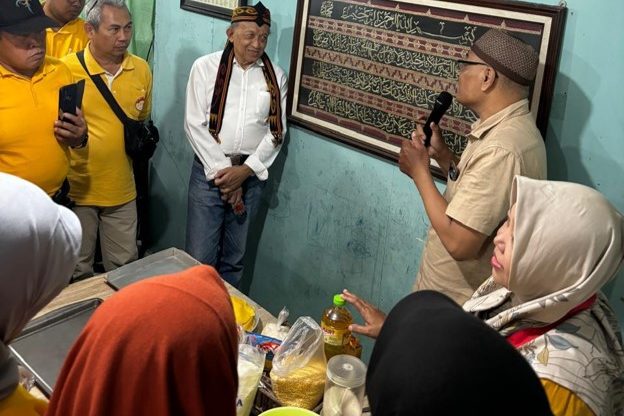
Participants, following the classroom sessions, took part in a crafting experience at Bakpia Doea Djempol, a local small and medium-sized enterprise (SME). During this activity, tour guides observed the production process firsthand and engaged in discussions with local entrepreneurs. This experiential learning approach was designed to enable participants to integrate historical facts, production processes, and cultural values into more engaging and meaningful narratives for visitors.
The Tourism Doctoral Program, with this program, seeks to transform the role of tour guides from information providers into cultural interpreters capable of helping visitors understand the deeper meanings behind the destinations they visit. The storytelling developed through the program is expected not only to enrich the visitor experience but also to strengthen Yogyakarta’s image as a city that has grown through cultural dialogue, tolerance, and harmony.
This initiative reflected the UGM Graduate School’s commitment to translate academic research and expertise into community engagement programs that generate tangible societal benefits. The collaboration of Indonesian Tour Guides Association (HPI) Yogyakarta and Bakpia Doea Djempol is expected to enrich tour guiding practices while promoting more meaningful, inclusive, and sustainable cultural tourism in the Special Region of Yogyakarta.
Author: Ghifari Yuristiadhi Masyhari Makhasi
Editor: Arfikahi