
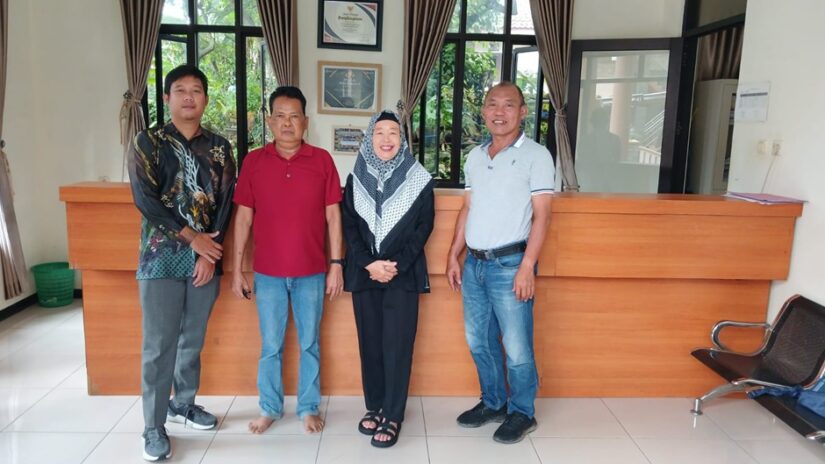
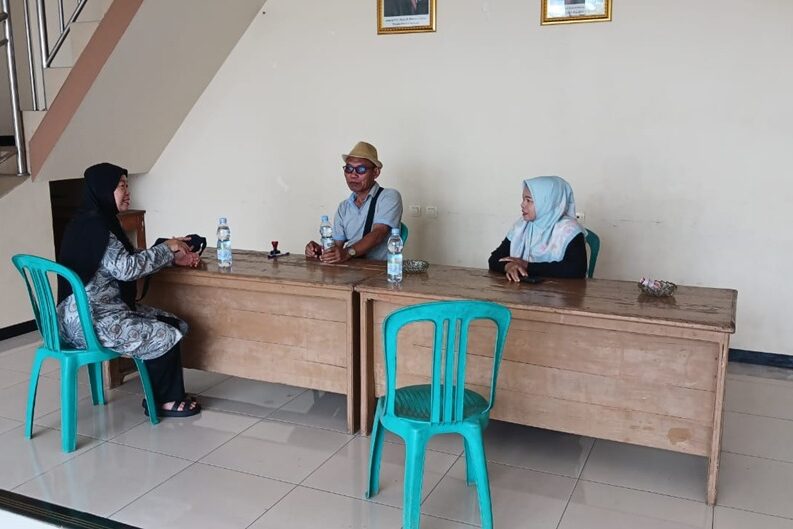
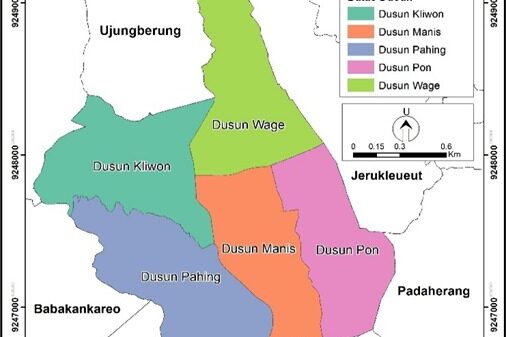
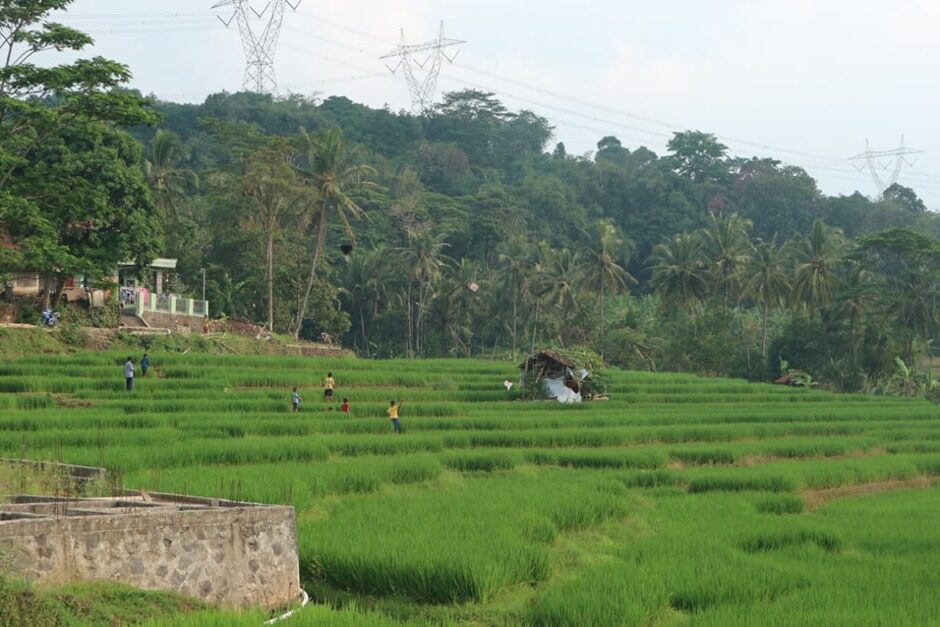
The research entitled “Food Security in the Peri-Urban Area of Majalengka Regency: A Case Study of Sindangwangi Village” was led by Prof. Dr. Sri Rum Giyarsih, S.Si., M.Si., in 2026. This research aligns with Sustainable Development Goal (SDG) 2, namely Zero Hunger. It also addresses one of the nation’s pressing challenges: food security issues in peri-urban areas.
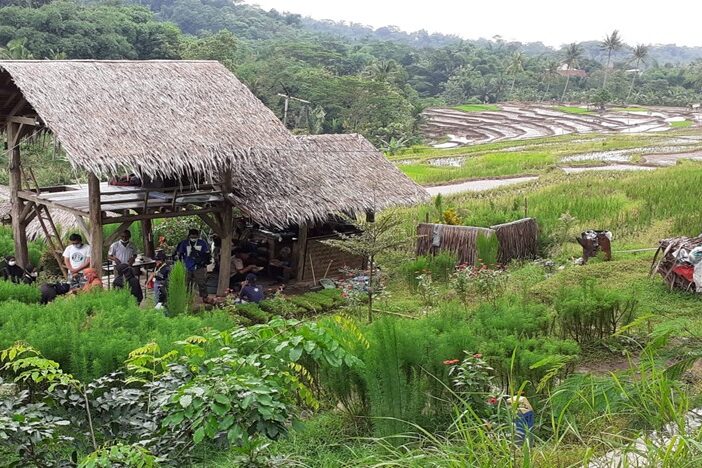
The research was conducted in Majalengka Regency, a partner of Universitas Gadjah Mada (UGM) in research and community service activities. The urgency of this research lies in the alignment of its theme with the National Research Priorities (Prioritas Riset Nasional/ PRN) and UGM’s research priorities. Its originality lies in its focus on food security in peri-urban areas.
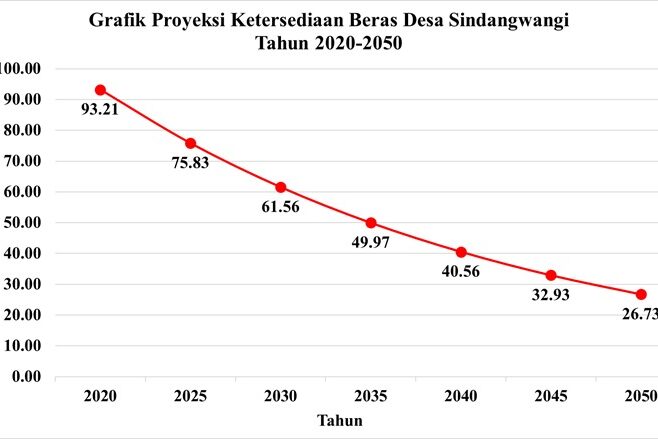
The study aims to analyze the food security conditions in Sindangwangi Village by projecting rice availability and demand over the long term, covering the period from 2020 to 2050. The research employs a quantitative descriptive method using a linear projection approach based on secondary data, including population size, harvested area, rice productivity, and annual harvest frequency. Rice demand is calculated using three approaches: Minimum Physical Needs (Kebutuhan Fisik Minimum/KFM), the Food Security Council (Dewan Ketahanan Pangan/DKP) standard, and Decent Living Needs (Kebutuhan Hidup Layak/KHL).
The findings indicated a declining trend in rice availability over time, while demand remains high even as the population decreases, resulting in a consistent food deficit from year to year. This condition suggests that local production is insufficient to meet the village community’s rice consumption needs. Therefore, food security strategies are needed, including improving agricultural productivity, strengthening farmer institutions, and enhancing the efficiency of harvest distribution to establish a sustainable food security system in Sindangwangi Village.
Author:Sri Rum Giyarsih
Editor: Siti Muyasaroh