
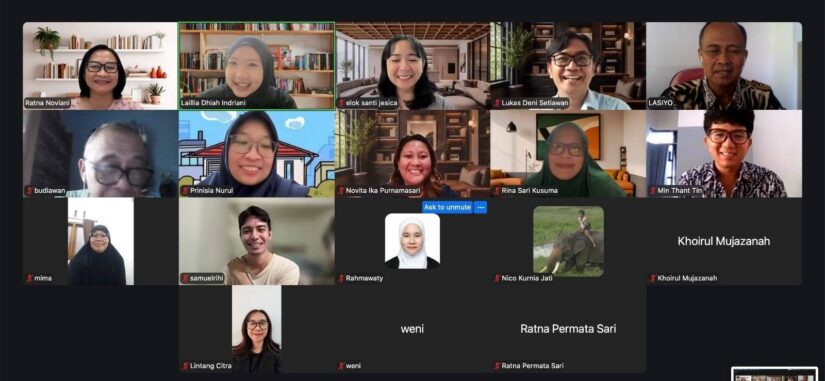

Yogyakarta, 30th October 2026 — The Media and Cultural Doctoral Program (KBM), Graduate School, Universitas Gadjah Mada (UGM), organized a series of Dissertation Proposal Seminars for its 2025 cohort from 26th to 30th October 2026. The series was attended by nine out of 13 students in the cohort. Organizing the seminars in a structured schedule was part of the program’s efforts to monitor students academic progress, ensure timely completion of academic milestones, and encourage students to complete their dissertations according to their planned study timelines.
The dissertation proposal seminar is an important stage in a doctoral student academic journey. At this stage, students present their research proposals, covering problem formulation, theoretical foundations, and research methodology. The seminar provides an opportunity for students to receive feedback and academic evaluations from their supervisory teams and reviewers to strengthen the direction and academic rigor of their research before proceeding to the dissertation research stage.
Nine students in the five-day period participated in the seminars conducted online via Zoom. The series began on Monday, 26th October 2026, with presentations by Ratna Permata Sari and Weni Adityasning Arindawati. On Tuesday, 27th October 2026, the seminars continued with presentations by Prinisia Nurul Ikasari and Rahadi. Lintang Citra Christiani presented her proposal on Wednesday, 28th October, followed by Nico Kurnia Jati on Thursday, 29th October 2026. The series concluded on Friday, 30th October 2026, with presentations by Rahmawaty, Min Thant Tin, and Lukas Deni Setiawan.
The proposed research projects addressed a wide range of contemporary issues in media and cultural studies. These included performance navigation practices in the arena of stand-up comedy, communicative capitalism and discourses of minimalism, the representation of female football fans on TikTok, and the discourse of regional identity in local political contests. Other research topics examined the platformization of women’s bodies within the visibility economy, the reconfiguration of photojournalistic work amid the development of artificial intelligence (AI), the commodification of women’s identities on TikTok, narratives of Burmanization within Myanmar’s diasporic community, and the construction of multiculturalism in short films for children.
The diversity of these topics demonstrated the breadth of research undertaken by doctoral students in the Media and Cultural Program in examining social and cultural phenomena with the perspectives of media, representation, politics, identity, technology, and everyday practices. Each seminar involved supervisory teams and reviewers who provided academic feedback on the substantive arguments and methodological designs of the proposed research. This feedback plays an important role in refining the proposals to ensure stronger research focus, arguments, and analytical frameworks.
Organizing the dissertation proposal seminars within a coordinated timeframe also reflected the program’s commitment to manage doctoral students’ study progress. Monitoring academic progress involves more than documenting academic achievements; it also requires facilitating the key academic milestones that students must complete. Through a structured seminar schedule, the program seeks to encourage students to establish clearer targets for completing their academic requirements and strengthening coordination of the students, supervisory teams, reviewers, and program administrators.
The nine students in the 2025 cohort of the Doctoral Program in Media and Cultural Program of 13, or approximately 69.2 percent, have participated in the Dissertation Proposal Seminar series. This achievement represented part of the program’s ongoing efforts to ensure that students’ academic progress remained structured and continuous. Moving forward, students are expected to incorporate the feedback received during their seminars and proceed with their research in accordance with their respective study plans.
This initiative showed the Media and Cultural Doctoral Program reaffirms its commitment to support students’ academic progress with the facilitation of academic milestones, strengthened supervision, and continuous research monitoring. These efforts are expected to help students advance to subsequent research stages in a more systematic manner and support the timely completion of their doctoral studies.
This activity contributes to the Sustainable Development Goals (SDGs), particularly SDG 4: Quality Education, with strengthening doctoral education, research supervision, academic evaluation, and learning processes that support the development of research capacity and quality.
Author: Khoirul Mujazanah