

Sri Rum Giyarsih, Tasya Pratiwi, and Lina Agustina Pujiwati were conducting a research project entitled “Population and Waste Volume Projections for the Period 2025–2030 as a Basis for Sustainable Waste Management in Sindangwangi Village, Sindangwangi Subdistrict, Majalengka Regency”, which aligns with SDG 3, namely good health and well-being. The research, conducted over the course of 2025, also addressed one of the nation’s persistent challenges: population and waste management issues.
This research was being conducted in Majalengka Regency, a partner region of Universitas Gadjah Mada (UGM) in research and community service activities. The urgency of this study lies in the alignment of its theme with the themes of the National Research Priorities (PRN) and UGM’s research priorities. The originality of this study lies in its focus on projecting population growth and waste volume as a basis for sustainable waste management.
The objectives of this research are to project the population from 2025 to 2030 and to estimate the waste volume for the same period in the study area. This study is based on secondary data obtained from the Sindangwangi Village Government.
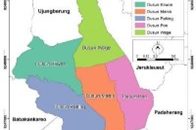
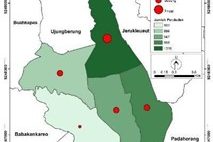
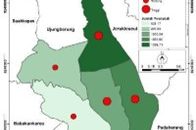
The data processing and analysis methods are conducted using a descriptive quantitative approach, utilizing mathematical formulas. The study includes a comparison of the population in 2025 and 2030. This comparison is visualized through maps of the projected population and waste volume, aiming to illustrate the distribution of population and waste volume in each hamlet of Sindangwangi Village. The software used for data analysis and mapping includes Microsoft Excel and ArcMap.
The research findings show that Wage Hamlet and Pon Hamlet generate the highest waste volumes due to their higher population densities compared to other hamlets. It is recommended that an integrated waste management strategy be implemented, based on these findings, along with improved waste processing facilities and changes in community behavior to reduce waste at its source. The results of this research are expected to serve as a reference for more effective policy-making aimed at creating a cleaner and more sustainable environment.
Author: Sri Rum Giyarsih