
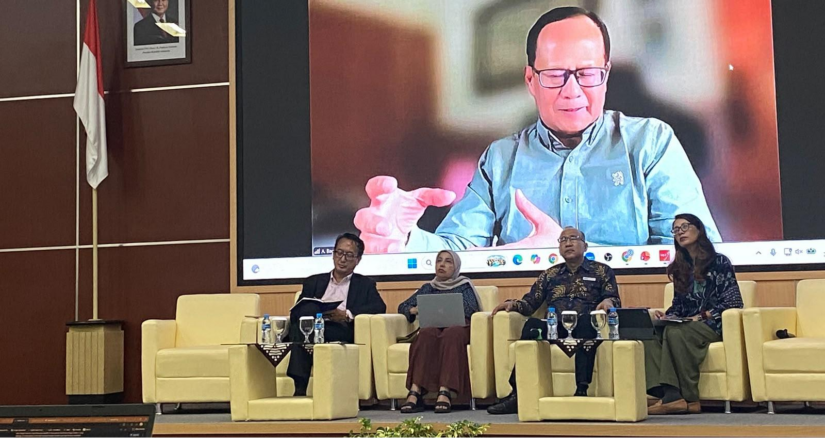
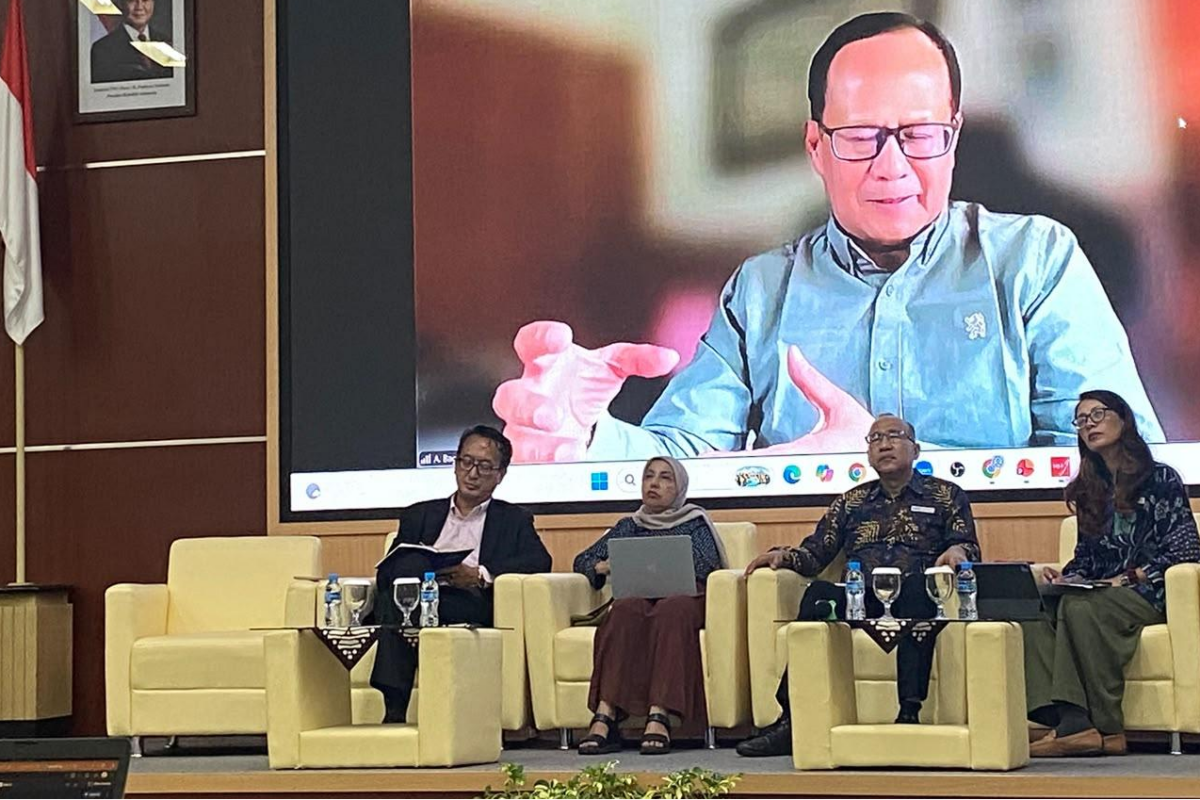
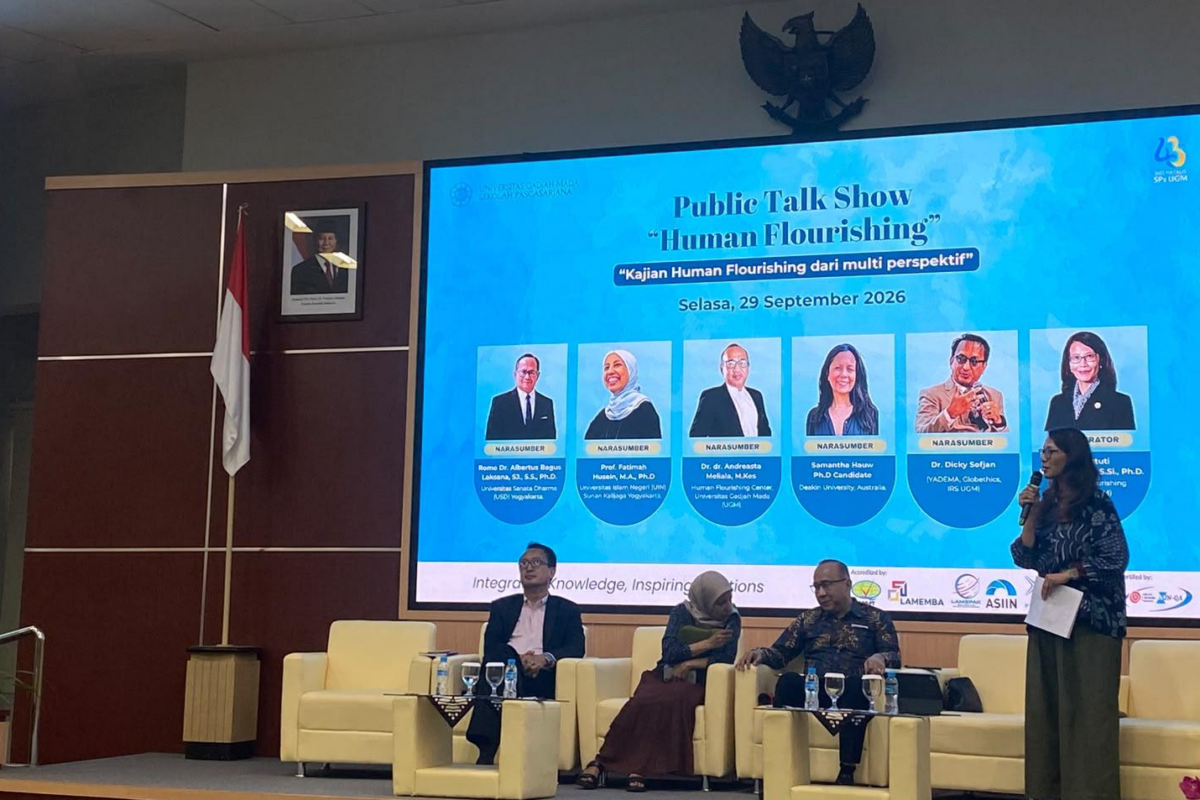
Yogyakarta, September 29, 2026 – The Graduate School of Universitas Gadjah Mada (SPs UGM) held a Public Talk Show themed “Human Flourishing: A Multi-Perspective Study of Human Flourishing” on Tuesday (29/9/2026). Held at the Auditorium on the fifth floor of SPs UGM, the event consisted of speakers from diverse academic and institutional backgrounds to discuss human flourishing from various perspectives.
The Public Talk Show featured Romo Dr. Albertus Bagus Laksana, SJ., S.S., Ph.D. from Universitas Sanata Dharma Yogyakarta; Prof. Fatimah Husein, M.A., Ph.D. from Universitas Islam Negeri Sunan Kalijaga Yogyakarta; Dr. dr. Andreasta Meliala, M.Kes. from the UGM Human Flourishing Center; Samantha Hauw, Ph.D. from Deakin University, Australia; and Dr. Dicky Sofjan from YADEMA, Globethics, and IRS UGM. The discussion was moderated by Wirastuti Widyatmanti, S.Si., Ph.D. from the UGM Human Flourishing Center.
Romo Dr. Albertus Bagus Laksana, SJ., S.S., Ph.D. discussed human flourishing from a Catholic perspective. He explained that although the term human flourishing is not a technical term in Catholic theology, the idea has roots in the Catholic tradition, including through the concept of life in abundance. He also emphasized the importance of human relationships with oneself, others, and creation in understanding a fulfilling and complete life.
Meanwhile, Prof. Fatimah Husein, M.A., Ph.D. discussed the Islamic perspective with the concept of insan kamil, or human perfection. The concept emphasizes balance in human life across individual, social, and spiritual dimensions, both in one’s role as a servant of God and as a khalifah (steward).
The health perspective and life beyond 2030 were discussed by Dr. dr. Andreasta Meliala, M.Kes. He highlighted the importance of viewing quality of life not only in terms of prosperity or financial capacity, but also through aspects such as health, meaning in work, character, virtue, and social connectedness. According to him, the development of human flourishing studies is also related to issues of human resources, interreligious and intercultural relations, and lifelong learning through cross-institutional collaboration.
Samantha Hauw, Ph.D. from Deakin University, Australia, discussed human flourishing from the perspectives of social well-being and Indigenous Australian communities. She explained that human flourishing encompasses physical and mental health, happiness, life satisfaction, meaning and purpose in life, character, social relationships, and financial stability. From the perspective of Indigenous Australian communities, human well-being is also closely connected to the environment. Human health and environmental health are viewed as interconnected conditions.
Meanwhile, Dicky Sofjan, Ph.D highlighted the relationship of religiosity, meaning and purpose in life, and human flourishing. He explained that meaning and purpose in life, as well as social relationships, are important aspects of understanding human well-being in Indonesia. He also connected character and virtue with the ability to delay gratification and religious values. In addition, Dicky emphasized the importance of incorporating an ecological dimension into discussions of human flourishing, including the idea of a balanced relationship of humans and the environment across various cultural and religious traditions in Indonesia.
The diverse perspectives presented during the event demonstrated that human flourishing encompasses a broad range of dimensions, including health, spirituality, social relationships, meaning and purpose in life, education, and human relationships with the environment. The event was attended by the SPs UGM academic community. This cross-perspective discussion, the Public Talk Show provided a space to broaden understanding of human flourishing, both as a dimension of individual well-being and in relation to social, spiritual, and ecological life.
Writer: Naufal Majid
Editor: Sri Pangesti Tuhu