
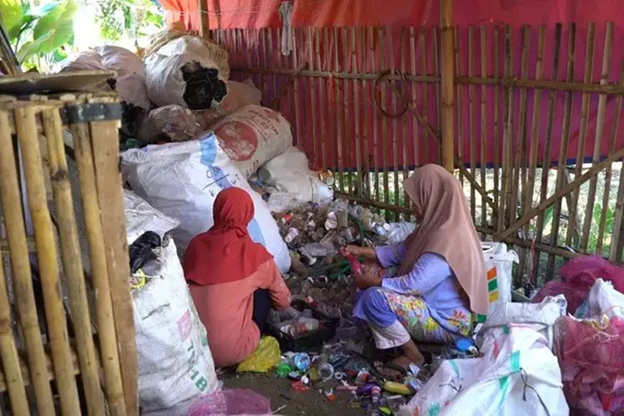
Yogyakarta, February 24th 2026 — Population growth and the increasing volume of waste remain serious challenges in various regions of Indonesia. In response to these issues, a research team from the Graduate School of Universitas Gadjah Mada (SPs UGM) conducted a study entitled “Population and Waste Volume Projections for the 2025–2030 Period as a Basis for Sustainable Waste Management in Sindangwangi Village, Sindangwangi District, Majalengka Regency.”
The research is led by Prof. Dr. Sri Rum Giyarsih, S.Si., M.Si., from the Population Doctoral Program at Graduate School UGM. The research is part of the Graduate School Research Grant for Fiscal Year 2025.
This study supports the achievement of the Sustainable Development Goals (SDGs), particularly Goal 3 on Good Health and Well-being. Majalengka Regency is also a partner of UGM in various research and community service activities.
Using secondary data obtained from the Sindangwangi Village Government, the research team conducted a quantitative descriptive analysis to project population growth and waste volume for the 2025–2030 period. The data were then visualized in map form using Microsoft Excel and ArcMap to identify the distribution of population and waste generation across each hamlet.
The results indicate that Wage Hamlet and Pon Hamlet have the highest waste generation, corresponding to their higher population density compared to other areas. These findings highlight the importance of implementing integrated waste management strategies, improving waste processing facilities, and promoting behavioral change within the community to reduce waste at its source.
According to Prof. Sri Rum Giyarsih, projection-based research is essential as a foundation for village-level policy planning. “Population and waste generation projection data must serve as the basis for designing a sustainable waste management system, ensuring that policies are not reactive but grounded in medium-term planning,” she stated.
This research is expected to serve as a reference for village governments and stakeholders in formulating more effective and sustainable waste management policies.
Source: Sri Rum Giyarsih
Editor: Asti Rahmaningrum
Photo: TIMES Indonesia