
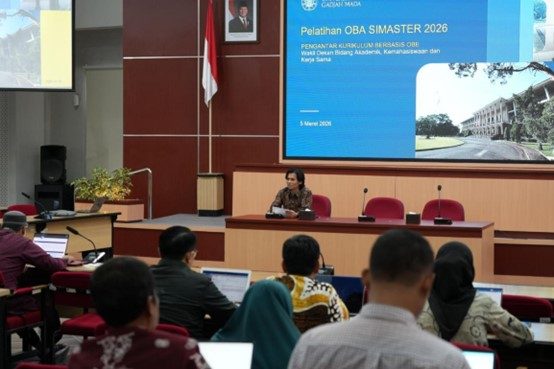
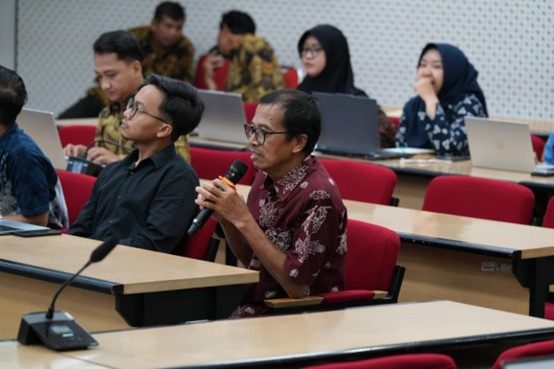
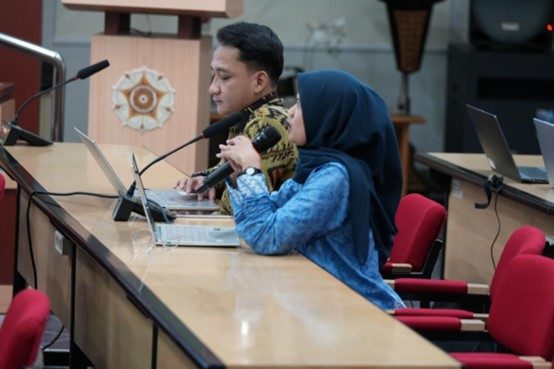
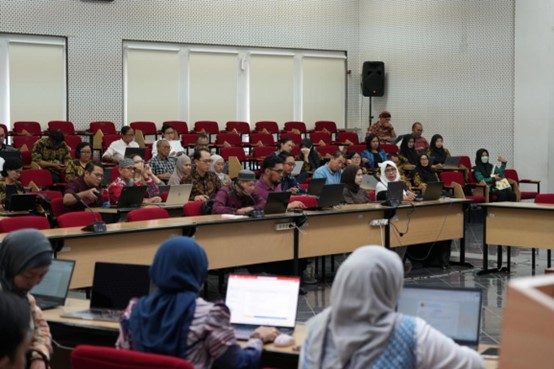
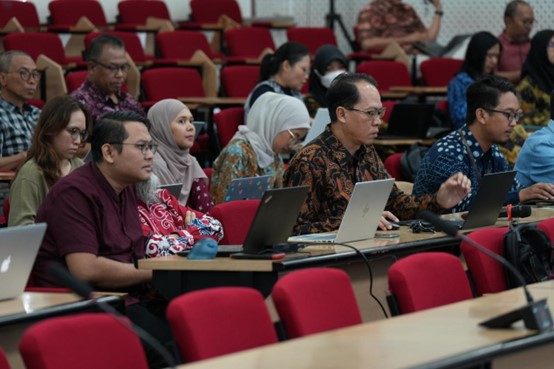
Yogyakarta, March 6th 2026 – As a strategic step in establishing the implementation of education that meets international standards and responsive to the challenges of Industry 4.0, the “OBA SIMASTER Training Workshop” was held on Thursday (March 5th 2026). This activity focused on strengthening the synergy of academic administrators—specifically the Programs’s Chief (Kaprodi), lecturers, and enumerators—in managing Outcome-Based Education (OBE) course administration with the Integrated Academic Management Information System (SIMASTER).
The implementation of OBE curriculum standards is a mandate of the National Higher Education Standards, aiming to ensure that university graduates possess the real-world competencies needed to solve problems in society and the industrial sector. Furthermore, the integration of OBE with OBA SIMASTER is crucial for meeting international accreditation requirements and monitoring the achievement of the university’s Key Performance Indicator (IKU) 7.
The event was officially opened with welcoming remarks from the Vice Dean, followed by an in-depth introduction to the philosophy of the OBE-based curriculum by Prof. Dr. Ir. Widyanto Dwi Nugroho, S.Hut., M.Agr.Sc. The technical session by Alia Bihrajihant Raya, S.P., M.P., Ph.D. guided the participants in understanding the architecture of OBA SIMASTER, particularly regarding curriculum input and the determination of Program Learning Outcomes (CPL/PLO). This session emphasized the importance of collaboration among elements within the study program.
The integration of OBA SIMASTER shows interconnected division of strategic roles of The Programs’ Chief (Kaprodi), the system provides access to comprehensively map the curriculum, formulate PLOs and their standard values, monitor study program evaluation results, and conduct real-time monitoring of program portfolio achievements and IKU 7. Meanwhile, for lecturers, OBA SIMASTER facilitates the preparation of Semester Learning Plans and Activities (RPKPS), the mapping of Course Learning Outcomes (CPMK/CLO) to PLOs, the distribution of assessment components, and the evaluation of student achievement results. On the other hand, the role of educational staff (Tendik) as academic enumerators is further strengthened as the frontline of administration. Enumerators are equipped with full access to manage the curriculum structure, ensure classes have been opened according to the assigned lecturers, arrange Study Plan Card (KRS) settings, and mitigate course implementation system constraints.
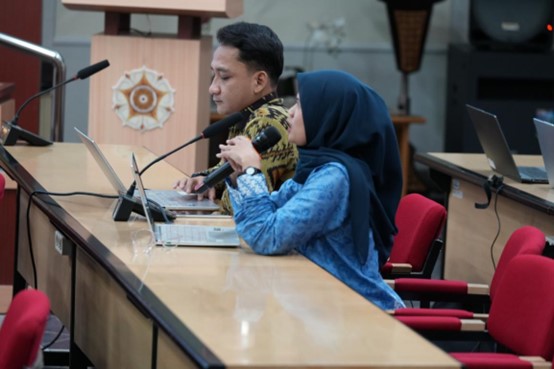
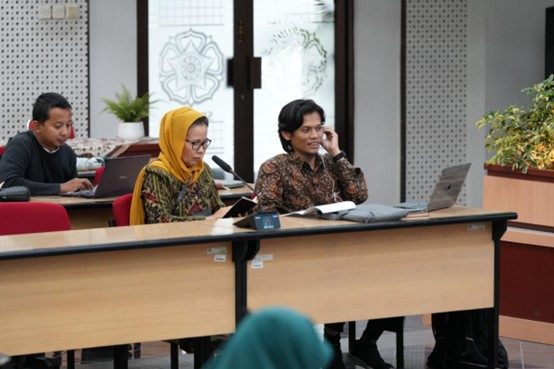
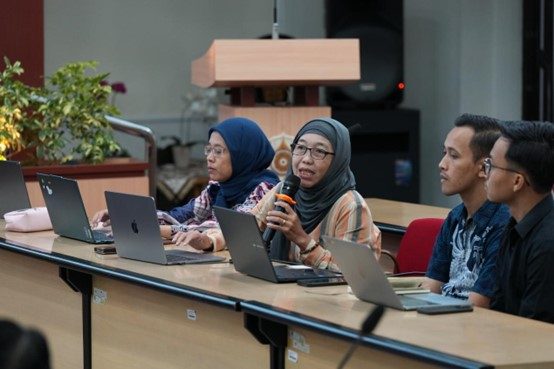
The technical role of enumerators was directly simulated by academic administration practitioners, Siti Muyasaroh and Berlian Belasuni, who equipped participants with practical steps for setting class capacity and curriculum. Meanwhile, technical guidelines for lecturers were explained by Dr. Ir. Siti Andarwati, S.Pt., M.P., IPM., Prof. Ir. Joko Sujono, M.Eng., Ph.D., and Prof. Dr. Sri Rum Giyarsih, S.Si., M.Si.
As a follow-up plan from this activity, the Vice Dean for Academic and Student Affairs conveyed several important points that must be immediately implemented by each study program or specialization. First, study programs are expected to continue the simulation and practice of OBA SIMASTER within their respective scopes using the old curriculum. Second, study programs need to finalize the 2026 Curriculum along with all its supporting documents, such as PLOs, the PLO-Course Matrix, and RPKPS. Third, study programs are requested to start preparing the management of OBA SIMASTER specifically adjusted to the 2026 Curriculum. Finally, a refresher workshop regarding the management of OBA SIMASTER will also be scheduled to ensure the smoothness of this transition.
It is hoped, through this training, that all stakeholders can carry out their roles optimally. The presence of OBA SIMASTER serves not only as a programmatic assessment instrument but also as the spearhead for creating an integrated, accurate university academic system that guarantees continuous educational quality.
Author: Berlian Belasuni