
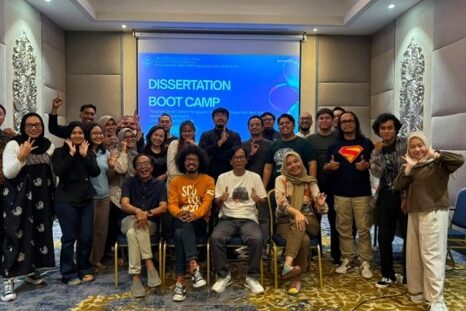
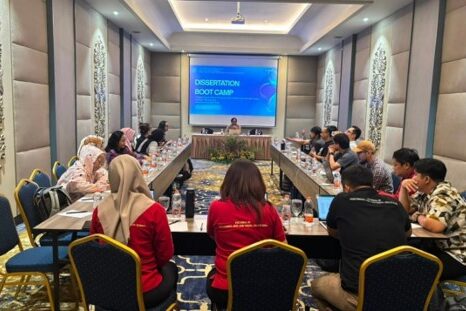
Yogyakarta, August 18th 2026 — In an effort to improve the quality of academic mentoring and accelerate students’ study completion, the Doctoral (S3) Program in Performing Arts and Visual Arts Studies (PSPSR) of the Graduate School of Universitas Gadjah Mada (SPs UGM) successfully held a Dissertation Boot Camp. This intensive mentoring program took place over three consecutive days, from Friday to Sunday, August 14th–16th 2026, at the Puri Asri Hotel, Magelang, Central Java. This educative event was attended with full enthusiasm by dozens of doctoral students who are striving hard to complete their final research projects. Full support from the faculty leadership also guaranteed and ensured the smooth running of the entire writing quarantine agenda.
Drafting a dissertation manuscript, which serves as the pinnacle of academic achievement in a doctoral program, frequently presents severe challenges for students. These common challenges encompass independent time management issues, academic writing idea blocks, and intensive communication hurdles with the supervisory promoter team. Responding to these issues, the Dissertation Boot Camp was specifically designed as a space integrating writing activities, expert discussions, and face-to-face consultations. This integrated approach proved highly effective in breaking various theoretical deadlocks that often hinder the productivity of young researchers. A comfortable physical environment with minimal distractions was also deemed successful in helping students refocus their attention on designing research substance.
The Head of the PSPSR Doctoral Program, Dr. Sri Margana, M.Hum., M.Phil., along with the Doctoral Quality Assurance Coordinator, Dr. Yohanes Tri Mastoyo, M.Hum., directly oversaw the running of this mentoring activity. A recorded total of 21 doctoral students from the PSPSR study program participated highly actively in following the dense and structured schedule. These academic candidates had the opportunity to receive exclusive guidance from a lineup of promoters to dissect research anatomy, reorganize methodologies, and sharpen scientific arguments. Highly intensive dialogical interactions with these competent experts yielded many new insights and solutions to various analytical obstacles in the field. All students were constantly encouraged to be bold in adopting a critical yet measured stance when formulating and defending their dissertation arguments.
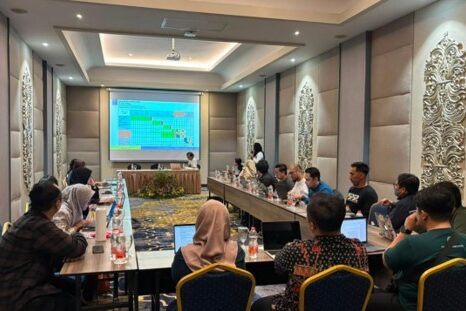
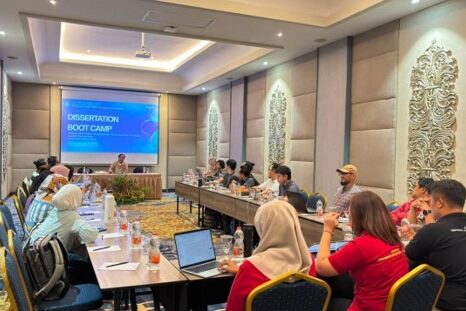
The first day’s series began with a presentation session on S3 administrative guidelines regarding publications, then immediately continued with a Study Monitoring and Evaluation (Monev) agenda. Moving to the second day’s agenda, participants were required to undergo a strict mentoring schedule alongside independent writing sessions from dawn until late at night. Such conditions were intentionally created to form a truly productive intellectual atmosphere isolated from often disruptive daily routines. The peak of the activity occurred on the third day with a forum for presenting independent works accompanied by an open Q&A session among academics. These students’ final reports transformed into strong evidence of discipline and tangible achievements obtained after undergoing this writing concentration quarantine.
The existence of this excellent boot camp facility, the SPs UGM institution held high expectations that doctoral candidates’ writing quality will experience a positive leap. Students do not merely receive constructive corrections from lecturers, but also experience a restoration of energy, motivation, and strengthened self-confidence in completing their studies. Such proactive policies strongly align with SPs UGM’s grand vision of delivering a timely and high-quality educational system (SDG 4). This breakthrough program plays a crucial role as an incubator to ensure the emergence of premium-quality dissertation research in the areas of visual and performing arts. The success of this intensive mentoring quarantine model is believed to be highly potential for massive replication by various other study programs in the future.
Author: Berlian Belasuni