
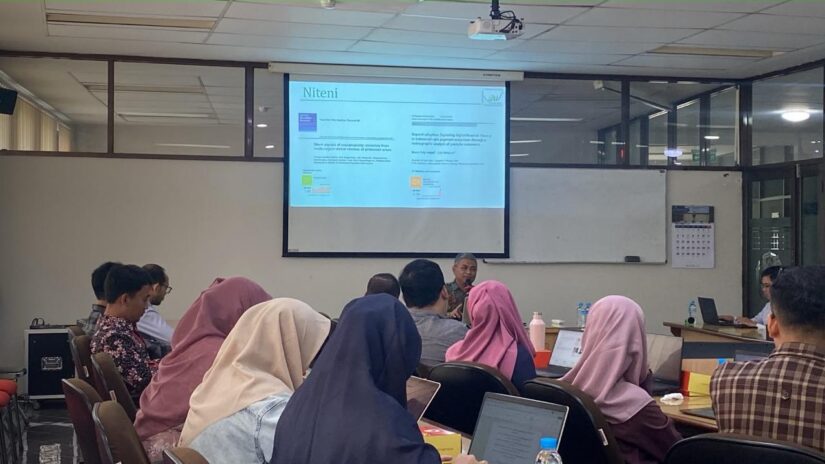
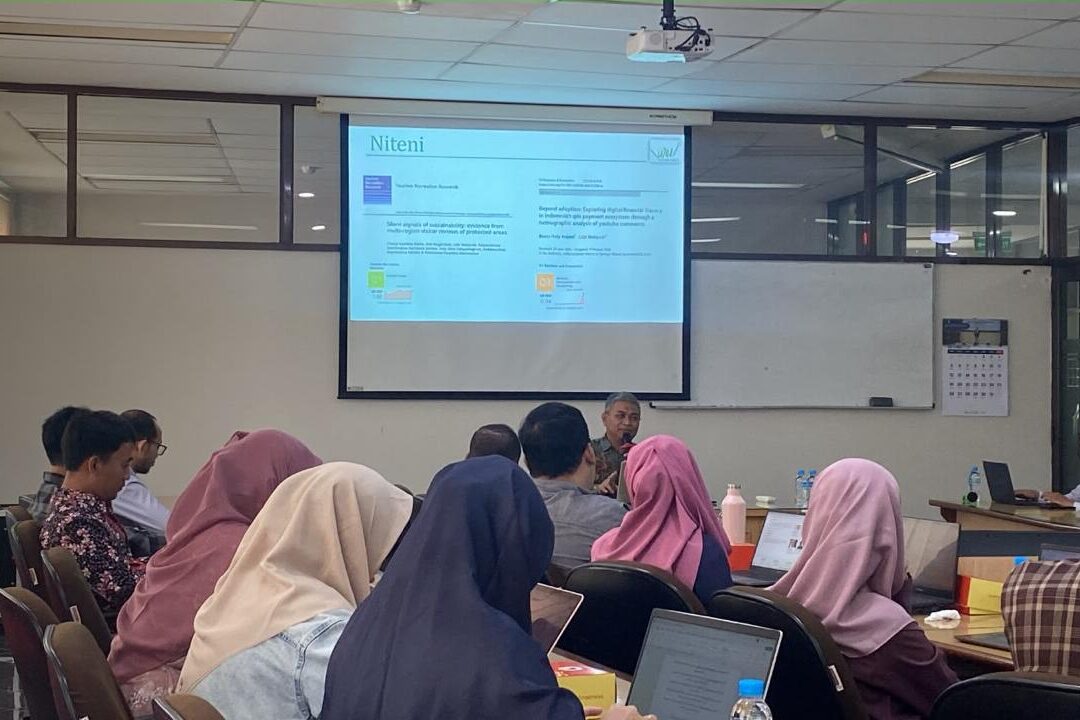
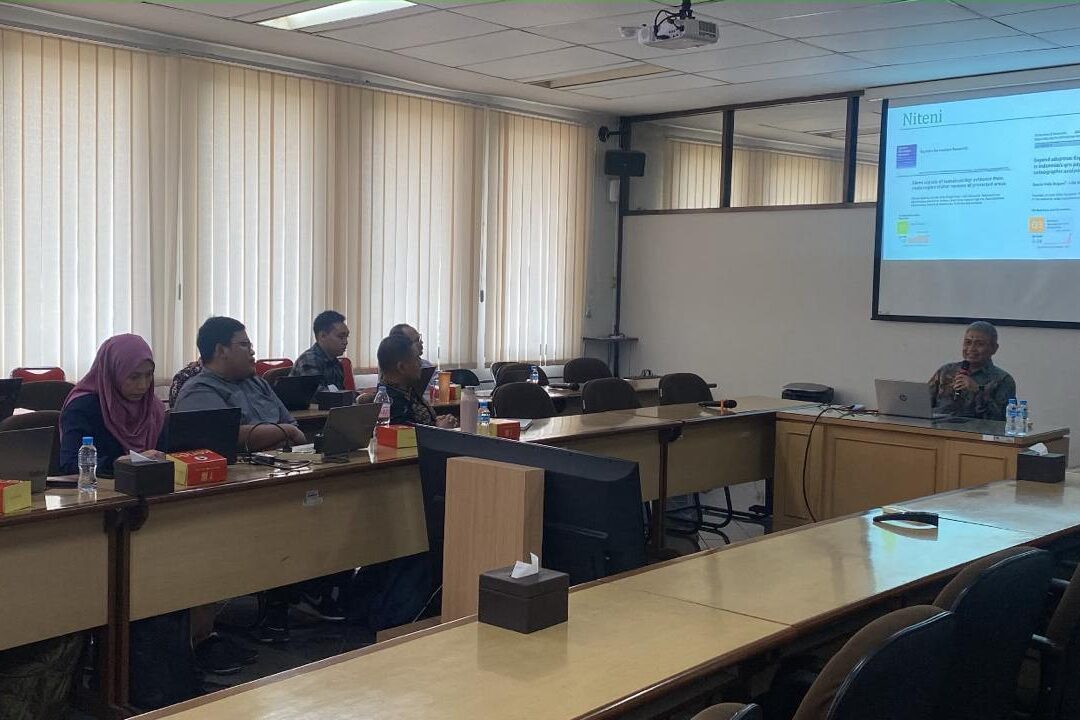
Yogyakarta, October 5th 2026 — The Graduate School of Universitas Gadjah Mada, in collaboration with the Islamic Economics and Halal Industry Doctoral Program successfully conducted a workshop entitled “Systematic Literature Review: The Foundation of Scholarly Contribution in Doctoral Research with Watase UAKE” on Monday (October 5th 2026). This academic event took place from 9:00 a.m. to 3:00 p.m. WIB in Meeting Room A, 5th Floor, SPs UGM Building. The technical training was specifically designed to guide doctoral students in managing thousands of scientific literature entries systematically and efficiently. The workshop featured Dr. Lilik Wahyudi, S.E., M.Si., a lecturer from the Faculty of Economics and Business at Universitas Sebelas Maret and Founder of Watase UAKE, as the principal speaker. All doctoral students of the PIIH program attended the session as an essential component of their Research Methodology and Concentration Research Workshop courses. This interactive training expected participants to strengthen their research methodological foundation to increase study completion and enhance publication quality.
Dr. Lilik, during the presentation session, introduced the Watase UAKE platform as a comprehensive tool to support literature searching, screening, and processing. He explained in detail the fundamental differences of the Systematic Literature Review (SLR) methodology and conventional literature reviews commonly utilized by researchers. In a conventional approach, researchers generally search for articles, read them thoroughly, and then select documents deemed relevant to their study. Conversely, the SLR methodology reverses this workflow by conducting rigorous quality selection before reading the full text of selected papers. “The conventional approach is to search, read, and then select. In SLR, we reverse the process: we select the articles first with quality selection and then read them,” Dr. Lilik explained to the audience. This explanation provided new insights for doctoral students on how to screen thousands of academic references effectively and measurably.
Furthermore, the speaker highlighted the integration of the PRISMA and SPAR-4-SLR frameworks to ensure accountability and transparency in literature review synthesis. The PRISMA framework is specifically applied during identification, initial screening, and eligibility assessment of selected research articles. Meanwhile, the SPAR-4-SLR framework is utilized to guide data analysis synthesis and systematic reporting of review findings. Dr. Lilik emphasized the critical necessity of enforcing internal quality control by screening abstracts, titles, keywords, and publication year parameters. The speaker also underscored strict data management protocols requiring all bibliographic entries originating exclusively from Scopus to maintain journal ranking integrity. Incorporating secondary data sources outside Scopus is strictly prohibited in the AI auto-reporting system to prevent statistical distortion and analytical interpretation anomalies.
Proceeding to the technical document retrieval phase, participants learned practical strategies to leverage institutional subscription databases using UGM Single Sign-On (SSO) credentials. To facilitate bulk downloading, the speaker shared custom Mozilla Firefox configuration techniques to prevent user accounts from being flagged as automated bots. The speaker also discussed Sci-Hub as a secondary alternative when official institutional access encounters limitations, although participants were advised to prioritize legitimate database channels. Additionally, attendees were trained to resolve metadata corruption issues within Watase UAKE, including manual DOI editing via PDF software and corrupted file restoration. Participants also practiced using FineReader OCR software to normalize hidden symbolic characters in domestic journal files caused by unlicensed software usage. Resolving these technical obstacles is essential to ensure that all document metadata can be recognized seamlessly by automated analytical systems.
Watase UAKE’s, during the selection stage, integrated workflow automatically generates PRISMA flowcharts, critical appraisal analysis, and SPARK frameworks based on the uploaded Scopus dataset. Participants were instructed on managing article eligibility statuses at the Path & Item (P&I) stage by updating the Scopus dataset without altering search keywords. In discussing information processing, the speaker outlined three essential stages consisting of data mining, extraction, and classification. Mining is applied to gather basic metadata such as titles and abstracts, whereas extraction retrieves specific details including research variables and empirical hypotheses. “Metadata such as titles, authors, and abstracts can be obtained with mining. However, information such as variables, hypotheses, and research locations requires extraction,” Dr. Lilik clarified. To enhance technical efficiency, the speaker introduced an Auto AI Web Service capable of automatically extracting theoretical frameworks and research contexts from digital documents.
Participants, in the final session of the workshop, explored research knowledge applications to identify theoretical gaps and create research trends in collected literature. The speaker subsequently provided comprehensive guidelines regarding writing techniques and structured reporting formats to craft publication-ready scientific manuscripts. Beyond receiving theoretical explanations, doctoral students engaged in hands-on practical exercises utilizing the Watase UAKE platform under the direct supervision of instructors. This practical component encompassed simulated database searching, quality screening, and information categorization customized to each participant’s doctoral dissertation topic. This training program is anticipated to empower SPs UGM doctoral students to produce high-impact, internationally recognized scientific publications that contribute significantly to academic advancement.
Author: Nadia Fadlillah Daniswari and M Naufal Majid
Editor: Berlian Belasuni