
Sedayu, Bantul — The Biomedical Engineering Master’s Program at the Graduate School (SPs) of Universitas Gadjah Mada (UGM), in collaboration with the Faculty of Medicine, Public Health, and Nursing (FK-KMK) UGM and the Faculty of Dentistry (FKG) UGM, organized a community service program (PKM) under the theme “Integrated Healthcare Services for Persons with Disabilities and Their Caregivers.”
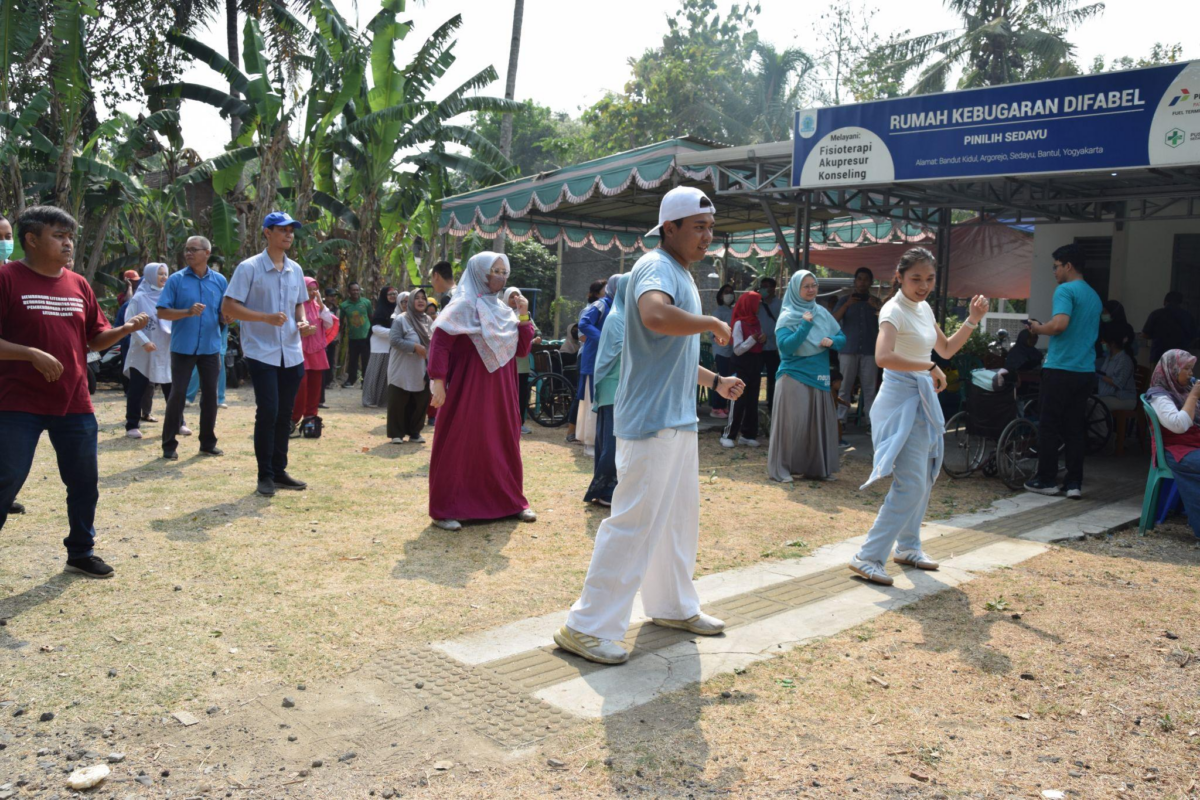
The activity was held on Saturday, September 12th 2026, at the Rumah Kebugaran Difabel (RKD), Sedayu, Bantul, Special Region of Yogyakarta.
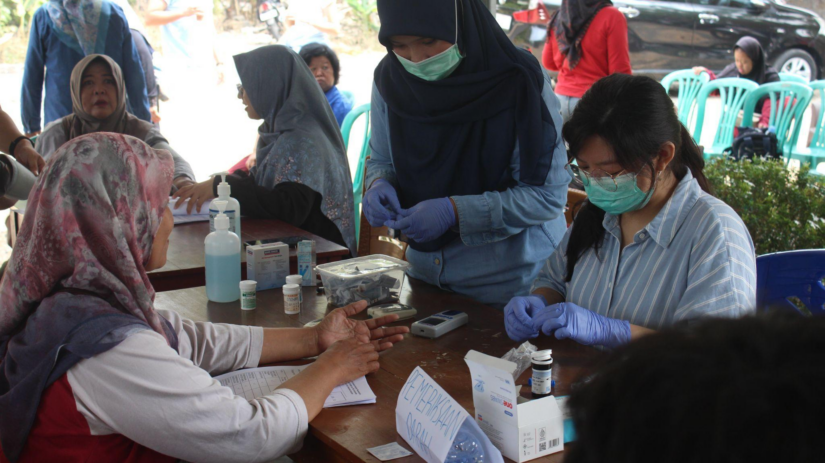
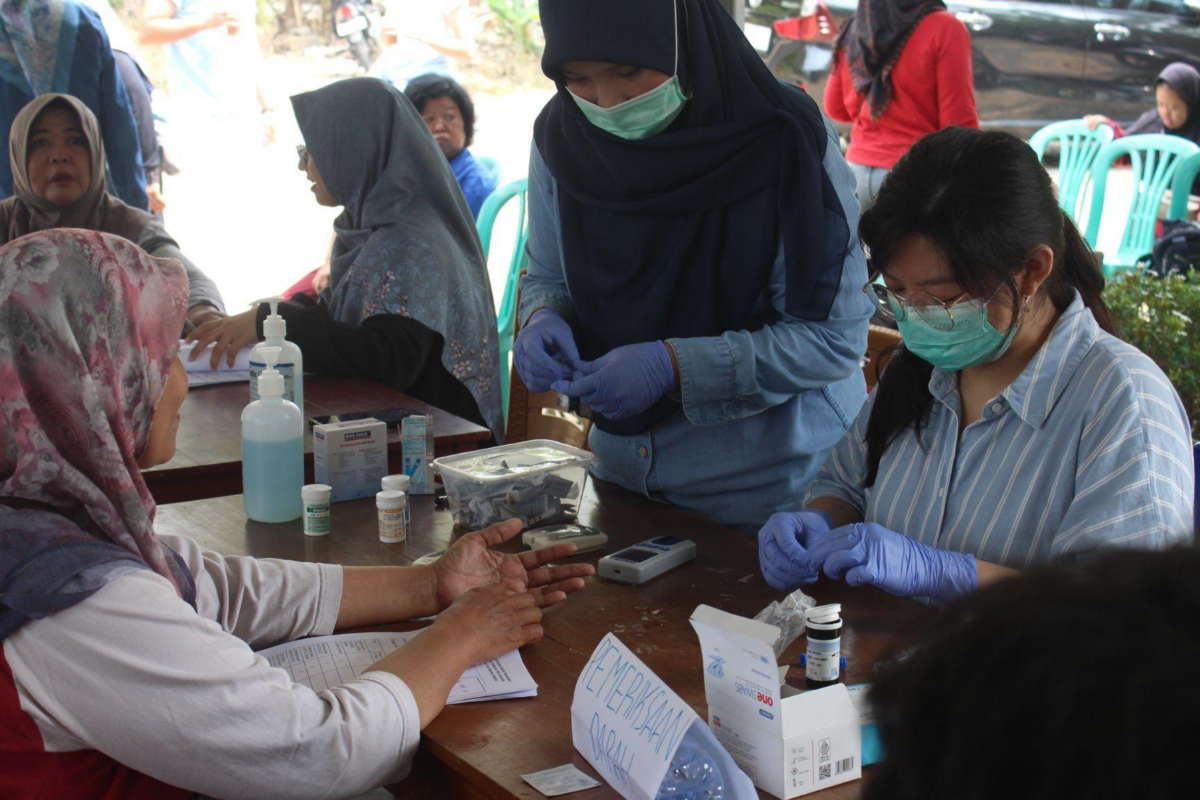
The event was part of a series of community service activities and aimed to provide integrated healthcare services for persons with disabilities and the family members or caregivers who support them. The services included general health examinations, dental examinations, basic laboratory tests, as well as specialized examinations for several participants with disabilities, including neurological examinations, physiotherapy assessments, and surveys on the use of assistive devices.
A total of 25 people with disabilities and 25 family members or caregivers participated in the activity. This integrated approach was expected to provide a more comprehensive overview of the participants’ health conditions while also providing information that could support ongoing care and assistance.
The chief of the community service program, Dr. drg. Anne Handrini Dewi, M.Kes., from FKG UGM, stated that the activity was expected to provide direct benefits to participants by providing information about their health conditions.
“This activity showed participants are expected to receive direct information regarding their health conditions. Dental examinations, particularly for people with disabilities, are beneficial for the early detection of oral health problems, prevention of complications, and improvement of quality of life. In addition, parents and caregivers also receive education on care practices that can be continued on an ongoing basis,” said Dr. Anne.
The team, in addition to providing medical examinations, also paid attention to the protection of participants’ data and privacy. Dr. Anne emphasized that participants’ identities would be kept confidential. Any publication of the activity’s results would use only anonymized data and would not include participants’ names or personal identifying information.
“Participants are required to follow the activity’s procedures and may ask the staff if there is any information or procedure that is unclear,” she added.
Meanwhile, Ir. Rini Dharmastiti, M.Sc., Ph.D., IPM., ASEAN Eng., Chief of the Biomedical Engineering Master Program at the UGM Graduate School, stated that the activity represented a concrete contribution by the university to society through collaboration across academic disciplines.
According to Dr. Rini, the healthcare needs of persons with disabilities vary considerably, requiring an approach that does not focus solely on a single aspect of health. Collaboration among biomedical engineering, medicine, public health, dentistry, neurology, and physiotherapy enables healthcare services to be delivered in a more integrated manner according to participants’ needs.
“This activity also provides an opportunity for students to learn firsthand about community needs, particularly those of people with disabilities and their caregivers. We hope that cross-faculty and interdisciplinary collaborations such as this can continue to be developed so that the educational and academic expertise at UGM can provide tangible benefits to society,” said Dr. Rini.
This community service activity was funded with a UGM Graduate School Research Grant (SPS). The implementation team consisted of professionals and academics from various fields, including neurologists from FK-KMK UGM, dentists from FKG UGM, residents from FK-KMK UGM, and students from the Biomedical Engineering Master’s Program.
The involvement of professionals from multiple disciplines was an important component of the integrated healthcare services. In addition to examinations, participants also received information and education intended to assist families and caregivers in providing day-to-day health support.
The implementation of this research-grant-funded activity also supported the achievement of the Sustainable Development Goals (SDGs), particularly SDG 3: Good Health and Well-Being, SDG 4: Quality Education, and SDG 17: Partnerships for the Goals.
Writer: Arni W