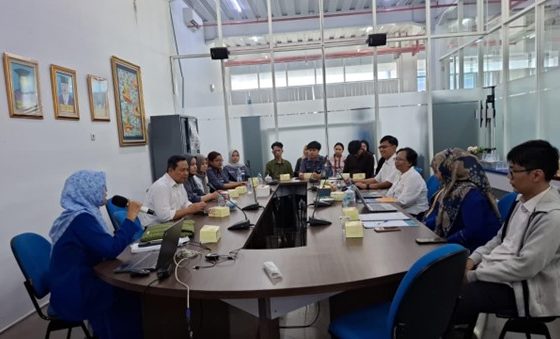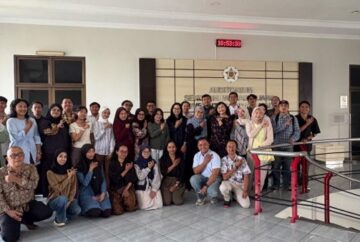
The Graduate School of Gadjah Mada University (UGM) held a SAPTO 2.0 Introductory Socialization event as a strategic step in preparing study programs for the new accreditation application scheme with the National Accreditation Board for Higher Education. The event took place on Thursday, April 23rd 2026, in Meeting Room A, 5th Floor, UGM Graduate School.
The socialization was attended by various key elements of the Graduate School, including the leaders, quality assurance coordinators, heads of study programs and study interest groups, and academic service managers. This multi-stakeholder involvement demonstrated the institution’s commitment in ensuring the readiness of all units to adopt the new, more integrated, digital-based system.
The event began with opening remarks by the Graduate School leaders followed by an introduction from the Coordinator of the Quality Assurance and Academic Data Unit, emphasizing the importance of institutional preparation to respond to changes in accreditation mechanisms. The main session then featured a presentation by Prof. Dr. Laurentius Hartanto Nugroho, M.Agr., and Akio Putra Perdana, comprehensively explaining the accreditation application scheme through SAPTO 2.0, including the system flow, new features, and adjustments required by study programs.
One crucial point conveyed during this socialization was that SAPTO 2.0 will be directly integrated with the national higher education data system, the Higher Education Database. This integration marks a significant shift in the accreditation process, where the data used is no longer entirely based on manual input, but rather gained from recorded data in the national system. Thus, the accuracy, consistency, and completeness of data in PDDIKTI are crucial factors in the accreditation assessment process.
The speakers, in their presentations, emphasized that SAPTO 2.0 is not simply a technical system update, but rather part of a transformation in accreditation governance, which demands data, accuracy in filling out forms, and consistency between documents and field practices. With an increasingly integrated system, each study program is required to have sound data governance, systematically documented, and aligned with the implementation of the Internal Quality Assurance System (SPMI).
The discussion and Q&A session was lively, with participants exploring various technical and substantive aspects related to the implementation of SAPTO 2.0. Questions raised not only focused on system usage but also on data synchronization strategies with PDDIKTI, prepared document, and efforts to maintain consistency between system data and actual conditions in study programs.
The event concluded with the presentation of a follow-up plan, affirming the Graduate School’s commitment to continue assisting study programs in their adaptation to SAPTO 2.0. This assistance is expected to strengthen the institution’s readiness to face future accreditation cycles in a more systematic, structured, and data-driven manner.
The UGM Graduate School with this outreach activity, emphasized that the transformation of the accreditation system must be accompanied by a strengthening of quality culture and data governance. The integration of SAPTO 2.0 with PDDIKTI increases process efficiency and also demands greater accountability, so that the quality of higher education delivery can be fully reflected and measured.
Author: Burhanul Aqil