
North Maluku, 2026 — The Graduate School of Universitas Gadjah Mada (UGM) with the 2026 Patriot Expedition Team (TEP), in collaboration with the Ministry of Transmigration, is promoting the utilization of agricultural and plantation waste as a source of energy and economic opportunities for communities in the transmigration area of Morotai Island Regency, North Maluku Province.
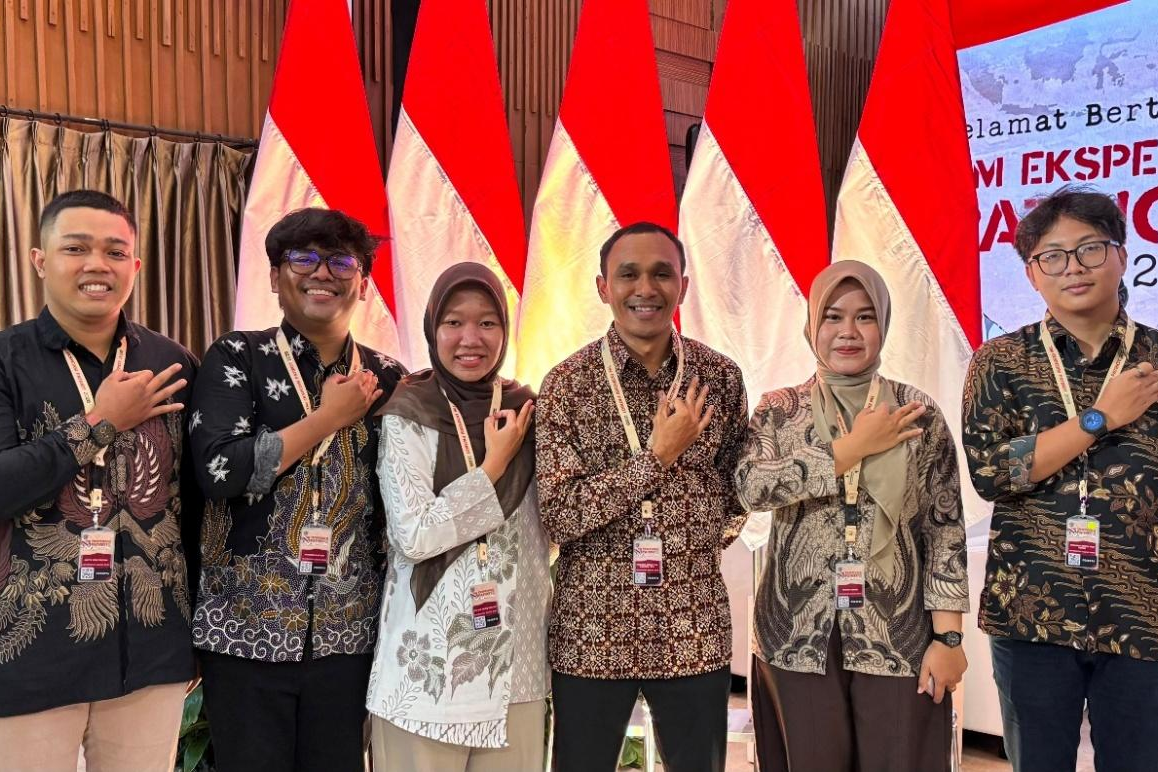
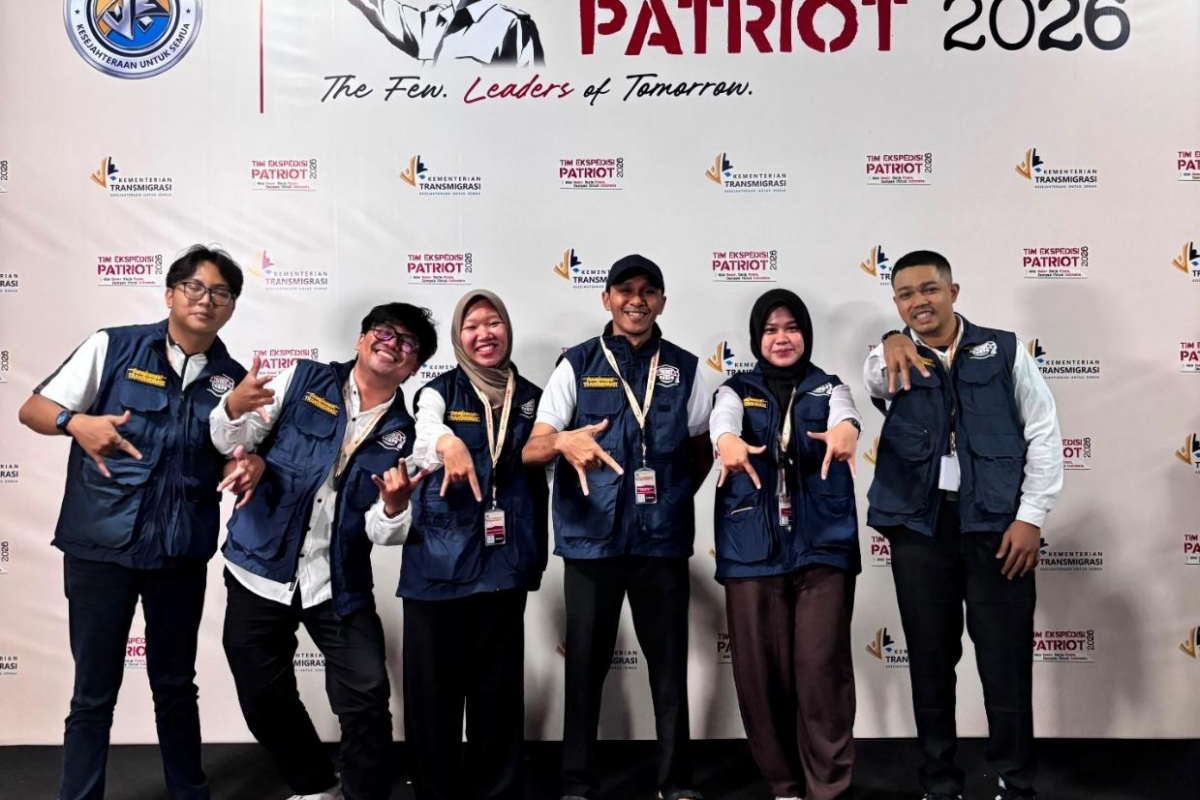
Started on 1st August to 25th November 2026, the program involved lecturers, alumni, and students from various academic disciplines at UGM. The team is led by Yumechris Amekan, S.Si., M.Biotech., Ph.D., a lecturer in the Biotechnology Program, Graduate School of UGM, together with Abiyyu Rifqi Pratama, S.P., M.Sc. and Muhammad Maulidan, S.Pi., M.Sc., alumni of the Development Extension and Communication Program at the Graduate School of UGM, as well as Natasya Rahman, S.Tr.P., an active student in the same study program. Cross-unit collaboration at UGM is further strengthened by Titi Nur Arofah Hidayati, S.P., an alumna of the Faculty of Agriculture, and Muhammad Ikhwan Dian Kusuma, S.Tr.Geo., from the Vocational College of UGM.
This interdisciplinary collaboration showed the 2026 UGM Patriot Expedition Team conducted research and community empowerment activities focusing on converting agricultural and plantation waste into renewable energy sources and economically valuable products. This initiative is intended to support the development of an energy-independent village concept in the transmigration area of Morotai Island.
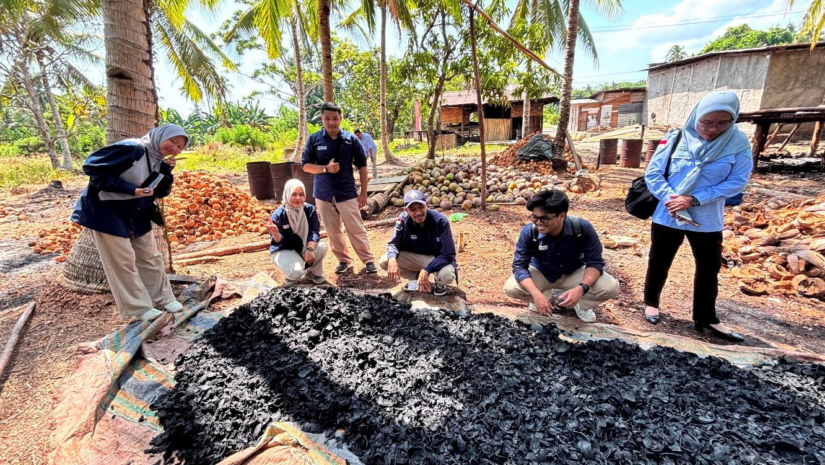
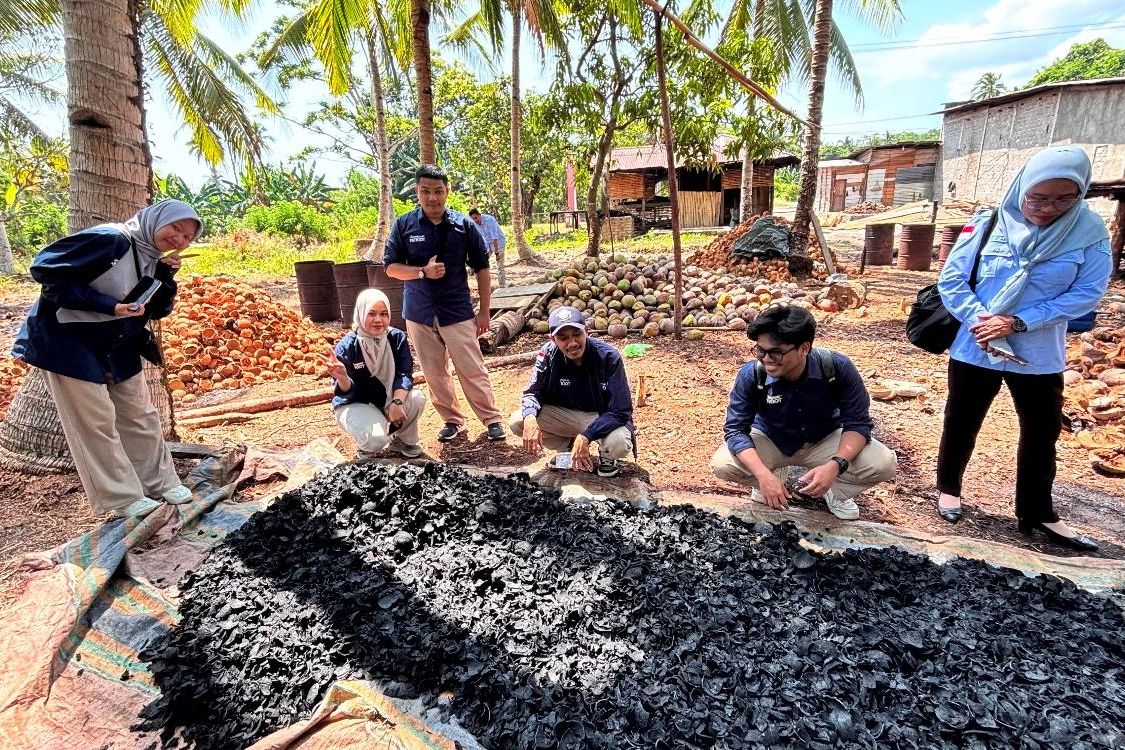
Over approximately four months, the team has conducted community outreach and empowerment activities focused on the management of agricultural and plantation waste. One of the main activities is the development of a closed-combustion carbonization prototype for charcoal producers.
The technology is designed to minimize smoke wasted during the combustion process. The resulting carbonized materials, including waste such as coconut husks, are further processed into briquettes, providing added economic value while reducing waste.
The team, in addition to briquette production, is also developing the utilization of coconut husks to produce cocopeat, while the liquid by-product of the processing is being explored for use in the production of nata de coco. These innovations are expected to create alternative ways of transforming waste into economically valuable products for local communities.
The initiative is not limited to plantation waste. Agricultural and household waste are also incorporated into the technology development carried out by the team. This biomass will be utilized with a biodigester to produce biogas as an energy source for household cooking needs.
The utilization of biomass as an energy source is expected to help communities in the transmigration area reduce their dependence on fossil fuels, such as LPG and kerosene.
The implementation of the 2026 UGM Patriot Expedition Program in Morotai Island is being carried out in stages. During the first month, the team conducted a rapid assessment to identify the potential of agricultural and plantation waste available in the transmigration area. The initial mapping results served as the basis for developing a retort drum prototype for the carbonization process and a biodigester for utilizing biomass as an energy source.
During the second and third months, activities focused on prototype development and monitoring the results of the technology implementation. In the fourth month, the team will disseminate the results and develop an energy potential mapping of the area. This energy potential map is expected to serve as an additional document for the local government, providing a basis for identifying and developing Morotai Island’s local potential in utilizing agricultural and plantation waste.
The involvement of lecturers, students, and alumni from various academic disciplines is an important component of the 2026 UGM Patriot Expedition. The collaboration combined approaches from biotechnology, development extension and communication, agriculture, and other relevant disciplines to address the needs of communities in the transmigration area.
The research and community empowerment approach showed the program focuses not only on developing waste utilization technologies but also on encouraging the management of local resources as sources of energy while creating added economic value for communities.
The program utilization on local potential and fostering interdisciplinary collaboration, is expected to contribute to the development of transmigration communities with more productive resource management and support greater energy self-sufficiency.
Author: Yumechris Amekan, S.Si., M.Biotech., Ph.D.
Editor: ArfikahI