
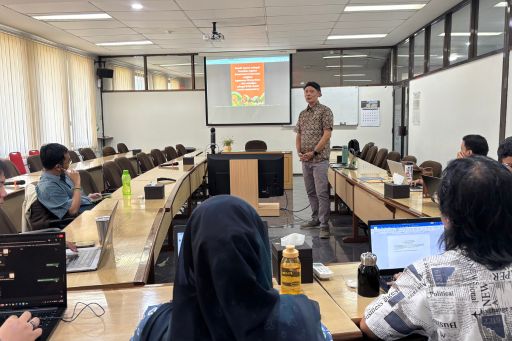
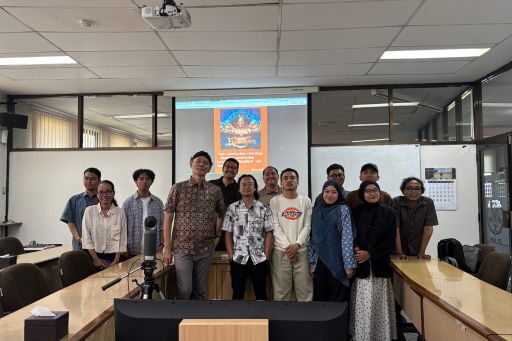
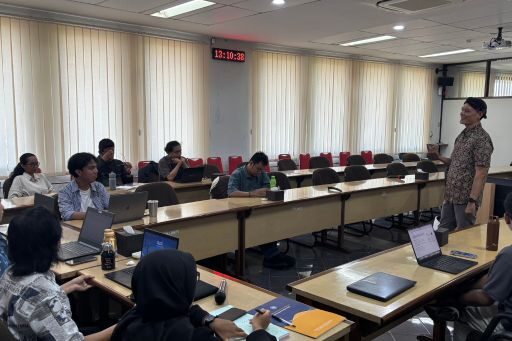
Yogyakarta, 21st October 2026 — The Media and Cultural Program, Graduate School, Universitas Gadjah Mada (UGM), held a Discussion Series entitled “Politics of Religious Representation,” focusing on the case study of religious comics on Wednesday (21st October). Featuring Dr. Leonard Chrysostomos Epafras as the speaker, the discussion was part of the learning activities for the Media and Politics of Representation course. The event took place at Meeting Room A, 5th Floor, Graduate School Building, Unit 1, UGM.
The discussion invited students to critically examine visual media and popular culture, particularly in understanding how religion is represented in comics. Comics are not merely viewed as entertainment products, but also as cultural texts containing narratives, symbols, values, and particular interests. The images, characters, and storylines showed comics convey ideas on religion and culture while shaping how readers understand social identities and historical experiences.
One of the key topics explored was the relationship of visual representation, identity construction, and collective memory. The portrayal of characters, religious symbols, and cultural elements in comics is not necessarily neutral. The selection of characters, attributes, expressions, and narratives can convey ideological meanings about particular groups or traditions. Therefore, critically reading comics requires attention to the social and historical contexts underlying the production of representations, including the values and perspectives communicated on their visual elements.
The discussion also opened up opportunities to examine the relationship of religion, popular culture, and everyday life. The perspective of vernacular religion, as developed in the sociology of religion, offers a way to understand how people practice, interpret, and make sense of religion in their everyday experiences. In the context of visual media, this perspective helps illustrate that religious representation does not emerge solely from formal religious institutions or teachings, but also with cultural practices, stories, symbols, and expressions that evolve within society.
Comics and other visual media in Indonesia have the potential to reintroduce the nation’s historical and cultural heritage to the public, particularly younger generations. Representations of cultural heritage, such as Borobudur Temple, wayang figures, and religious symbols, demonstrate how traditions can acquire new forms and meanings in popular media. However, these representations also need to be examined critically, as media do not simply reflect reality; they also shape how society understands history, culture, and national identity.
This Discussion Series showed students were provided with an opportunity to develop critical perspectives on the relationship of media, religion, and culture. Examining the politics of representation is important because it helps reveal how meanings are constructed, disseminated, and negotiated with popular cultural products. The event also strengthened the learning approach of the Media and Politics of Representation course. It views media as a space for the production of meaning and an arena in which various social and ideological interests unfold.
This activity contributes to the Sustainable Development Goals (SDGs), particularly SDG 4: Quality Education, by strengthening critical learning, media literacy, and interdisciplinary perspectives. Furthermore, discussions on the diversity of religious and cultural representations are also relevant to SDG 10: Reduced Inequalities, particularly in fostering understanding and appreciation of diverse identities within society.