
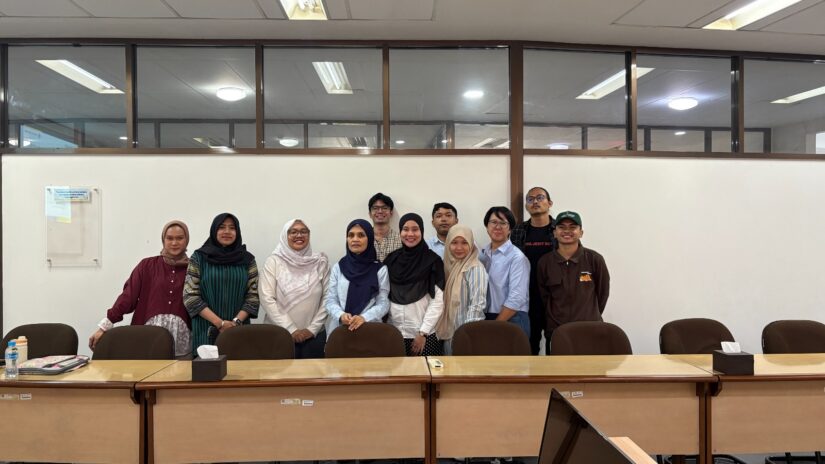
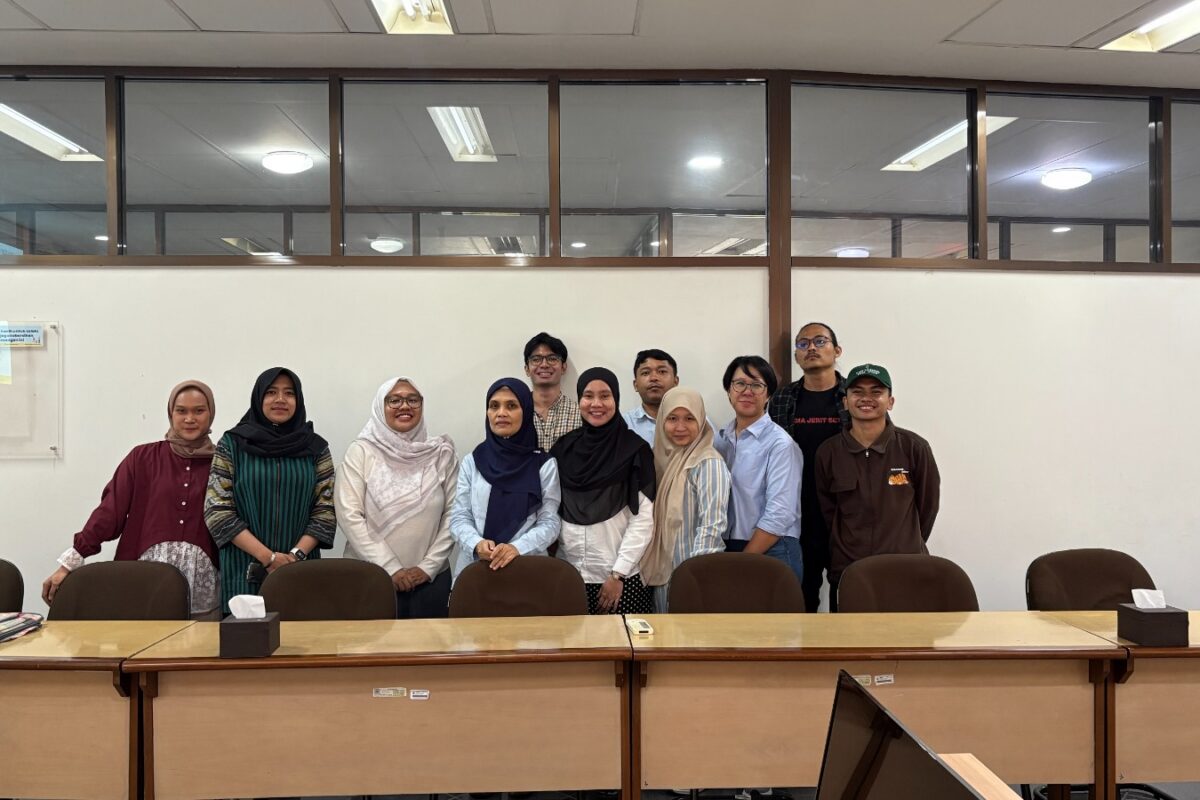
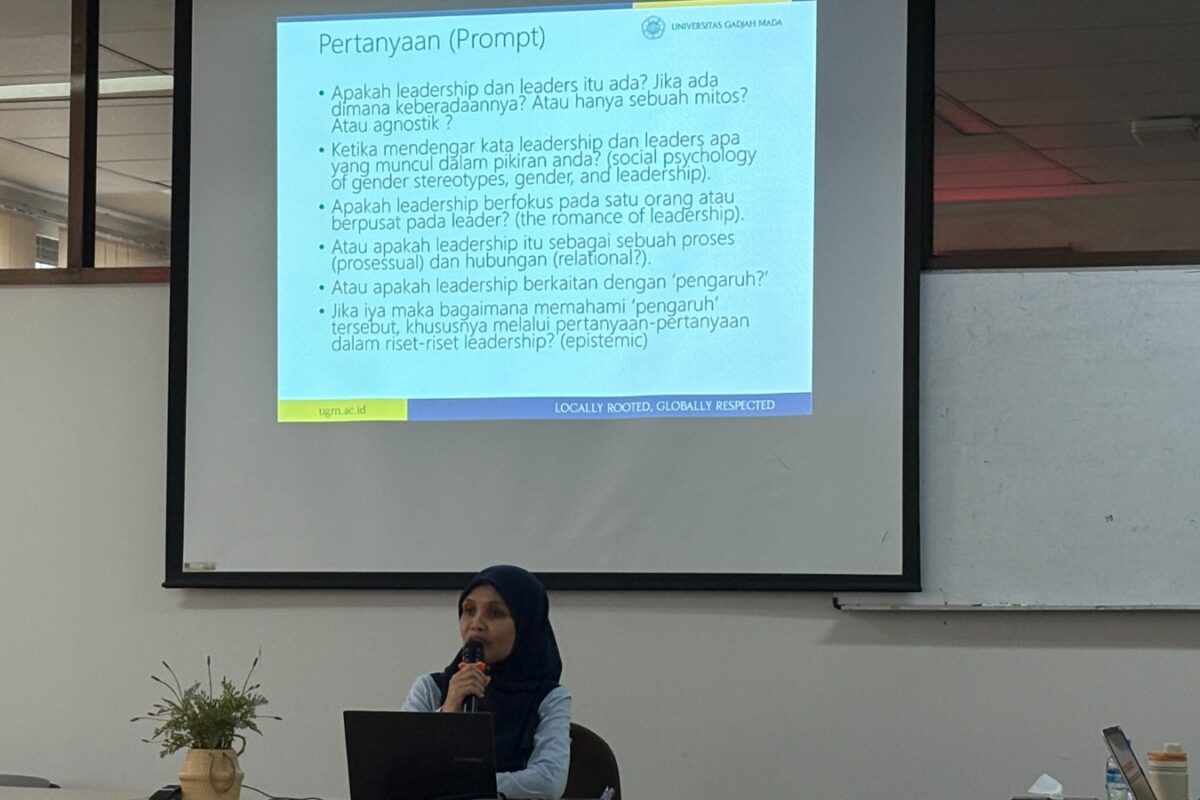
Yogyakarta, 7th October 2026 —Media and Cultural (KBM) Program, Graduate School of Universitas Gadjah Mada (UGM), explored issues of gender and leadership in higher education with a discussion featuring Prof. Nurdiana Gaus. The discussion examined how gender constructions, organizational culture, and power relations influence leadership practices and women’s opportunities to occupy strategic positions in academic institutions.
The discussion entitled “Gender and Leadership in Higher Education” encouraged students to question the common assumption that leadership is an individual ability inherent in certain people. The perspective of critical leadership showed leadership was understood not merely as a personal characteristic or the authority of an individual leader, but as a process shaped by interpersonal relationships and the distribution of power within organizations.
The critical leadership approach encourages leadership studies to move beyond questions about how leaders can perform their roles effectively. It also invites researchers to examine who is recognized as a leader, how influence is established, and what values and interests underpin leadership practices. This perspective enables organizational structures and established practices to be critically examined to identify potential inequalities.
One issue highlighted in the discussion was the persistent association of leadership and masculine characteristics. Assertiveness, dominance, and the ability to control an organization are often regarded as attributes of an ideal leader. Women, meanwhile, may face different expectations when occupying leadership positions, including judgments shaped by gender stereotypes concerning behavior and social roles. This demonstrates that the recognition of leadership capabilities is not always independent of the social constructions prevalent in society.
The barriers women face throughout their academic careers can be understood with the concepts of sticky floor, leaky pipeline, and glass ceiling. The sticky floor describes difficulties in advancing from entry-level positions, while the leaky pipeline refers to the declining representation of women throughout career progression. The glass ceiling describes invisible barriers that prevent women from reaching the highest leadership positions. These phenomena indicate that gender inequality cannot be explained solely by differences in individual capabilities; it must also be examined in relation to institutional systems and structures.
The discussion also addressed changes in higher education governance increasingly shaped by competition, internationalization, commercialization, and performance measurement. On the one hand, universities are expected to produce and disseminate knowledge for the public good. On the other hand, they encounter growing demands to enhance competitiveness, establish industry partnerships, and generate innovation. These changes also influence how institutional success is measured and what qualities are considered desirable in leaders.
In this context, the division of labor in higher education institutions is another important issue. Women often undertake work that supports institutional operations, including quality assurance, academic development, and student support. Although these responsibilities are essential, they do not always receive recognition equivalent to more visible activities, such as managing research projects, overseeing financial resources, and developing external partnerships. This disparity in recognition can affect performance evaluations and career advancement opportunities.
Beyond structural barriers, the discussion highlighted the importance of women’s agency in negotiating their positions and exercising leadership. Support networks and solidarity among women, including the principle of women support women, can provide spaces to strengthen women’s contributions and develop alternative leadership practices. However, these efforts must be accompanied by institutional change so that the responsibility for achieving equality does not fall solely on individual women.
The perspective of critical leadership showed the Media and Cultural Program encourages students to understand leadership as a phenomenon closely connected to social constructions, power relations, and organizational dynamics. The discussion also emphasized the importance of gender mainstreaming with greater awareness, gender-responsive policies, and the transformation of institutional cultures. These approaches showed higher education institutions are expected to foster a fairer and more inclusive academic environment that provides equal opportunities for all members of the academic community.
Author: Khoirul Mujazanah