
Yogyakarta, 12th November 2026 – The Leadership and Policy Innovation Master and Doctoral Programs (MDKIK), Graduate School, Universitas Gadjah Mada (UGM), held a webinar entitled “Conducting Responsible Research: Why Ethical Clearance Matters” on Thursday (12/11). Conducted online via Zoom Meeting from 1:00 to 3:00 p.m. Western Indonesian Time (WIB), the webinar featured Ario Wicaksono, M.Si., Ph.D., Chair of the Social Sciences and Humanities Panel of the UGM Research Ethics Committee, as the speaker.
The webinar was specifically intended for Master’s (S2) and Doctoral (S3) students of MDKIK UGM. It aimed to provide participants with an understanding of the procedures, requirements, and application process for obtaining ethical clearance in research, while raising awareness of the importance of applying ethical principles in academic and research activities.
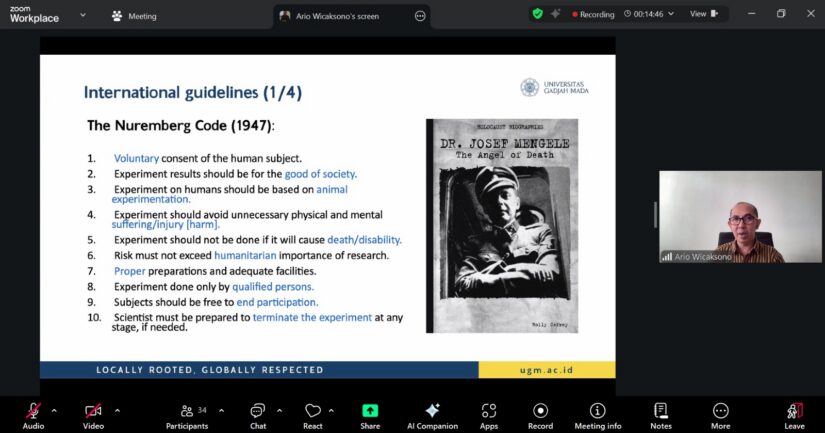
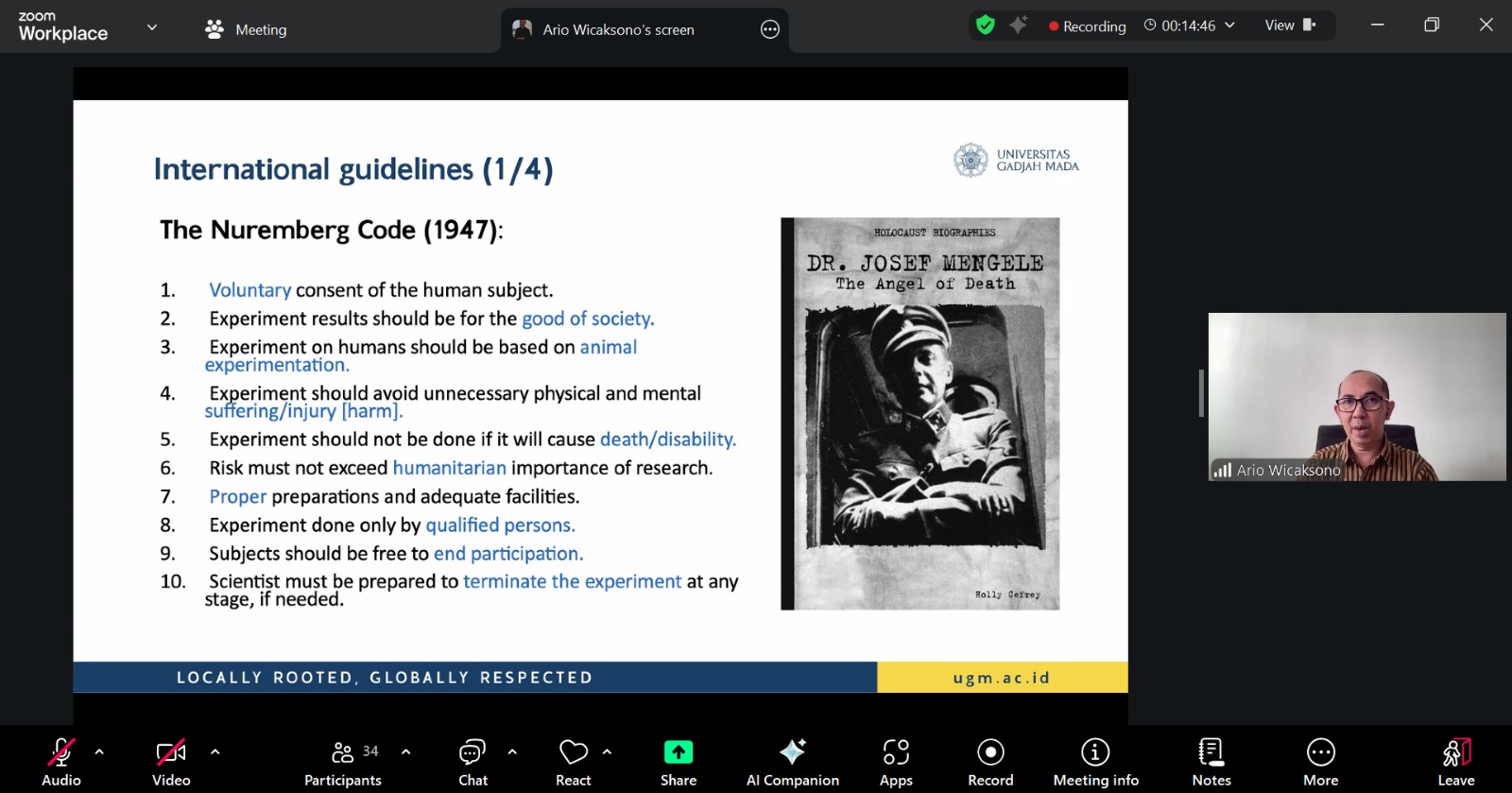
Ario Wicaksono in his presentation highlighted the importance of international research ethics guidelines as a foundation for ensuring that research is conducted responsibly. One of the topics discussed was The Nuremberg Code (1947), which outlines ten fundamental principles for experiments involving human subjects. These principles include the importance of voluntary consent from research participants, the benefits of research to society, the prevention of unnecessary physical and mental suffering or injury, and participants’ freedom to withdraw from a study at any time.
The discussion emphasized that protecting research participants is a fundamental aspect of producing scientific knowledge. Researchers must also consider the balance of research risks and benefits, ensure adequate preparation and facilities, and make certain that research is conducted by appropriately qualified individuals.
This webinar showed students are expected to gain a deeper understanding that ethical clearance is not merely an administrative requirement to be fulfilled before conducting research. Ethical approval represents a commitment in upholding academic integrity, respecting the rights and safety of research participants, and ensuring that research activities comply with established ethical standards.
This event reflected MDKIK UGM’s ongoing efforts to strengthen students’ academic capacity and foster a research culture grounded in integrity, quality, and responsibility. With a sound understanding of research ethics, students are expected to produce scholarly work that contributes to the advance of knowledge but also upholds humanitarian principles and social responsibility.
Author: Khoirul Mujazanah