
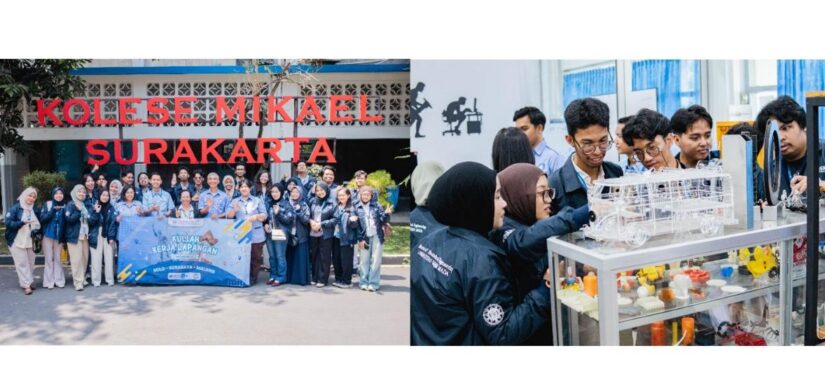
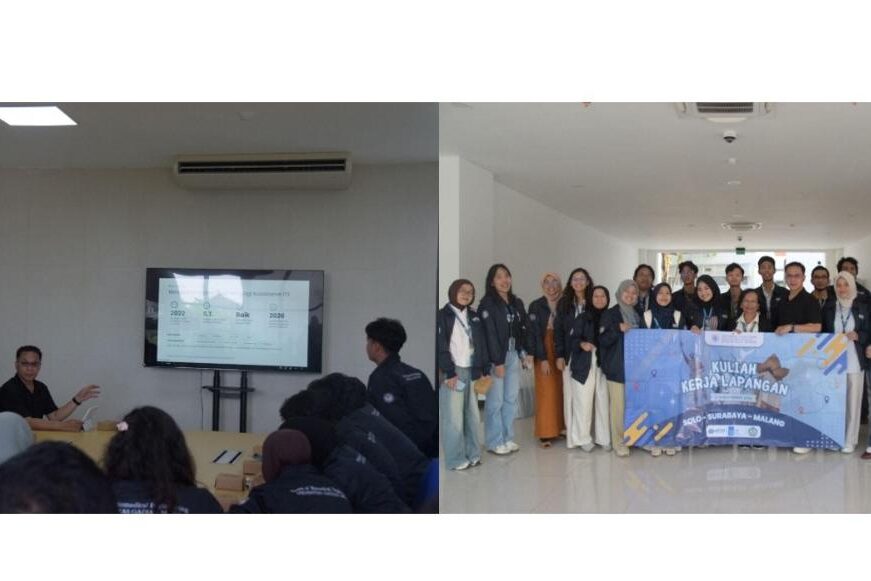
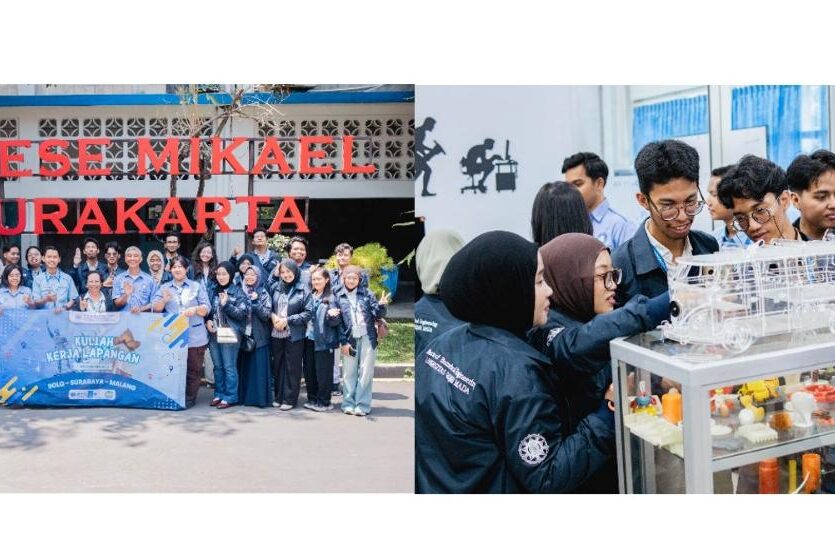
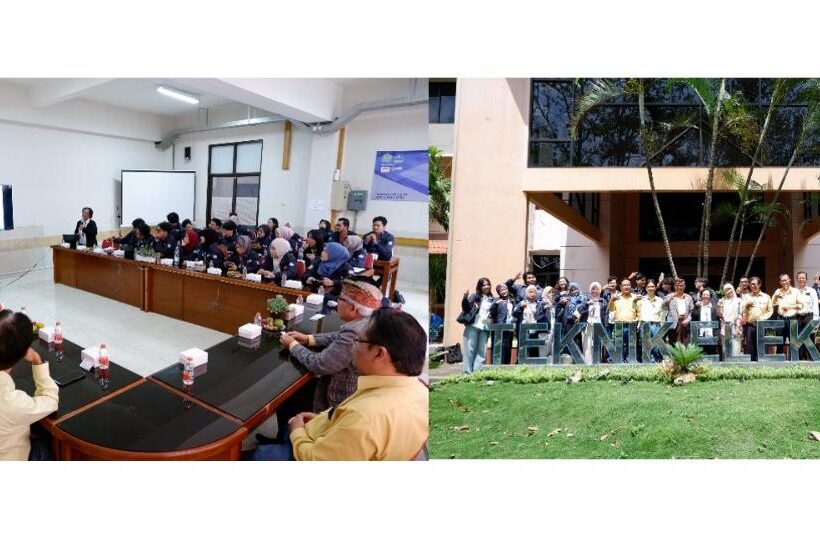
YOGYAKARTA – Students from the Biomedical Engineering (BME) Master Program at the Graduate School of Universitas Gadjah Mada (UGM) conducted a field study visit to Solo, Surabaya, and Malang on November 3th–4th, 2026. The visit was attended by 24 students and accompanied by faculty members and included visits to ATMI Polytechnic and PT ATMI Solo, the Medical Technology Study Program at Institut Teknologi Sepuluh Nopember (ITS), and the Electrical Engineering at Institut Teknologi Nasional Master’s Program (ITN) Malang.
The field study aimed to broaden students’ understanding of engineering practices in both industrial and academic settings, while also creating opportunities for networking and inter-institutional collaboration.
Learning from Production-Based Vocational Education at ATMI
The journey began from Solo. At ATMI Polytechnic Surakarta and PT ATMI Solo, participants attended presentations and toured the facilities.
ATMI, which began operating in 1968 with support from Swiss and German organizations and governments, implemented the Production-Based Education and Training (PBET) method. This approach emphasizes learning with production activities, with approximately 67 percent of the curriculum devoted to practical training and 33 percent to theory. Each student is assigned responsibility for operating a specific machine to produce components that meet industrial standards.
Participants also learned about the ATMI Group ecosystem, which comprises three educational institutions and four corporate business units. They were introduced to various manufacturing technologies, including CNC machining, milling, turning, molding, and laser cutting.
Several products showcased during the visit were closely related to biomedical engineering, including a hip joint simulator for biomechanical studies, a dental measuring probe developed in collaboration with UGM’s Faculty of Dentistry, and a vest designed for children with autism.
Clinically Oriented Medical Technology at ITS
In Surabaya, the group visited the Medical Technology Study Program at ITS. This multidisciplinary program integrates medical sciences, engineering, natural sciences, and design, adopting an approach that begins with identifying the needs of patients and healthcare professionals in clinical settings. Student internships are largely directed toward hospital environments.
Participants were introduced to several technological developments, including CRANIO3D, a system for cranial reconstruction and patient-specific implants based on CT scans and 3D printing; surgical fixation devices; 3D-printed hand and leg prostheses developed by Rumah Prostesis Indonesia; AR/VR/XR-based surgical training; and cranioplasty mannequins.
One notable example was the design of children’s prostheses featuring popular characters such as Spider-Man and Ultraman. This demonstrates an approach that considers not only the functional needs of users but also their psychological well-being.
Energy and Control Systems at ITN Malang
The participants, on the second day, visited the Electrical Engineering Master Program at the ITN Malang Graduate Program, located at Campus 2.
The relatively new program offers specializations in Electrical Energy and Control Systems and is currently preparing to establish a doctoral program.
During the visit, participants observed the implementation of a campus-scale Solar Power Plant (PLTS) featuring both on-grid and battery storage systems. They also explored a sensor-based Building Automation System (BAS) designed to detect room occupancy, monitor electrical parameters, and control equipment to improve energy efficiency.
This field study showed expectations on students to connect their field experiences with research and the development of healthcare technologies, and also explored opportunities for collaboration with the institutions they visited.
This activity also supports the implementation of the Sustainable Development Goals (SDGs), particularly Goal 3: Good Health and Well-Being; Goal 4: Quality Education; Goal 9: Industry, Innovation and Infrastructure; and Goal 17: Partnerships for the Goals.
Writer: Ines Maharani Pratiwi Editor: Arni W.