
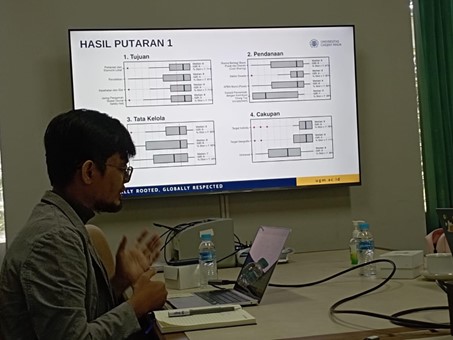
Yogyakarta, March 31st 2026 — The Graduate School of Universitas Gadjah Mada (SPs UGM) has released the results of a strategic policy study on the governance discourse of the Free Nutritious Meals Program (MBG). The study was led by Prof. Muhadjir Darwin, M.P.A., Ph.D., in collaboration with doctoral and master students of the Leadership and Policy Innovation Study Program, M. Qur’anul Kariem, M.I.P., and Ryan Alfitra, S.ST.
The research employed a two-round Delphi method involving 21 expert panelists from various disciplines, complemented by in-depth interviews conducted between August and October 2025.
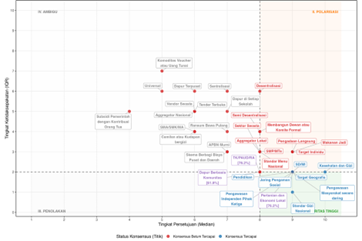
The findings highlight the urgency of improving the governance design of MBG implementation. Panelists assessed that the program’s current universal coverage is overly ambitious, posing potential long-term fiscal risks and increasing the complexity of oversight.
As an alternative, the panelists recommended a gradual restructuring of the program’s target beneficiaries by prioritizing primary school students (SD/MI), particularly in high-poverty areas (geographical targeting). This recommendation aligns with UNESCO’s proposal that places primary school coverage as one of the indicators of SDG 4.
In addition, economic objectives and the strengthening of local agriculture are not yet considered primary priorities, as they may shift the program focus and compromise its nutritional quality.
“With this approach, substantive justice can be maintained, while effectiveness and fiscal sustainability are better ensured,” said Prof. Muhadjir Darwin.
The panelists also emphasized the importance of establishing clear nutritional standards and enhancing public participation, both with online mechanisms and independent third-party oversight. These aspects are considered requiring a legal framework at Law level (Undang-Undang) to ensure that the MBG program does not merely become a short-term political commodity, but evolves into a sustainable social protection system.
Such regulation is expected to include standardized healthy kitchens, funding schemes that do not fully burden the state budget (APBN), and digital-based public monitoring mechanisms (crowd-based monitoring).
On the other hand, the study also identified polarized views on several aspects, including alternative financing models, gradual decentralization, variations in service modalities, kitchen models, and supply chain stability. These differences reflect the dilemma of the idealism of fulfilling citizens’ rights and the realities of fiscal limitations, regional bureaucratic capacity, as well as food safety and quality concerns.
Therefore, the successful implementation of the MBG program will depend heavily on mitigating key risks, including potential budget leak and food safety issues, integrating supply chains with local economies, and strengthening the legal foundation.
“To improve and ensure the long-term success of the MBG program, I recommend the President to establish a strong legal framework, national nutritional standards, sustainable funding schemes, as well as integration with local food systems and digital monitoring,” said Dr. W.
Source: Muhadjir M. Darwin
Editor: Asti Rahmaningrum
Photo: Muhadjir M. Darwin