
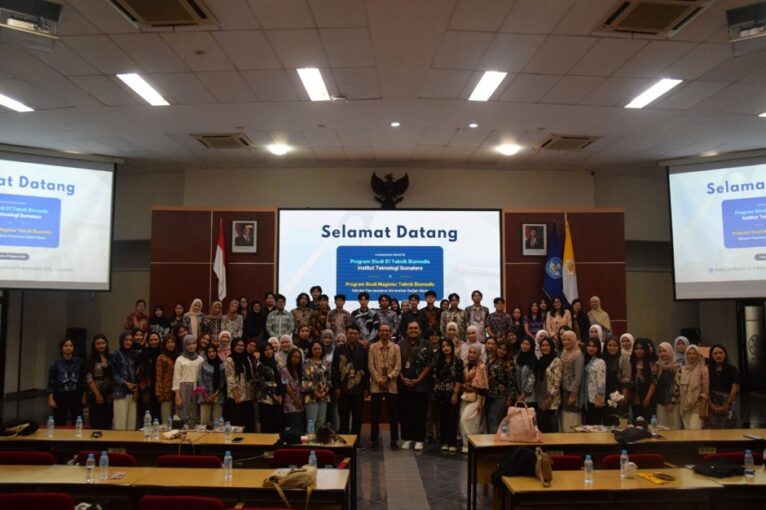
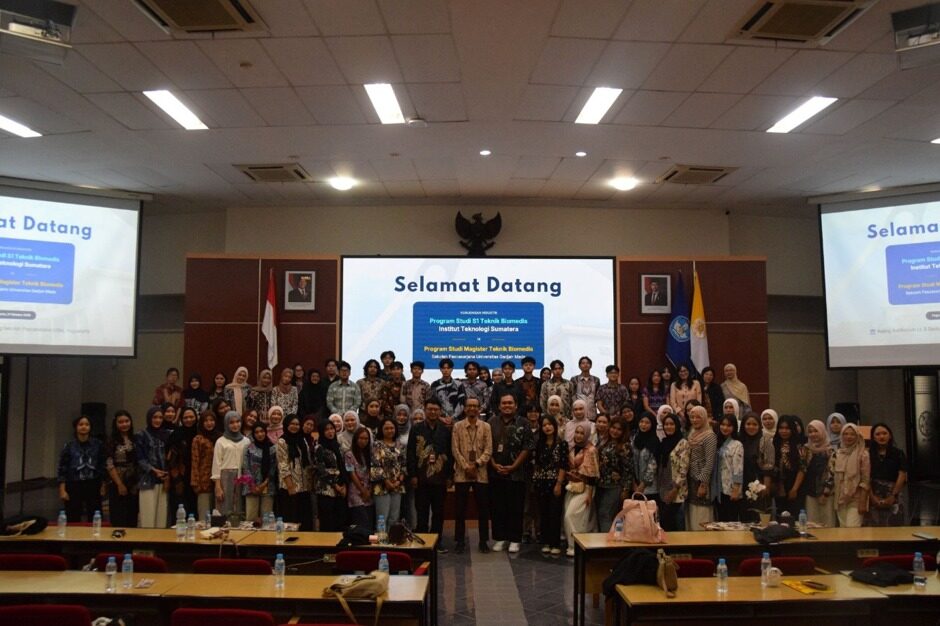
YOGYAKARTA – The Undergraduate Program in Biomedical Engineering, Faculty of Industrial Technology, Institut Teknologi Sumatera (ITERA), conducted an academic visit to the Master’s Program in Biomedical Engineering at Universitas Gadjah Mada (UGM). The visit took place on Tuesday, 27 October 2026, at the Auditorium on the 5th Floor of the UGM Graduate School Building.
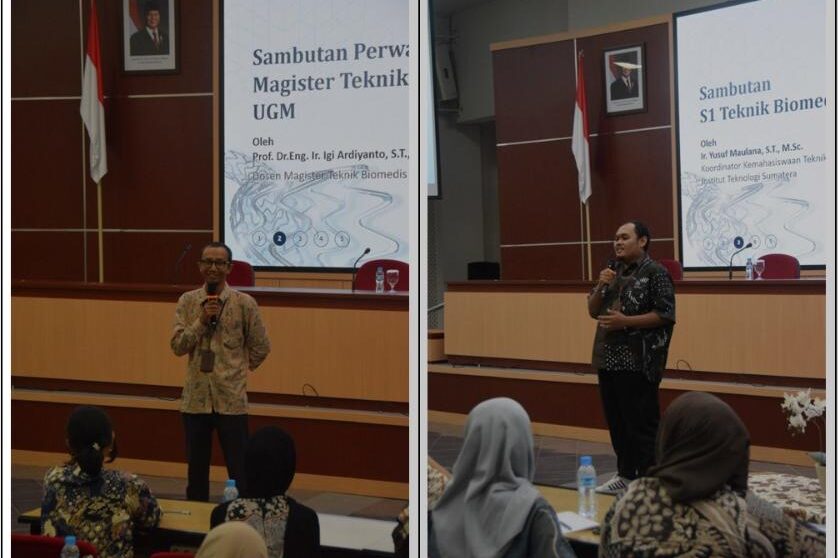
The event opened with welcoming remarks from Prof. Dr.Eng. Ir. Igi Ardiyanto, S.T., M.Eng., IPM., ASEAN Eng., SMIEEE, a lecturer in the Master’s Program in Biomedical Engineering, followed by remarks from Ir. Yusuf Maulana, S.T., M.Sc., representing ITERA’s Undergraduate Program in Biomedical Engineering.
Introduction to UGM Biomedical Engineering
In his presentation, Prof. Igi explained the admission pathways to UGM, namely the regular admission track and the by research track, as well as the courses offered under the 2026 curriculum. He also introduced CIMEDS and outlined potential forms of academic collaboration, including academic field visits and the Student Creativity Program (PKM).
Prof. Igi explained that the Biomedical Engineering program was established in response to the need for greater self-reliance in the healthcare sector, particularly in the development of medical equipment. Graduates of the master’s program are expected to be able to assess needs and serve as a think tank, generate innovations, conduct research, and develop specifications based on workplace requirements, rather than directly undertaking equipment repairs.
One of the key strengths of UGM’s Master’s Program in Biomedical Engineering is its interdisciplinary nature, which allows research to span various fields and enables researchers to connect with relevant experts more easily. Although the program is relatively new, UGM Graduate School has the authority to invite expert practitioners from other faculties to enrich the learning process.
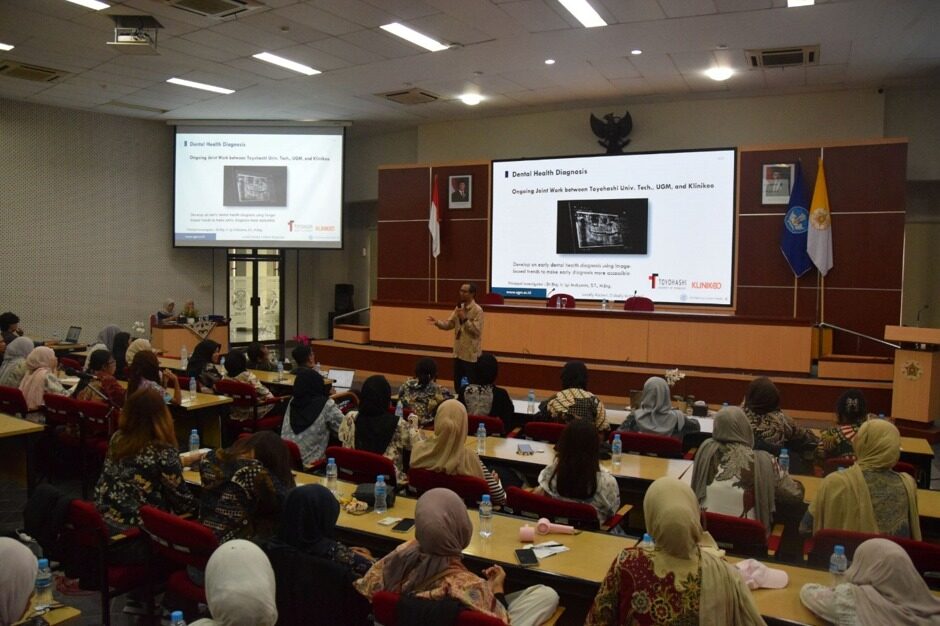
Public Lecture: AI Research and Image Processing
The public lecture introduced various research projects in artificial intelligence (AI) and image processing conducted by Biomedical Engineering students and graduates at UGM. These included applications in dental health diagnostics, tomography, virtual and augmented reality, as well as deep learning-based medical image analysis for chest CT scans, ophthalmology, and parasite detection.
The presentations also covered soft robotics and low-cost edge AI, before concluding with a discussion of future challenges and opportunities in AI development.
Questions and Discussion
The discussion session was lively, with participants raising a range of questions.
Regarding scholarships and career opportunities, participants asked about the prospects of working as clinical engineers. It was explained that opportunities in this field remain limited, as efforts to secure professional registration through a Registration Certificate (Surat Tanda Registrasi or STR) for biomedical engineering graduates are still.