
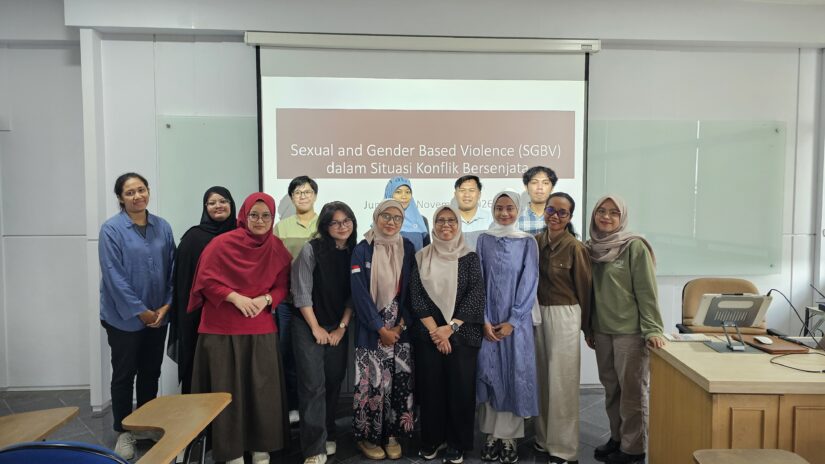
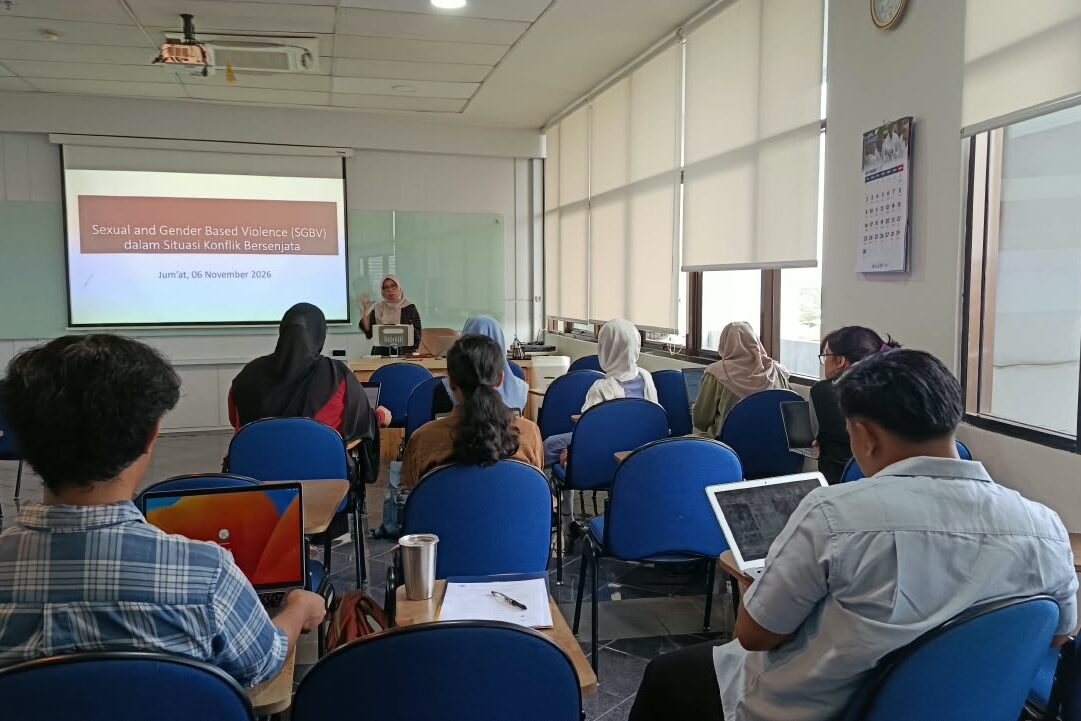
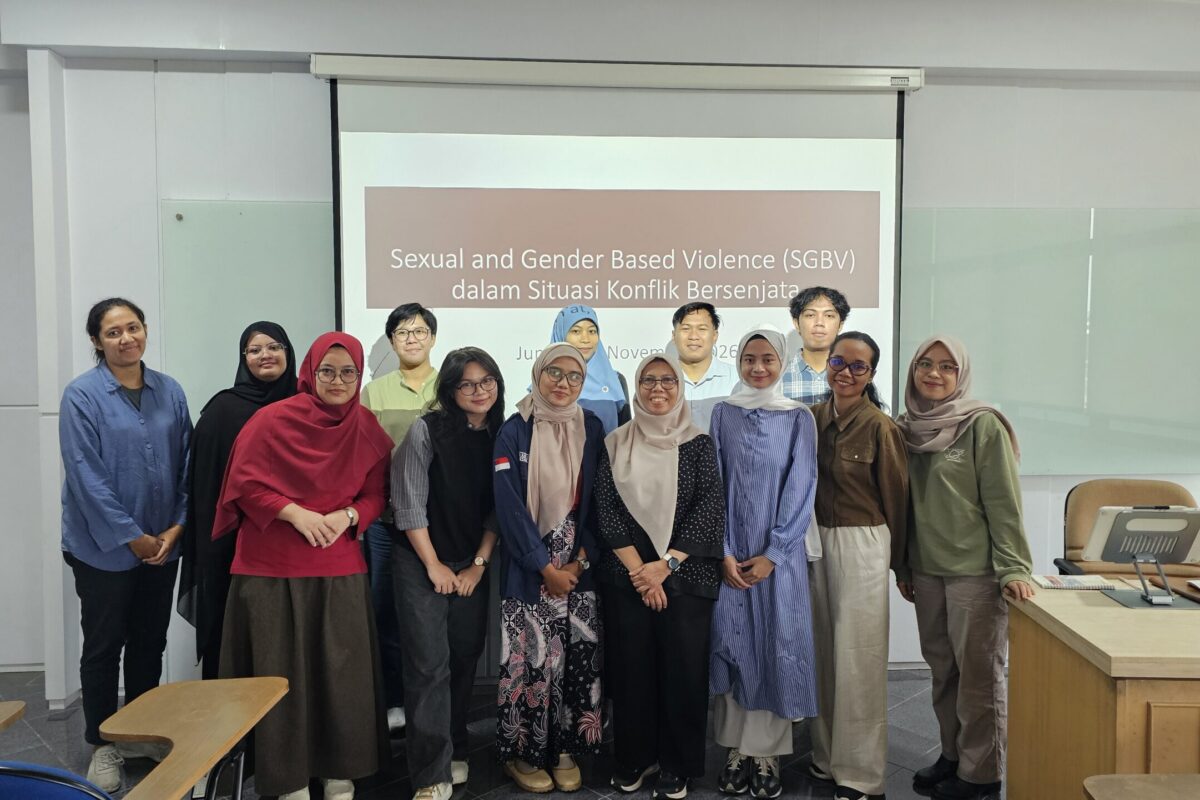
Yogyakarta, 6 November 2026 — Sexual and gender-based violence in armed conflict is a complex issue closely connected to power relations, gender constructions, and broader social and political dynamics. This issue was the focus of a Discussion Series organized as part of the Media, Gender, and Sexuality course by the Media and Cultural Master Program (KBM), Graduate School, Universitas Gadjah Mada (UGM). Entitled “Sexual and Gender-Based Violence in Conflict and Post-Conflict Settings,” the discussion featured Dr. Arifah Rahmawati, M.A. as the speaker and was organized in two sessions, held on Friday, 6th November, and Friday, 13th November 2026, from 09.00 to 11.00 WIB, in Room 406, 4th Floor, Unit 1, Graduate School, UGM.
The first session, held on Friday (6th November), invited students to explore sexual and gender-based violence (SGBV) in the context of armed conflict. The discussion emphasized that gender-based violence is not limited to acts of violence against individuals, but is also connected to gender roles, social constructions, and hierarchical power relations. This perspective is important for understanding how gender inequality can shape vulnerability and experiences of violence in conflict situations.
One of the main topics addressed was the distinction of SGBV and Conflict-Related Sexual Violence (CRSV). SGBV refers to violence associated with gender constructions, gender roles, and power relations, whereas CRSV specifically refers to sexual violence directly linked to military or political conflict. This conceptual distinction helps students understand that violence in conflict settings has specific contexts, characteristics, and dimensions that require more differentiated analysis.
The discussion also examined the status of conflict-related sexual violence within the framework of international law. In the presentation, CRSV was situated within discussions of war crimes and crimes against humanity. This international legal perspective broadened students’ understanding that sexual violence in conflict is not merely an individual matter, but also an issue involving humanitarian protection, accountability, and justice.
The perspectives of gender and sexuality studies showed SGBV can be examined by considering the social and political conditions that enable violence to occur and persist. Armed conflict does not only involve direct acts of violence; it can also reinforce inequalities and power relations shaping the positions of vulnerable groups. Therefore, understanding sexual and gender-based violence requires an analysis that goes beyond individual incidents of violence, taking into account the broader social structures, gender constructions, and conflict-related contexts in which such violence occurs.
Organizing the discussion in two sessions provides students with an opportunity to develop their understanding of the issue progressively. Through academic engagement with the speaker, students can deepen their knowledge of key concepts and develop critical perspectives on the relationships of gender, violence, conflict, and international law. The activity also enriches the learning process in the Media, Gender, and Sexuality course by introducing social and political issues that are highly relevant to the broader field of media and cultural studies.
The second session of the Discussion Series is scheduled for Friday, 13th November 2026, from 09.00 to 11.00 WIB, in Room 406, Graduate School, UGM. This follow-up meeting will continue the same learning series with Dr. Arifah Rahmawati, M.A.
This activity showed the Media and Cultural Master Program at UGM continues to promote learning that connects theoretical perspectives with contemporary social issues. The discussion of sexual and gender-based violence in armed conflict is expected to strengthen students’ academic awareness of inequality, power relations, human rights protection, and the importance of gender perspectives in understanding conflict dynamics.
Author: Khoirul Mujazanah