
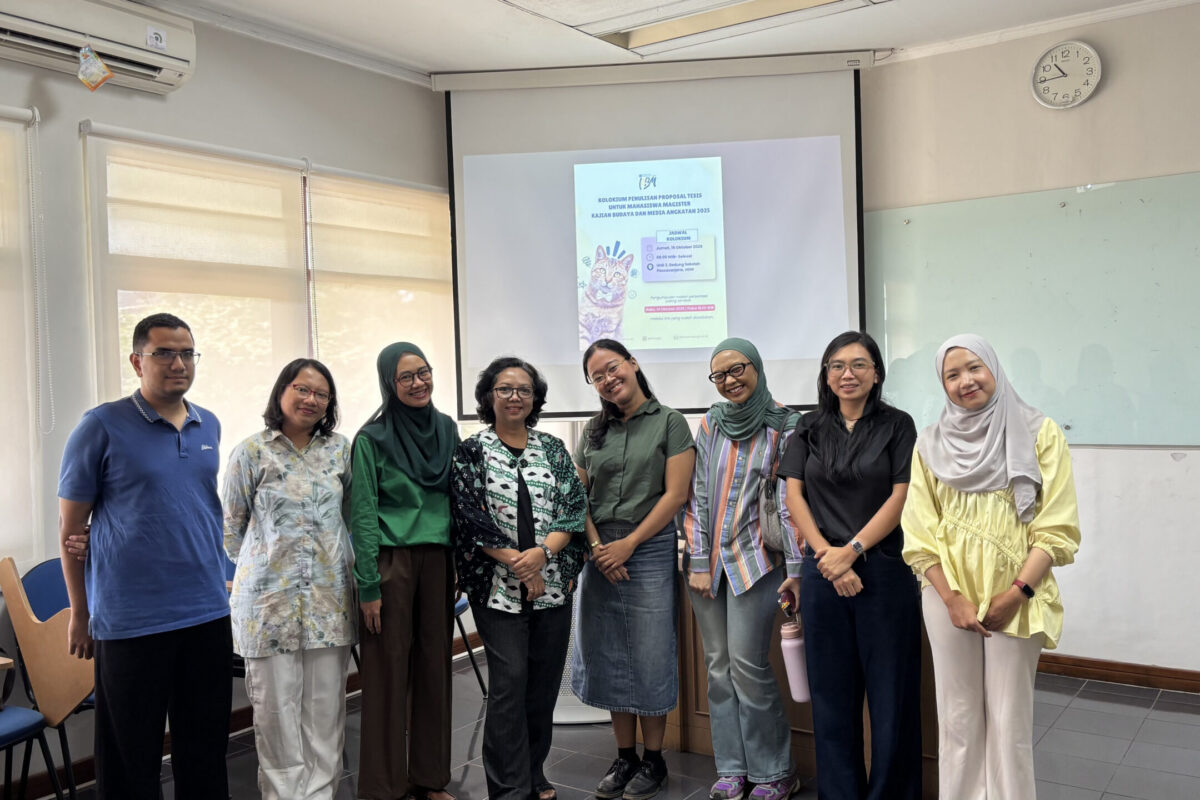
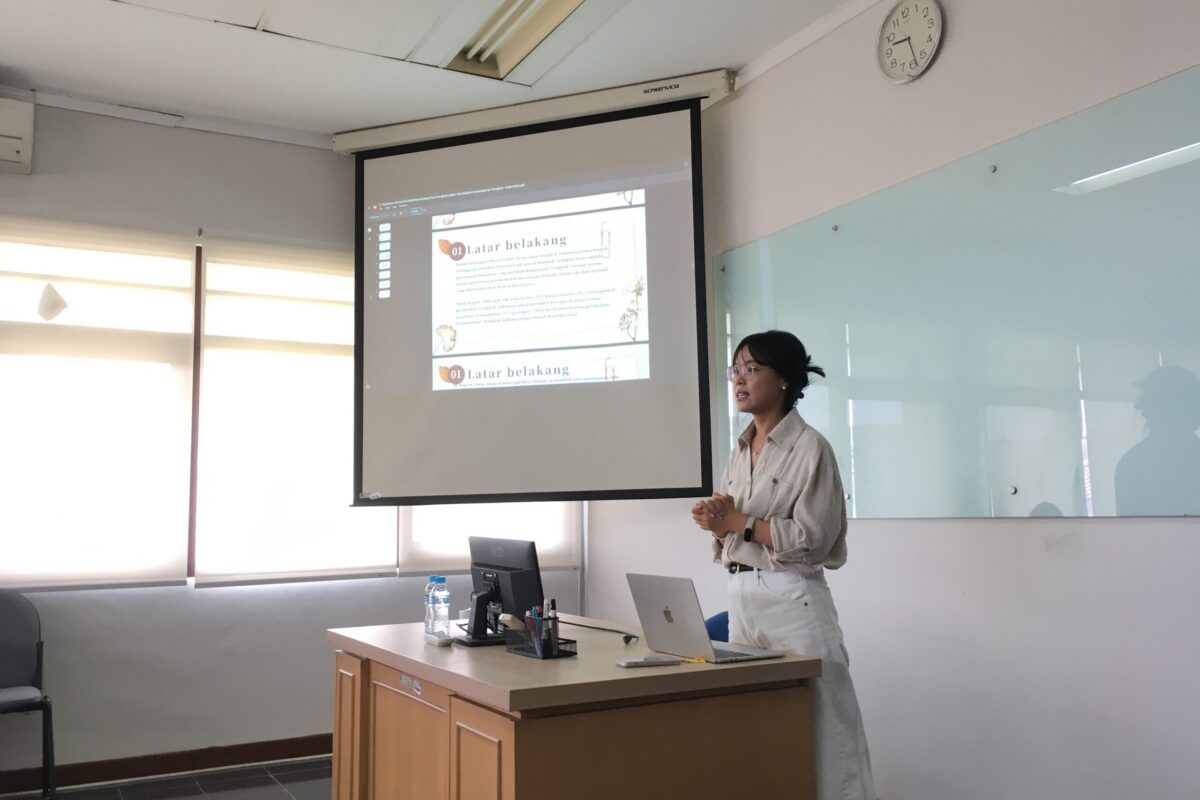
Yogyakarta, October 16th 2026 — The Media and Cultural Master Program, Graduate School of Universitas Gadjah Mada (UGM), held a Thesis Proposal Writing Colloquium for its 2025 cohort on Friday (October 16th). The in-person event, held at Unit 3 of the UGM Graduate School building, provided an academic forum for students to present their research designs and receivde feedback to refine the focus and arguments of their thesis research.
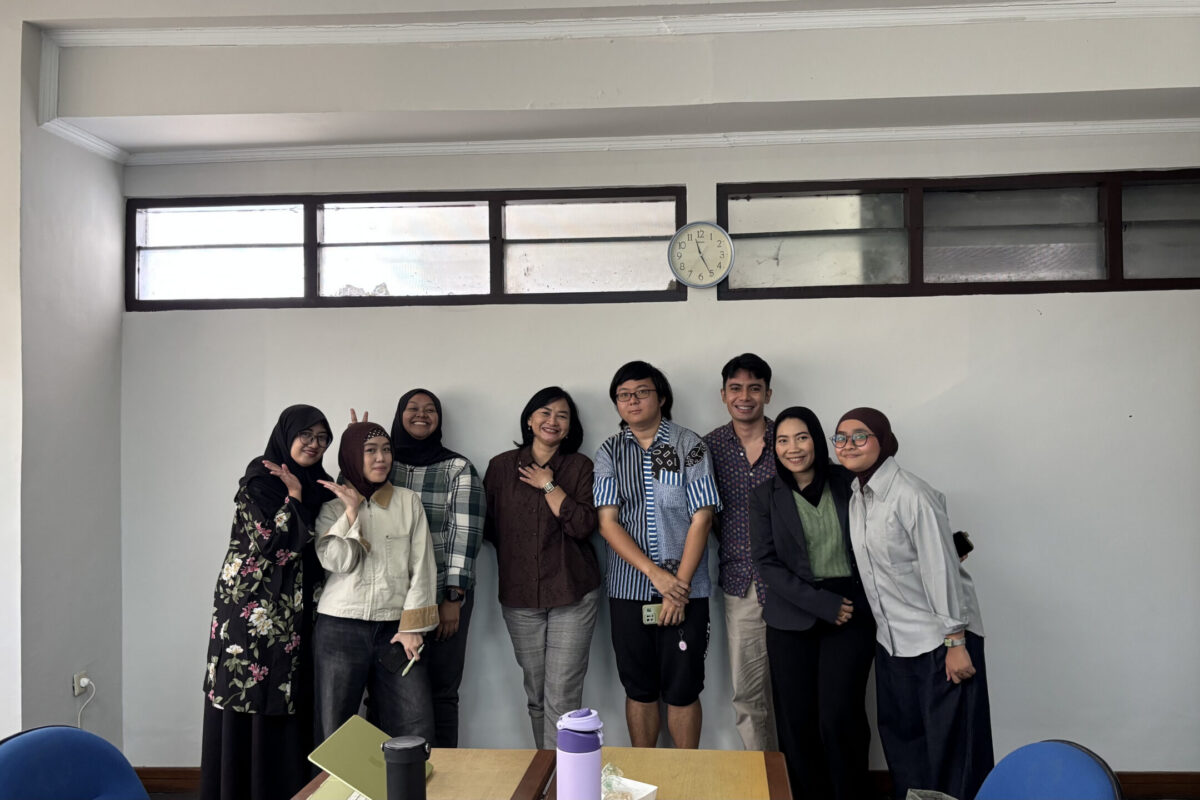
The colloquium was attended by 30 students and involved five faculty reviewers: Ratna Noviani, S.I.P., M.Si., Ph.D.; Budiawan, S.S., M.A., Ph.D.; Dr. phil. Ramayda Akmal; Dr. Elok Santi Jesica, S.Pd., M.A.; and Dr. Wiwik Sushartami, M.A. The event was also supported by a team of facilitators who helped guide presentations and discussions across the different clusters.
The program began with participant registration and a morning coffee session from 8:00 to 8:25 a.m. Western Indonesian Time (WIB) at the second-floor corridor near the Bank Negara Indonesia (BNI) area of the Graduate School. Students then proceeded to presentation and discussion sessions on five clusters. Each student was allocated 15 minutes to present their research proposal, followed by 15 minutes of discussion with faculty reviewers, facilitators, and fellow students.
The cluster-based format enabled more focused discussions tailored to each student’s research questions and approach. Discussions addressed not only the substance of the proposed topics but also the clarity of research problems, the formulation of research questions, the use of theoretical frameworks, and the alignment of research methods and objectives.
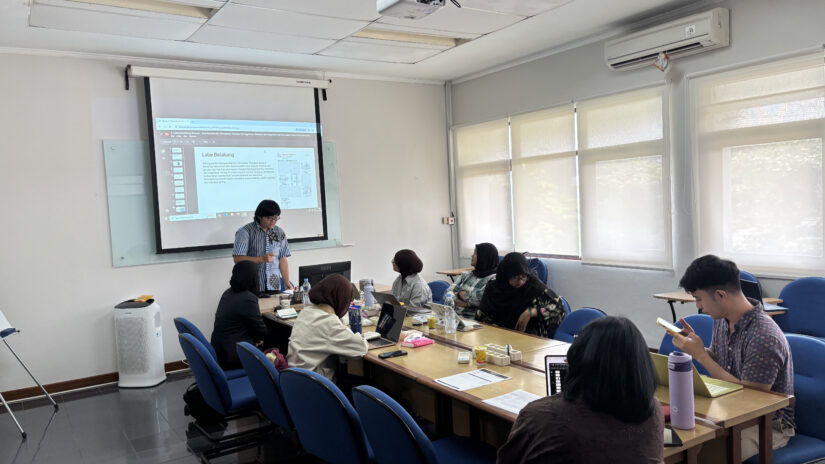
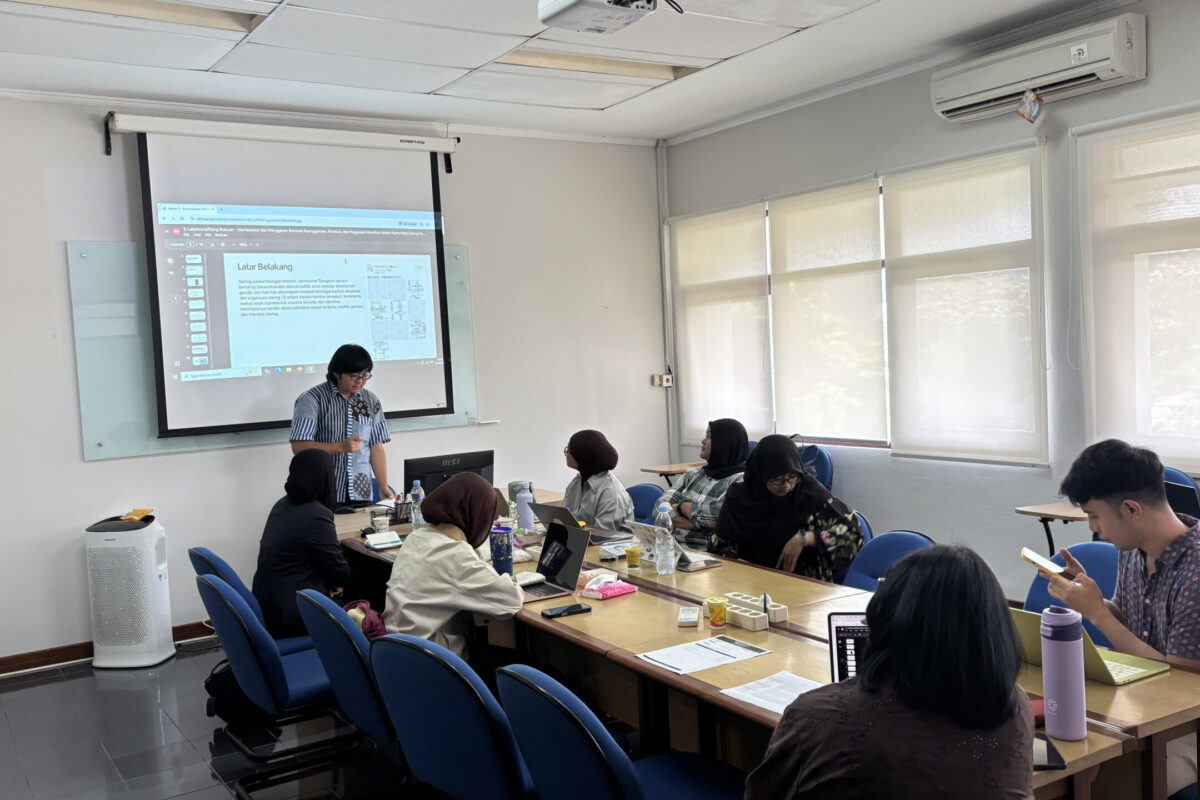
One of the discussions took place in Cluster 1, in Room 208 on the second floor of Unit 3. The session was reviewed by Ratna Noviani, S.I.P., M.Si., Ph.D., and facilitated by Samuel Rihi Hadi Utomo. During the session, Ulfah Aristia Tresna Gunawan presented her thesis proposal entitled “Unraveling Gendered Labor Behind the Practice of Ngabongsang: Women Artisans’ Agency in Everyday Life.”
The discussion highlighted the need to clarify the central research problem, including the distinctive characteristics of the ngabongsang practice at the research site and its relationship to the division of domestic labor and women artisans’ experiences. The student was also encouraged to strengthen the connection of empirical phenomena and the theories applied, and also refining the research questions to establish a more focused direction for the study.
Discussions in Cluster 3, held in Room 206 on the second floor of Unit 3, also emphasized the importance of carefully formulating research problems. Dr. Wiwik Sushartami, M.A., serving as the reviewer, encouraged students to conduct field observations to gain a clearer understanding of empirical conditions before determining their research focus. Students were also reminded to adopt a critical perspective when examining social and cultural phenomena and to revisit Chapter I after completing their analysis, ensuring that the research background remained consistent with the findings.
The feedback provided throughout the colloquium formed an important part of the thesis proposal refinement process. Through academic discussion, students had the opportunity to test their ideas, identify aspects requiring further clarification, and strengthen the theoretical and methodological foundations of their research before proceeding to the next stage.
The colloquium reflected the Media and Cultural Master Program at the UGM Graduate School’s commitment to supporting systematic, critical, and academically rigorous student research. It also fosters a collaborative academic culture with the exchange of ideas and constructive feedback between students and faculty members.
The event concluded around midday with a break for rest, prayer, and lunch (ISHOMA) in the second-floor corridor near the BNI area of the Graduate School. This activity showed students are expected to include the feedback they received into their revised proposals and better subsequent stages of their thesis research.
Writer: Khoirul Mujazanah