
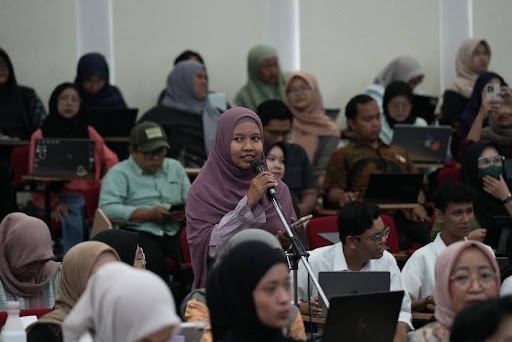
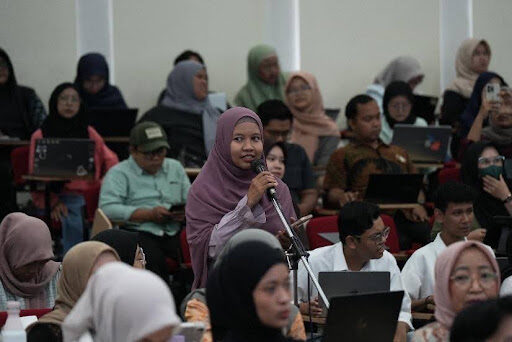
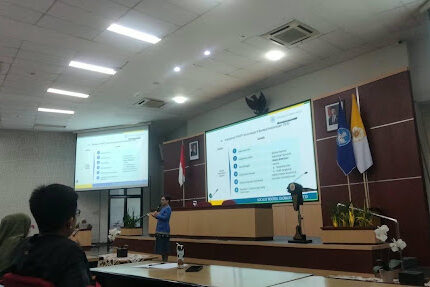
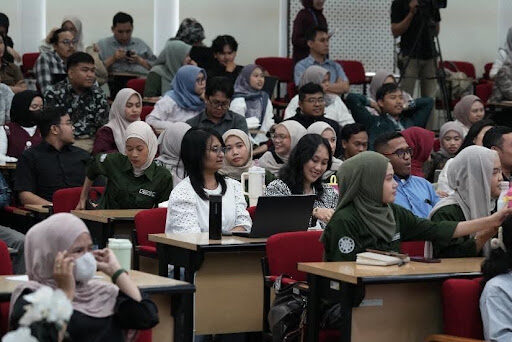
Yogyakarta, September 15th 2026 — The Graduate School of Universitas Gadjah Mada (SPs UGM) organized an orientation public lecture for incoming graduate students, focusing on the critical imperative of establishing a healthy, safe, and inclusive campus ecosystem. Held on-site at SPs UGM, the second session of the orientation program carried the theme “Health Promoting University (HPU) and Sexual Violence Prevention within the Campus Environment,” featuring Prof. Dr. Yayi Suryo Prabandari, M.Si., Chief of the UGM Task Force for the Prevention and Handling of Sexual Violence (PPKS UGM, 2024–2026), as the keynote speaker. The event was designed to educate the academic community on maintaining an environment conducive for learning and working while remaining entirely free from all forms of violence.
Prof. Dr. Yayi Suryo Prabandari, M.Si., during her presentation, highlighted that UGM is an active participant in the global Health Promoting University (HPU) framework. This initiative aims to shape an organizational culture and environment that enhances health, well-being, and sustainability on the entire academic community, empowering individuals to reach their optimal potential. She emphasized the necessity for students to maintain high physical energy and stamina to support their academic pursuits, recommending at least 150 minutes of physical activity per week. Furthermore, she detailed nine core pillars of a healthy campus infrastructure: regular physical activity, healthy nutrition, mental health support, health literacy, reproductive health and social interaction, zero tolerance for drugs, tobacco, and alcohol, zero tolerance for violence, bullying, and harassment, as well as the establishment of a safe, healthy, and disability-friendly environment.
The lecture also examined the strategic role of the UGM PPKS Task Force in addressing, preventing, and handling structural, direct, and cultural violence on campus. Referencing UGM Rector Regulation No. 1 of 2023 on the Prevention of Sexual Violence, sexual violence is defined as any act that insults, harasses, causes discomfort, and/or attacks an individual’s body, reproductive functions, or gender identity. Prof. Yayi elaborated on specific prohibited behaviors covered under university regulations, including making discriminatory remarks, exposing genitals, catcalling or uttering sexually suggestive comments, staring in a sexually suggestive manner, transmitting sexual jokes or images, non-consensual recording or circulating of sexual media, unauthorized disclosure of personal body information, peeping into private activities, coercion or extortion with threats, imposing sexually suggestive sanctions, non-consensual physical contact, and forcing sexual transactions or community traditions characterized by sexual harassment. She stressed that violence often originates from power imbalances, which can inflict severe psychological harm and mental health afflictions on students, faculty, and administrative staff alike.
Comprehensive protection and integrated support services provided by UGM on an extensive network of health and assistance facilities’ operation accessible to all students, faculty members, and administrative staff. These integrated service units include the UGM Academic Hospital (RSA), Gadjah Mada Medical Center (GMC), Dental and Oral Hospital (RSGM), Veterinary Hospital, Korpagama Clinic, Disability Unit, Mental Health Task Force, Center for Occupational Health, Safety, and Environment (P4KL), and Safe Houses. Students can also access the Psychological Consultation Unit and the Legal Aid Consultation Center at the Faculty of Law (FKH UGM). Internally, SPs UGM reinforces these services with a dedicated Health Center and an independent psychology unit. As a proactive preventive measure, the UGM PPKS Task Force has released an educational guideline titled “Healthy Relationships” (Relasi Sehat), which students can access directly via UGM’s SIMASTER portal to promote a peaceful, prosperous, and respectful academic culture.
This public lecture, SPs UGM reaffirms its commitment to sustain a safe, humane, and supportive academic atmosphere for all community members. The event served to strengthen collective awareness and encourage active participation in cultivating a sustainable and equitable higher education environment.
Author: Nadia Fadlillah D.
Editor: Berlian B.