Pacitan Regency, East Java, is known as an area that holds extraordinary natural and cultural wealth. This area has many important archaeological sites that record traces of ancient human life, such as Song Terus Cave and Tabuhan Cave.
The Environmental Science Master Program, Universitas Gadjah Mada (UGM) chose Pacitan as the location for a field study for the Cultural Environment course. This area is considered very relevant due to a real context of the culture and the environment interaction historically and ecologically.
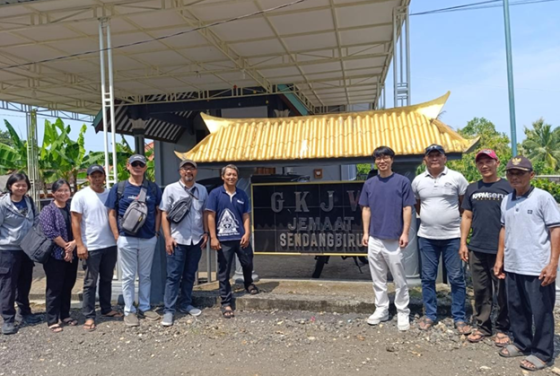
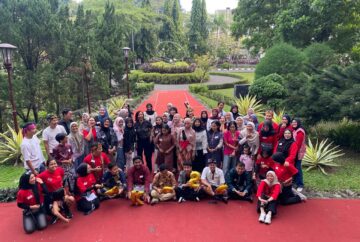
This activity was attended by nine students of the UGM Environmental Science Master Program, accompanied by the lecturer in charge of the course, Dr. Dra. Niken Wirasanti, M.Si. Students conducted observations and field studies on Saturday, April 26th 2025 at three main points: the Song Terus Museum, the Song Terus Site, and Tabuhan Cave.
The purpose of this activity is to deepen students’ understanding of the cultural environment’s concept, especially about how prehistoric humans shaped and adapted their environment with culture. This activity is expected to be able to build awareness of the importance of conserving cultural and ecological sites as part of the nation’s heritage.
Dr. Niken explained that the field is an irreplaceable learning space. “Knowledge of how early humans shaped their living environment through culture is an important foundation in understanding the development of technology and human lifestyle today,” she said. She also hopes that students will be able to interpret this direct experience as an important complement to theoretical learning in class.
The field study activity lasted a full day, starting with a visit to the Song Terus Museum. Here, students received an explanation from educators and technical staff about the long history of archaeological research since the 1950s. After the museum, students conducted direct observations at the Song Terus Cave, a 70-meter-long active cave that is an important site in the history of Homo sapiens.
The activity was then closed with a visit to the Tabuhan Cave, which is famous for its stalactites that produce sounds similar to gamelan which also hold important archaeological value, in the form of findings of stone artifacts and vertebrate bones. The activity went smoothly and was accompanied by student enthusiasm.
The Master of Environmental Science Study Program hopes that this activity can support the achievement of the Sustainable Development Goals. By understanding cultural and environmental heritage directly, students are also encouraged to become agents of change in sustainable conservation efforts.
Author: Muhammad Ulyn Nuha
Editor: Siti Muyasaroh
Photo: Naufal Hasani, Aurel Fernanda, & Januanto