
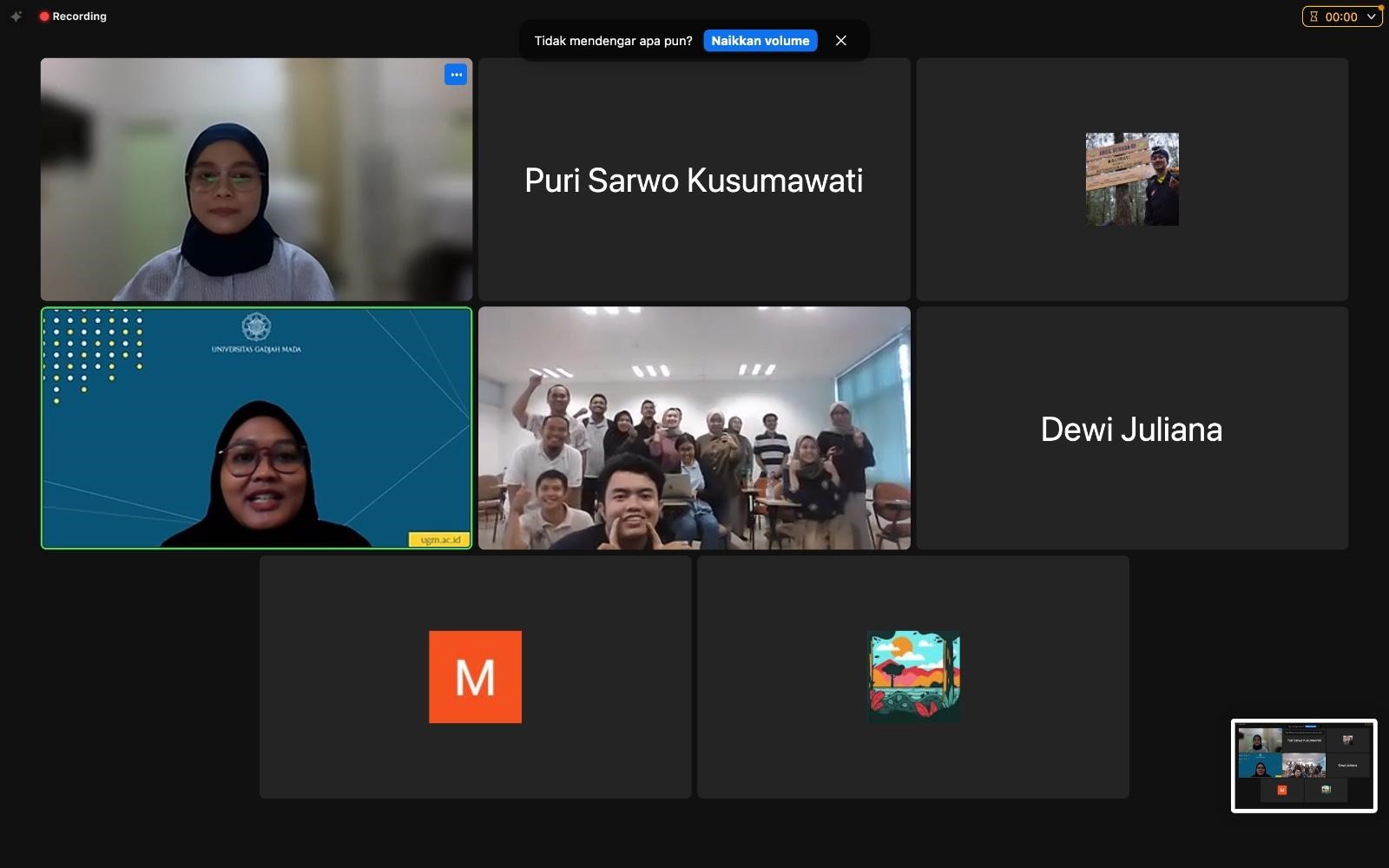
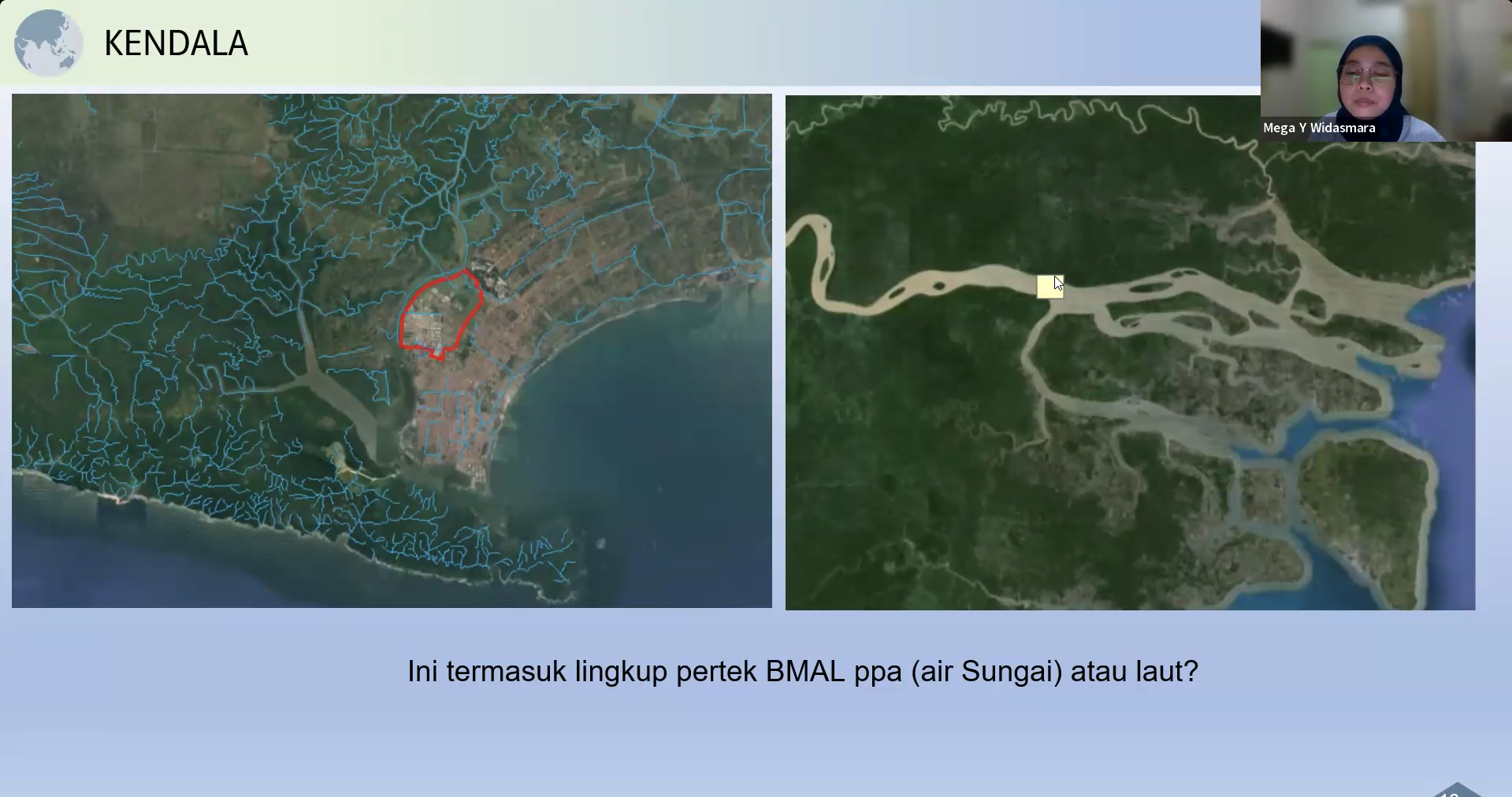
June 13th 2024, Master of Environmental Management (MPL) Study Interests, Gadjah Mada University Postgraduate School conducted a guest lecture on AMDAL and Environmental Audit courses taught by Dr. Lintang Nur Fadillah, S.Sc., M.Sc. as well as being a moderator for this event. Presenting a resource person who is an expert in the field of AMDAL, Mega Yulisetya Widasmara, S.Sc M.Sc who currently works as a consultant for AMDAL 8, PERTEK BMAL 34, and conducts research related to hydrology and water quality. This event was attended by 23 MPL students which was held online using zoom meeting media.
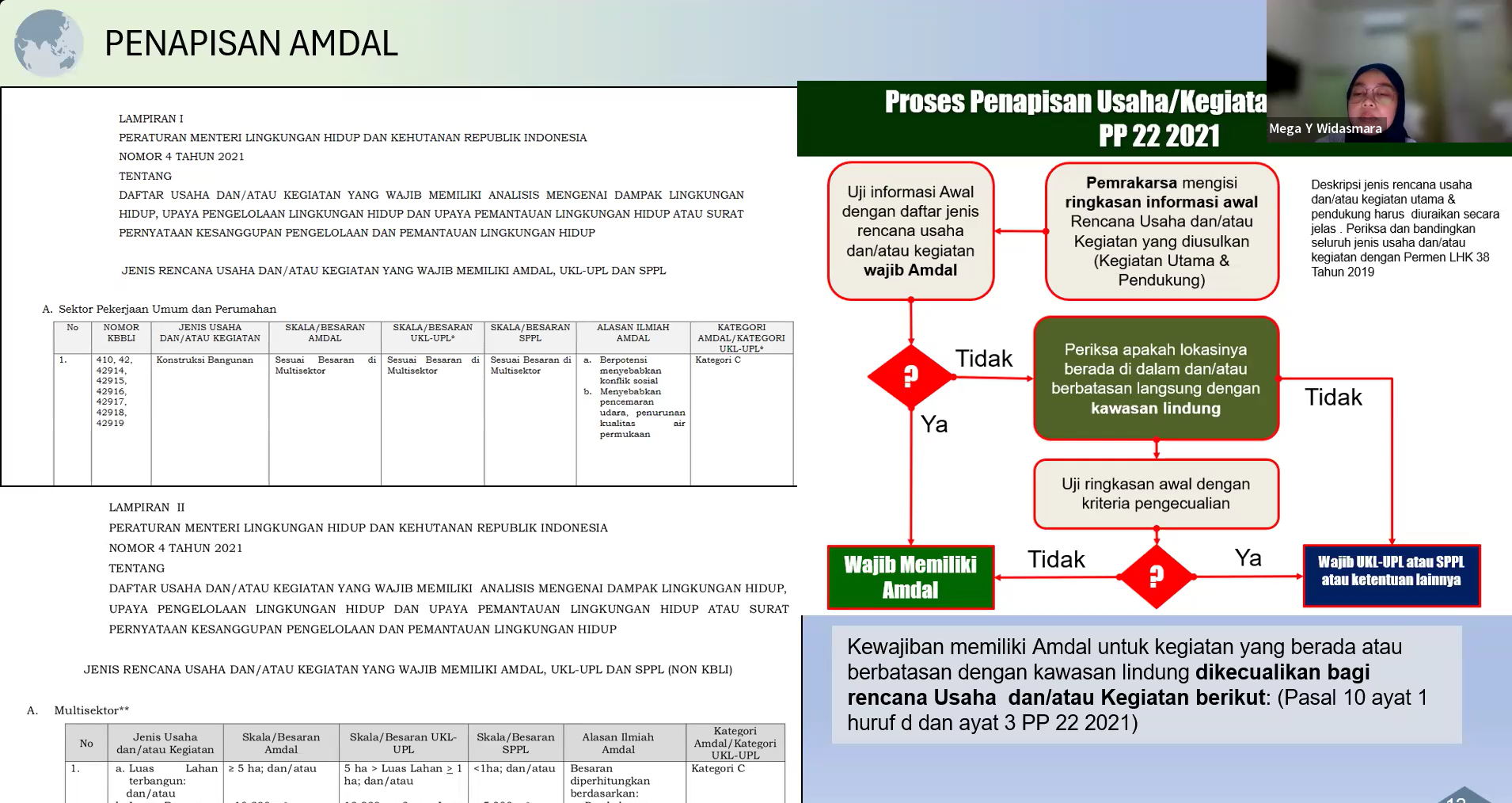
The discussion in this lecture was on procedures for preparing environmental documents such as AMDAL and Technical Approval (PERTEK), as well as how to submit the results to the relevant agencies. Many government regulations regulate AMDAL and waste water quality standards.
“Every business activity that produces waste in the production process is regulated in Government Regulation Number 22 of 2021 concerning the Implementation of Environmental Protection and Management, which includes a clause that the company or initiator can dispose of waste water in water bodies on condition that they carry out water quality restoration activities.” , said the source when giving a material presentation explaining the legal basis for AMDAL. Furthermore, the Operational Feasibility Certificate (SLO) has been regulated in Government Environment and Forestry Regulation Number 5 of 2021 concerning procedures for issuing technical approval and operational feasibility letters in the field of environmental pollution control.
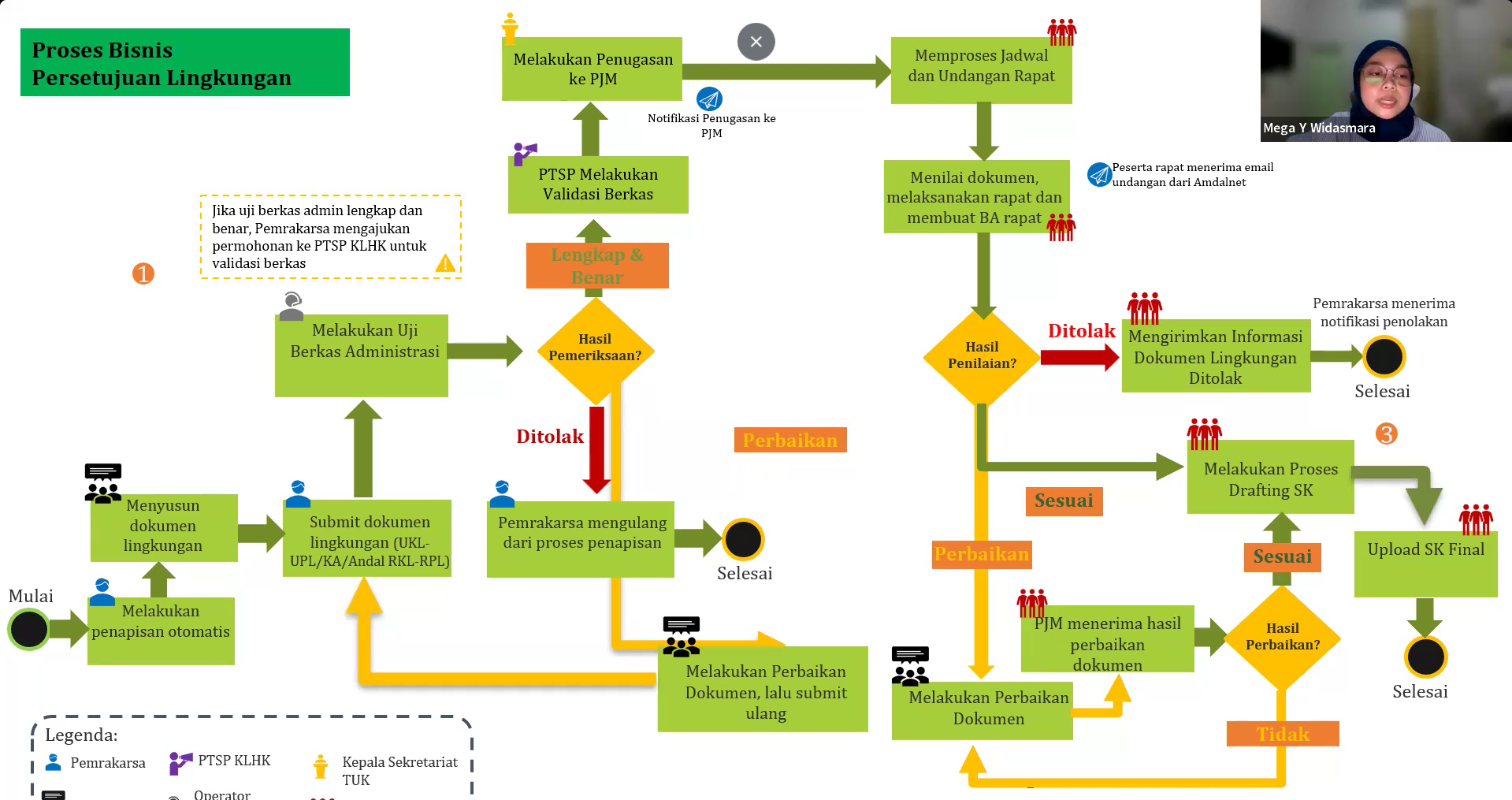
The environmental approval business process through Amdalnet has a complex scheme starting from the screening process, preparation of environmental documents, administrative tests to file validation. Amdalnet assists in the process of digitizing environmental documents and the environmental approval process. A company or initiator also submits a business plan or AMDAL addendum activity on Amdalnet.
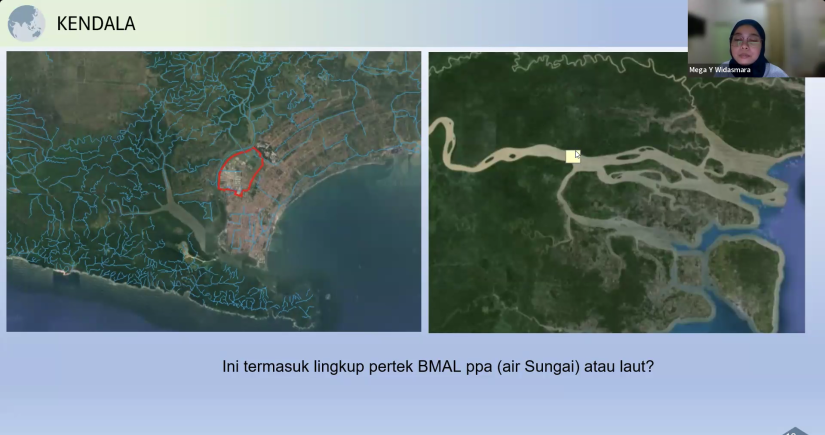
Engineering standards and technical studies are also very important and a matter of concern in the process Technical Approval (PERTEK). Both have differences in the impact estimates and proposed wastewater quality standards. Technical standards can refer to applicable regulations, for example domestic activities related to key parameters and their quantities refer to P68 Domestic Waste Quality Standards. Meanwhile, technical studies need to ensure whether the river’s capacity meets or requires tightening of quality standards and certain modeling of the distribution of impacts to determine monitoring points to find out how far the impact of waste is distributed or determining the Zone of Initial Dilution (ZID).
This event was successful in discussion between sources and students who actively gave their views, especially regarding the PERTEK application process. This meeting provided opportunity for MPL students to share experiences and ask questions about environmental documents which is expected to increase students insight and experience in preparing environmental documents. This activity is in line with sustainable development goals (Sustainable Development Goals) pillar 4 regarding quality of education, pillar 14 regarding protecting marine ecosystems, and pillar 15 regarding protecting land ecosystems.
Tags: environmental management, EIA, waste water quality standards, SDG, SDGs 4: quality of education, SDGs 14: protecting marine ecosystems, SDGs 15: protecting land ecosystems
Author: Siti Muyasaroh