
Yogyakarta, 15th January 2026 — Researchers from Universitas Gadjah Mada (UGM) have revealed practices of servitization experienced by former female Indonesian Migrant Workers (PMI) from Indramayu Regency, West Java Province. These practices constitute a form of cultural violence linked to six targets of the Sustainable Development Goals (SDGs): No Poverty (Goal 1), Good Health and Well-Being (Goal 3), Gender Equality (Goal 5), Decent Work and Economic Growth (Goal 8), Reduced Inequalities (Goal 10), and Peace, Justice, and Strong Institutions (Goal 16).
The study was conducted in 2025 as part of the Research Grant Program of the UGM Graduate School (SPs UGM). It was led by Dr. Arifah Rahmawati, M.A. (Center for Security and Peace Studies and lecturer in Cultural and Media Studies at UGM). The research was motivated by the high volume of migrant worker remittances, which reach approximately IDR 227 trillion per year. The total number of womenIndonesian migrant workers is around 67.5 percent of all Indonesian migrant workers. Despite their significant economic contribution, female migrant workers remain vulnerable to various forms of mistreatment, including cultural violence.
Indramayu Regency was selected as the research site as it was the largest source of Indonesian migrant workers in 2024, with a total of 21,688 workers. This figure is based on data from the Indonesian Migrant Workers Protection Agency (BP2MI) published in 2025.
The findings indicate three interrelated dimensions of servitization. First is unequal power relations, in which female migrant workers are often positioned as commodities or services traded by agencies and employers. Second is the construction of a degrading identity, reflected in how they perceive themselves as “queen maids” and consider verbal abuse acceptable as long as it is compensated by economic gain. Third is the domination of knowledge and technology, which leads to social isolation due to restrictions on the use of communication devices and limited interaction with fellow migrant workers.
The following are excerpts from statements by former female migrant workers regarding their experiences abroad.
“There was never any day off—no holidays at all. I wasn’t allowed to leave the house, except when accompanying my employer. I never went out with other workers. The facilities were good, the room was like a queen’s. A queen maid,” said Iin.
“My employer didn’t allow me to use a mobile phone. They said my money would be wasted. You’ve come all the way from Indonesia to Singapore, and your money will be spent just on a phone. So I was only allowed to send letters once a month,” said Siti.
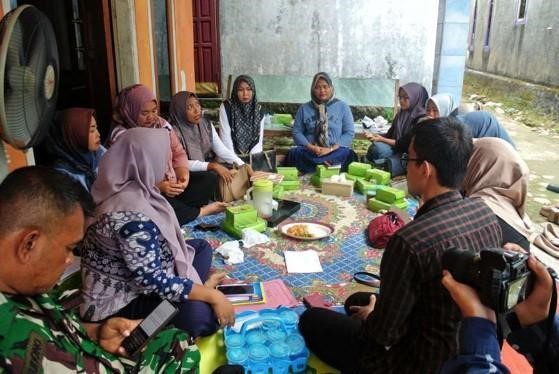
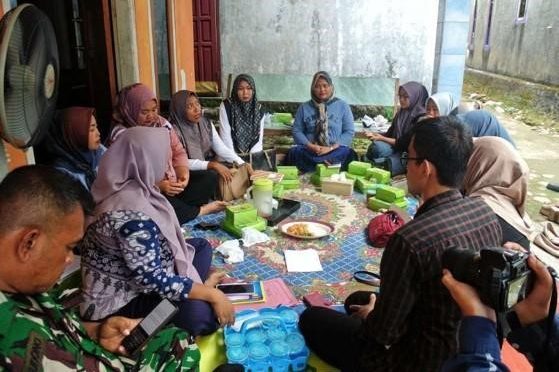
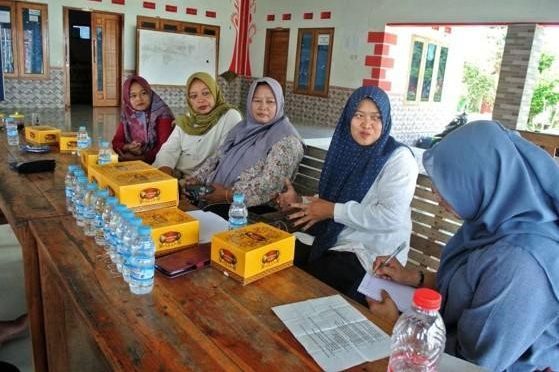
The research team included Dody Wibowo, S.IP., M.A., Ph.D. (Faculty of Social and Political Sciences, UGM), as well as master’s students in Cultural and Media Studies at UGM, Akhmad Jauhari and Nobertus Mario Baskoro. Data were collected through interviews with five former female migrant workers from Singakerta, Krangkeng, and Dukuhjati villages in Krangkeng Sub-district, Indramayu Regency. In addition, the researchers conducted discussions with Family Planning Cadres of Krangkeng Village, the Singakerta Village PKK (Family Welfare Movement), and the Economic and Employment Council of the Regional Leadership of ‘Aisyiyah, Indramayu Regency.
Source: Arifah Rahmawati
Editor: Asti Rahmaningrum
Photo: Arifah Rahmawati