
Gunungkidul, June 4th 2025 – The clean water crisis and threats to food security have become increasingly urgent global issues. Climate change, environmental deterioration, and population growth are inclining to limited access to drinking water and adequate food, especially in vulnerable areas such as Gunungkidul Regency, Special Region of Yogyakarta.
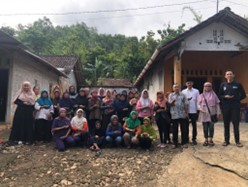
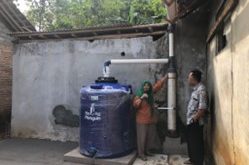
A community service team from Universitas Gadjah Mada (UGM), consisting of lecturers from the Master of Disaster Management (MMB) Program at UGM’s Graduate School—Dr. Retnadi Heru Jatmiko, M.Sc. and Dr. Dina Ruslanjari, M.Si.—along with students, Muhammad Irfan Nurdiansyah, Nabilla Auriel Fajarian, and Silfani, implemented a community-based water and food resilience strengthening program. A rainwater harvesting system was installed at the home of Mr. Harmoko, a resident of Pakel Hamlet, RT 1 RW 2, Tepus Village, Tepus Sub-district, Gunungkidul.
Dr. Retnadi, the team leader, emphasized that this program is not just a technical intervention but part of a broader social and environmental transformation. “We want to show that solutions to ecological disasters such as drought and food crises don’t always have to be complex. With simple yet effective rainwater harvesting, we can strengthen grassroots community resilience,” he stated.
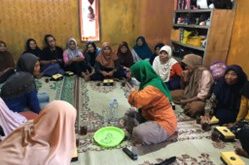
The initiative also involved collaboration with Sri Wahyuningsih, founder of the Banyu Bening Community, who has developed rainwater electrolysis technology to make it safe for consumption. During a public outreach session, Sri explained that most Tepus residents already harvest rainwater in a traditional and unhygienic manner. “We simply want rainwater, which usually goes to waste, to be reclaimed as a source of life—drinkable, healthy, and sustainable,” she said.
TDS (Total Dissolved Solids) testing showed that rainwater processed through the Banyu Bening device had a TDS level of just 15 ppm, compared to traditional rainwater storage systems (51–59 ppm) and local municipal water (229 ppm). This proves that with appropriate technology, rainwater can meet the standards of Indonesia’s Ministry of Health Regulation No. 492/Menkes/Per/IV/2010 and is safe for consumption.
The program, for the MMB UGM students, serves as a hands-on learning opportunity in real-world disaster risk management implementation. “We’ve learned to understand real challenges in the field. Amid global issues of food and water security, we’ve seen firsthand that communities like those in Gunungkidul need support through simple technologies they can manage themselves,” said Muhammad Irfan Nurdiansyah, who is known as Cak Irfan.
The program will continue until the end of 2025 with a series of training sessions, monitoring, and scientific publications. With a spirit of sustainability and replication, this model is expected to be implemented in other drought-prone areas across Indonesia.
Authors: Silfani, Irfan, and Nabila et al.
Editor: Siti Muyasaroh